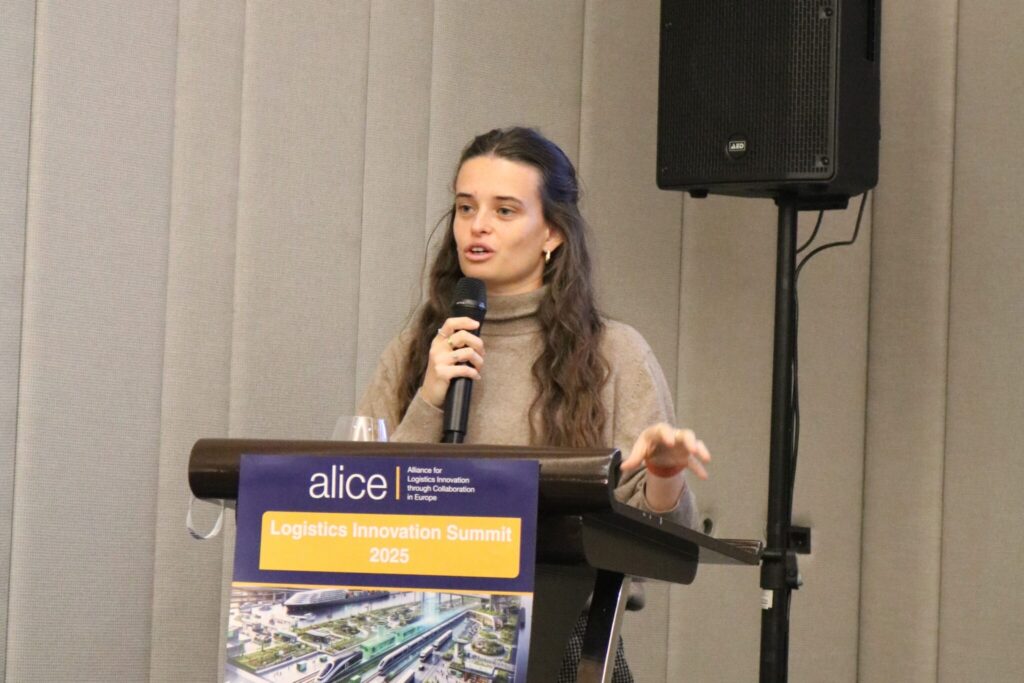
Cities across Europe are rethinking how urban space can serve both people and logistics. The “Shared Cities” session at the ALICE Logistics Innovation Summit 2025 explored how parking areas, markets, and other underused infrastructures can be repurposed into shared, multifunctional logistics hubs – a key step toward zero-emission and efficient city deliveries.
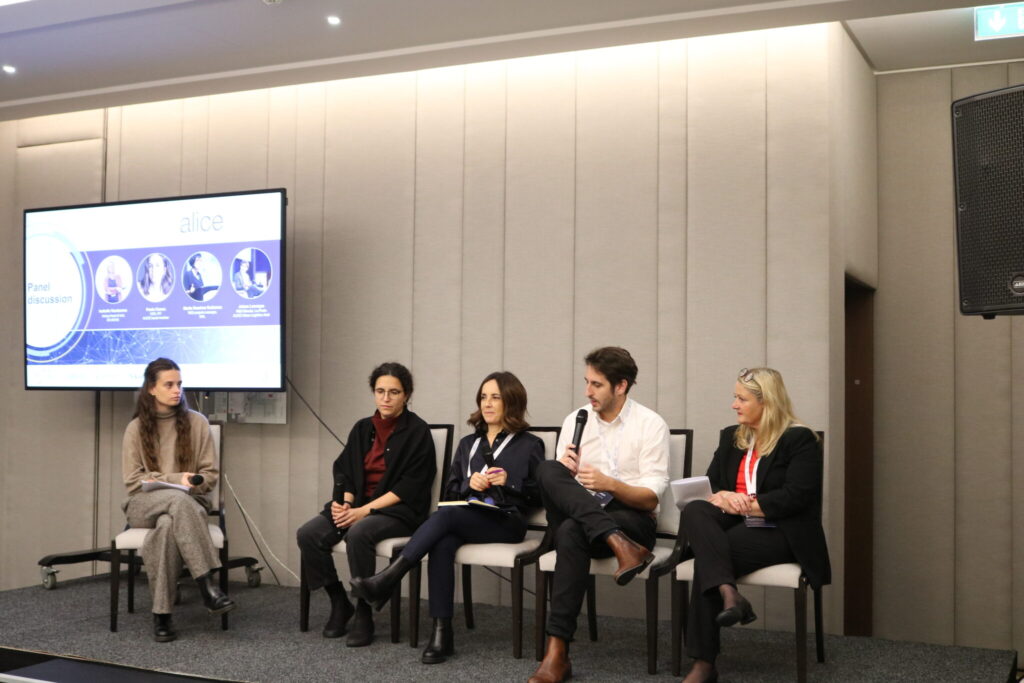
Hosted by Marion Cottet, ALICE Urban Logistics Deputy Programme Manager, the session brought together a strong line-up of speakers from the European Commission, La Poste, DHL, FIT Consulting, and Cross River Partnership, alongside representatives from CityLogIn and several EU-funded projects including DECARBOMILE, DELPHI, DISCO, LogE-Hubs, UNCHAIN, and URBANE.
Isabelle Vandoorne’s keynote set the tone for the discussion by reaffirming the Commission’s commitment to including urban logistics into the broader sustainability agenda, such as in the EU Urban Mobility Framework (2021). Her intervention linked policy, planning, and practice through four main lenses: governance (multi-actor collaboration), integration (logistics within Sustainable Urban Mobility Plans (SUMPs) and land-use planning: mandatory for all 431 TEN-T urban nodes by 2027), digitalization (European Mobility Data Space will incorporate logistics), and investment (EU funding exceeding €220 million since 2014 have funded innovation in sustainable urban freight and space optimization). Vandoorne called for shared urban space that must be co-designed by cities and logistics actors and started partnerships such as POLIS-ALICE which exemplify the required multi-level dialogue to translate European guidance into local implementation.
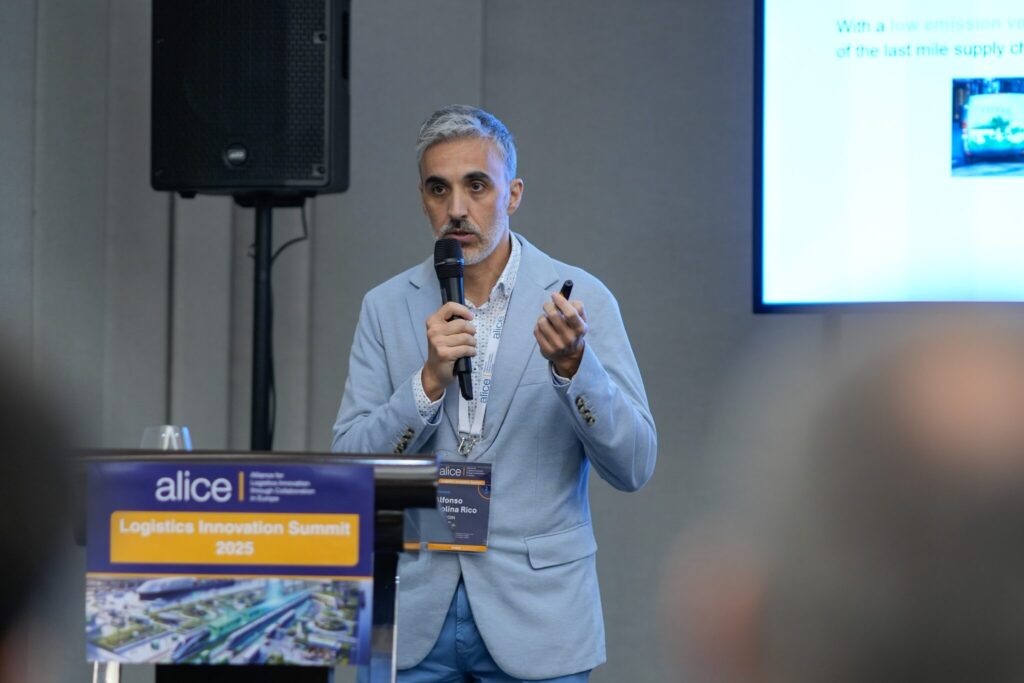
Alfonso Molina Rico (CityLogIn) shared how Madrid and Zaragoza are transforming parking facilities and market areas into shared micro-logistics hubs, enabling low-emission deliveries and improved urban accessibility. Ross Phillips (Cross River Partnership) presented London’s award-winning Waterloo Freight Hub, which repurposed a disused railway arch into a zero-emission delivery facility.
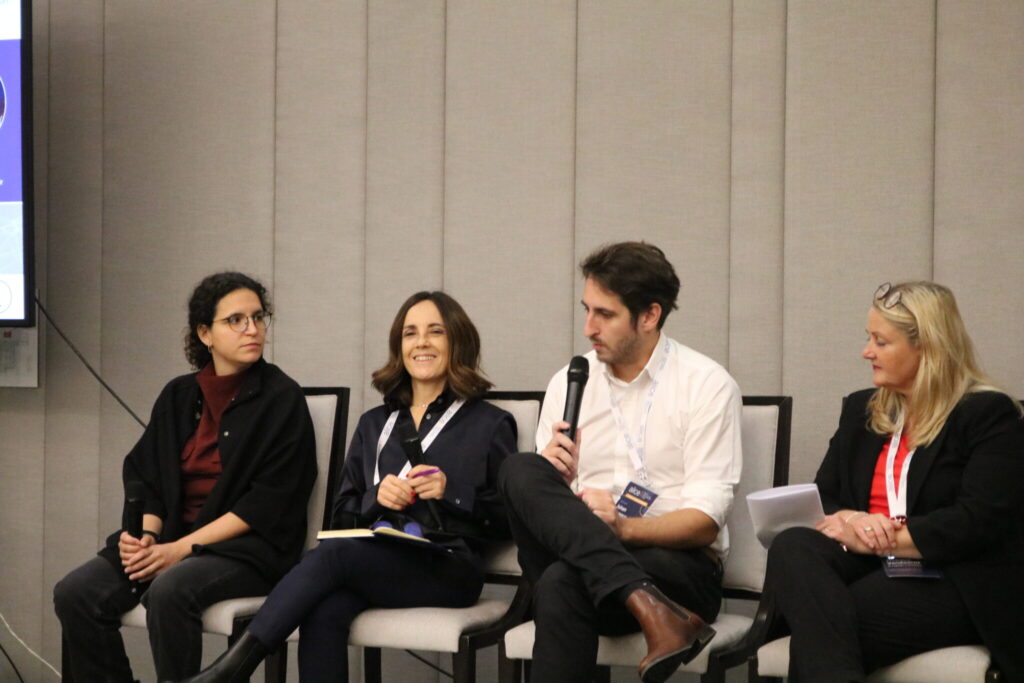
During the panel, Johan Leveque (La Poste), Maria Ramírez Gutierrez (DHL), Paola Cossu (FIT Consulting), and Isabelle Vandoorne discussed how interoperability, trust, and local collaboration can turn these pilots into scalable models. Cossu highlighted synergies between projects DISCO and URBANE, which are developing digital tools such as the Urban Freight Data Space to help cities map and manage logistics assets more efficiently.
Across all interventions, a clear message emerged: reusing existing space is faster, cheaper, and more sustainable than building new infrastructure. Achieving this, however, depends on shared governance frameworks and mutual trust between public and private actors. As Johan Leveque concluded, “Collaboration cannot be imposed – it must grow from shared incentives.”
Read the full session report (restricted access) on the Knowledge Platform … and download the short PDF version here https://www.etp-logistics.eu/wp-content/uploads/2025/10/4C_Shared-Cities-Unlocking-space-for-sustainable-UL_COM_VF.pdf