
Wednesday, July 29th, 2026
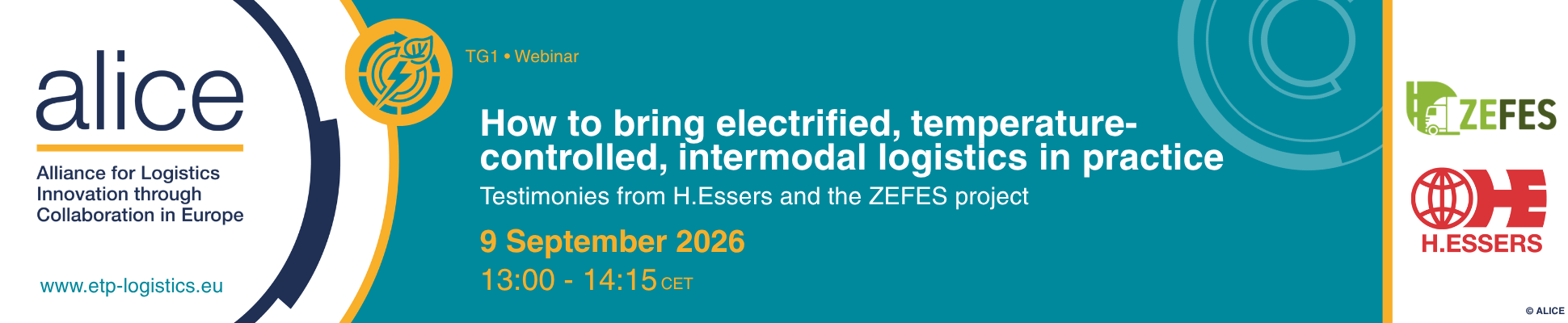
Electrifying long-haul freight requires more than zero-emission vehicles: it also requires reliable energy solutions, resilient infrastructure and seamless integration with intermodal logistics operations. This ALICE TG1 webinar will bring together practical experience from H.Essers and insights from the ZEFES project to discuss how electrified, temperature-controlled intermodal logistics can work in real transport chains.
H.Essers will present its electrified intermodal operational deployment between Genk and Oradea, while ZEFES will share lessons from its electrified intermodal use case between Murcia and Bettembourg. The webinar will show different approaches to electrificy intermodal, refrigerated logistic. Key enablers, remaining barriers and lessons learned for scaling zero-emission intermodal freight will be presented, with attention to infrastructure availability, operational planning, and the need for innovative solutions.
The recorded session videos and presentations are available in the ALICE Knowledge Platform Efficient and Low Emissions Assets and Energy event page:

 |
ZEFES is funded by the European Union under grant agreement number 101095856. Views and opinions expressed are however those of the author(s) only and do not necessarily reflect those of the European Union or the European Climate, Infrastructure and Environment Executive Agency (CINEA). Neither the European Union nor the granting authority can be held responsible for them. |