Coordination and collaboration refer respectively to vertical and horizontal synergies along and across different supply-chains to increase logistics and supply chain efficiency reducing waste.
Supply Network Collaboration deals with maximising resources utilization, such as vehicle and infrastructure capacity, by matching demand from multiple shippers with available transport and logistics services from different modes and service providers (see ALICE Roadmap Towards Zero Emission Logistics Transport modes are smartly used and combined and fleets and assets are shared and used to the max).
Both coordination and collaboration can produce significant gains in terms of efficiency and sustainability and represent a big step towards the Physical Internet, leading the transition from individually managed supply chains to open supply networks enabling structural collaboration.
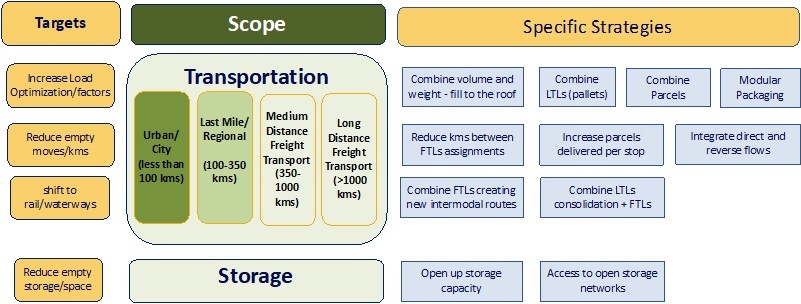
Within this thematic group we build and share knowledge and practical guidance and use cases to reduce emissions and increase efficiency of supply chains following the specific strategies and targets and in the different scopes included in the figure below:
Currently the group is busy with these activities:
Applied Collaboration streams increase-use-of-rail ALICE-express
Cities across Europe are rethinking how urban space can serve both people and logistics. The “Shared Cities” session at the ALICE Logistics Innovation Summit 2025 explored how parking areas, markets, and other underused infrastructures can be repurposed into shared, multifunctional logistics hubs – a key step toward zero-emission and
Read moreOn 16-17 September 2025, Brussels will host the sixth edition of the European Research and Innovation (R&I) Days, the European Commission’s flagship event for shaping the future of science, technology, and innovation in Europe. With a growing focus on strategic
Read moreThe European Union is a global leader in science and discovery. The European Union, UK and Switzerland produce around one-third of the world’s scientific publications, making it one of the largest contributors to global research. A large share of Nobel
Read more
Understanding how intermodal transport is planned, implemented, and experienced in practice is essential for strengthening resilience and efficiency in European logistics networks. This webinar is centrally focused on the Intermodal Transport Survey, presenting its objectives, structure, and initial reflections, and
Read moreThe Alliance for Logistics Innovation through Collaboration in Europe (ALICE) announces to its members the General Assembly to be held on 2nd February 2026 from 14:00 to 17.00. AGENDA The General Assembly is an event exclusively for ALICE Members. Information
Read more The transport, logistics and supply chain landscape is undergoing profound and continuous change. From geopolitical disruptions to shifting socio-economic trends, businesses across Europe are facing a new level of complexity and uncertainty. In response to these pressing challenges, the
Read more
In the ever-evolving world of logistics and transport, the quest for sustainable and efficient solutions is becoming increasingly critical. ALICE, with the support of TRANSPOREON, prepared a White paper “Increasing the Use of Rail and Intermodal Transport in Europe: Integration of rail
Read moreALICE aims to facilitate value and impact creation out of research implementation through practical freight and logistics innovations addressing societal challenges. From a common effort of ALICE Supply Network Coordination and Collaboration Thematic Group & ALICE secretariat a position paper
Read moreDownload the Roadmap In response to the Paris Agreement, more and more governments, associations, and businesses are setting bold climate targets. As set out in the European Green Deal, the ambition for Europe is to be the first climate-neutral continent
Read moreRelated LinkedIn posts:
TG4 Knowledge Platform (ALICE members only)
TG4 past events, news and documents