Monday, June 22nd, 2026
Logistics is a fundamental pillar of European competitiveness, enabling the movement of goods, supporting industrial productivity, connecting markets and ensuring societal well-being. As Europe navigates the green and digital transitions, logistics is becoming an increasingly strategic asset for achieving economic growth, resilience and sustainability simultaneously.
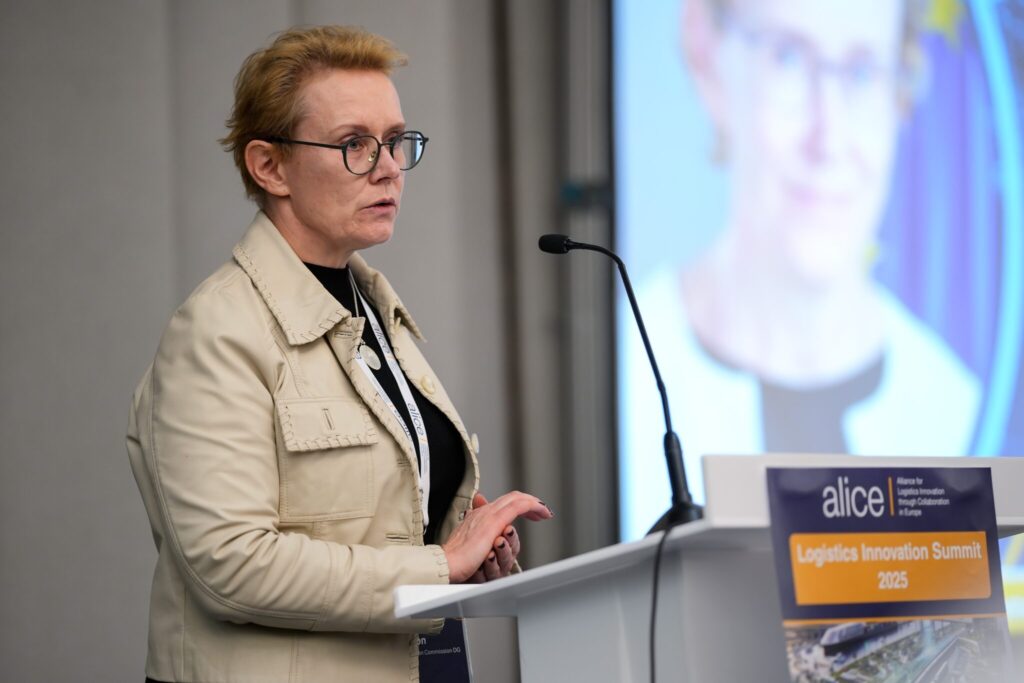
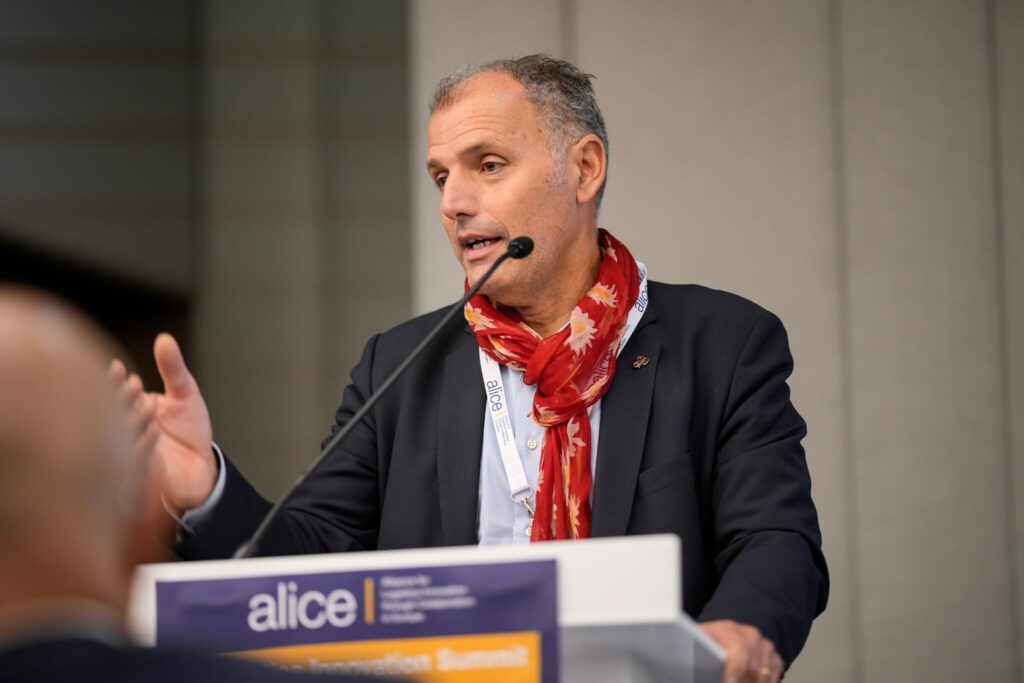
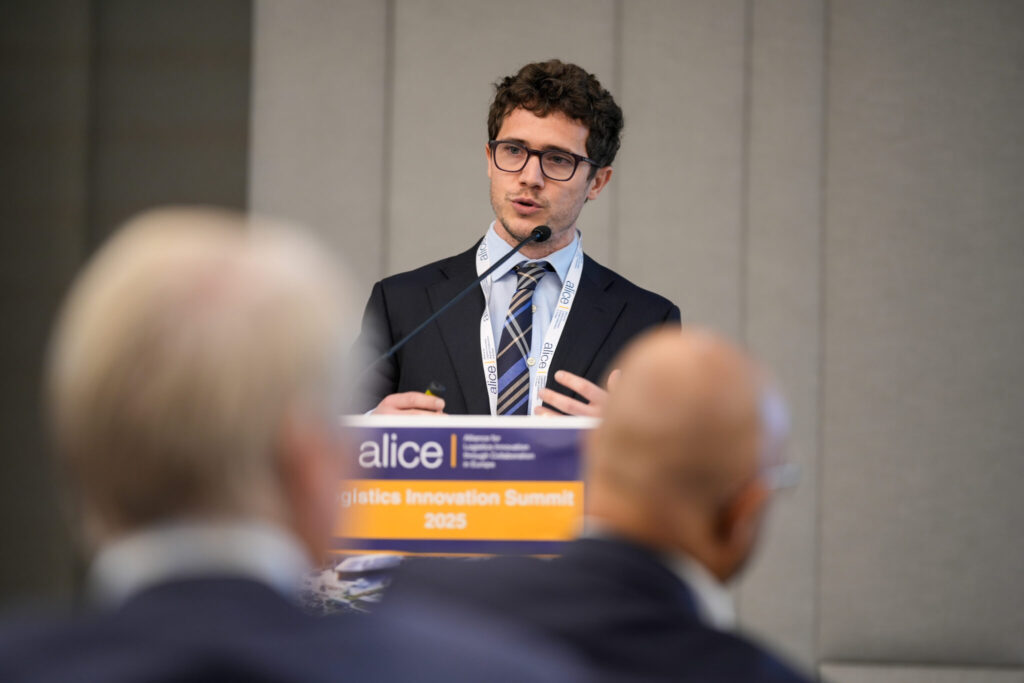
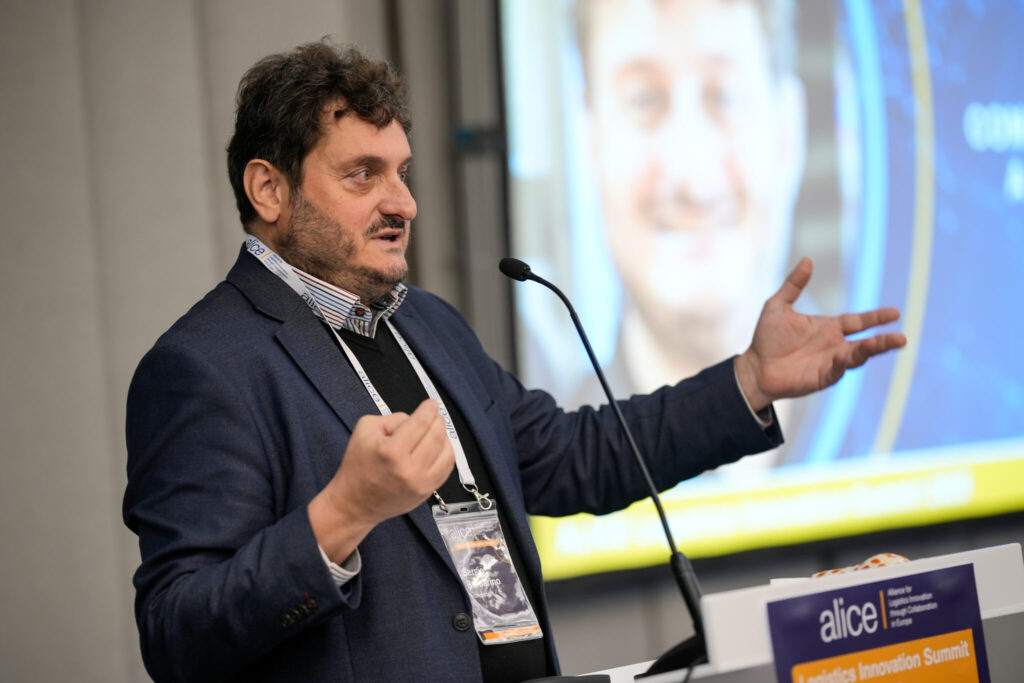
The opening plenary of the ALICE Logistics Innovation Summit 2025 explored how logistics can strengthen Europe’s competitiveness in a rapidly changing global environment. Moderated by Fernando Liesa, Secretary General of ALICE, the session brought together Annika Krohn (European Commission DG MOVE), Andrea Gentili (European Commission DG RTD), Paolo Giacobbe (Contract Logistics Observatory, Politecnico di Milano) and Sergio Barbarino (Former ALICE Chair and Procter & Gamble Research Fellow) to discuss the policy frameworks, market trends and innovation pathways shaping the future of logistics.
A key message throughout the session was that Europe has entered a new implementation phase. Annika Krohn highlighted how the European Green Deal and the previous European Commission mandate have delivered an unprecedented package of legislative initiatives aimed at accelerating decarbonisation while strengthening competitiveness. Measures included within the Fit for 55 package, the Greening Freight Transport Package, CountEmissionsEU, FuelEU Maritime and the Electronic Freight Transport Information (eFTI) Regulation are now adopted or close to adoption and will significantly reshape the logistics landscape in the coming years.
Particular attention was given to the Greening Freight Package, which aims to improve freight transport efficiency while reducing environmental impacts. The package includes initiatives on railway capacity management, incentives for zero-emission road freight vehicles, multimodal transport and CountEmissionsEU, which provides a common methodology for calculating greenhouse gas emissions from freight transport operations. These developments are closely linked to ongoing European efforts to harmonise emissions measurement and reporting across logistics chains, including activities supported by the CLEVER project.
Beyond creating new compliance requirements, these initiatives provide opportunities for logistics stakeholders to improve efficiency, embrace digitalisation and accelerate the transition towards low-emission operations. Krohn emphasised that organisations capable of adapting to this evolving policy environment will be better positioned to compete in the future logistics market. ALICE was highlighted as a key actor in helping stakeholders understand, anticipate and benefit from these developments by connecting innovation, regulation and deployment activities.
Andrea Gentili focused on the priorities of the new European Commission mandate, where competitiveness has become a central policy objective. Through initiatives such as the Competitiveness Compass and the Clean Industrial Deal, Europe seeks to ensure that industrial leadership, innovation and decarbonisation reinforce one another. He stressed that bridging the innovation gap will be critical to maintaining Europe’s global position, requiring not only research excellence but also effective deployment and scaling of innovative solutions. Large-scale demonstrations, cross-sector collaboration and deployment-oriented research programmes will play an important role in accelerating the uptake of zero-emission transport technologies, automation and digital logistics solutions.
This perspective closely aligns with ALICE’s long-standing advocacy on moving beyond Technology Readiness Levels (TRLs) and focusing on pathways to impact. Innovation success increasingly depends on business readiness, market adoption, regulation, standardisation and collaboration between stakeholders, rather than technology development alone.
Providing the market perspective, Paolo Giacobbe presented insights from the Contract Logistics Observatory of Politecnico di Milano. He highlighted that logistics remains one of the key enablers of economic growth and competitiveness, yet often lacks visibility due to the sector’s fragmentation and complexity. At the same time, logistics companies are facing an increasingly challenging environment shaped by digitalisation, automation, sustainability requirements, demographic shifts and geopolitical uncertainty. To help stakeholders better understand these transformations, ALICE and Politecnico di Milano announced plans to develop a European Logistics Market and Innovation Observatory, providing market intelligence and evidence-based insights to support strategic decision-making across Europe.
Closing the plenary, Sergio Barbarino invited participants to view logistics not as a support function but as a strategic business capability. Drawing on his experience at Procter & Gamble, he demonstrated how logistics and transportation have become essential drivers of competitiveness, resilience and sustainability. He shared examples of how research and innovation projects have influenced operational practices within P&G and highlighted the role of collaboration, standardisation and system-wide approaches in accelerating logistics transformation.
Barbarino also reflected on the impact of ALICE’s work over the past decade. He noted that the ALICE roadmap on freight transport and logistics decarbonisation helped shape P&G’s own transport decarbonisation strategy and highlighted the contribution of ALICE and collaborative European initiatives to the development of harmonised carbon accounting methodologies. These efforts contributed to the emergence of common frameworks for emissions measurement and reporting that are now supporting decarbonisation efforts across the logistics sector.
Across all interventions, a common conclusion emerged: Europe’s competitiveness will increasingly depend on its ability to combine sustainability, digitalisation, innovation and collaboration into a coherent logistics transformation strategy. While significant policy frameworks and technological solutions are already available, the next challenge is implementation. Bridging the gap between innovation and large-scale adoption will be essential to ensuring that logistics continues to support Europe’s economic prosperity, industrial leadership and climate ambitions.
Read the full session report (restricted access) on the ALICE Knowledge Platform and download the short PDF version here https://www.etp-logistics.eu/wp-content/uploads/2025/10/P1-Logistics-as-a-driver-for-competitiveness.pdf