Wednesday, June 24th, 2026
One year after the publication of the Expert Group on Urban Mobility (EGUM) Recommendations on Urban Logistics, European cities are increasingly moving from policy recommendations to practical implementation. The session “From EGUM recommendations to practice: One year of progress in shaping urban logistics” at the ALICE Logistics Innovation Summit 2025 examined how guidance on Sustainable Urban Logistics Plans (SULPs), data sharing and innovation deployment is helping cities integrate freight transport into broader urban mobility strategies.
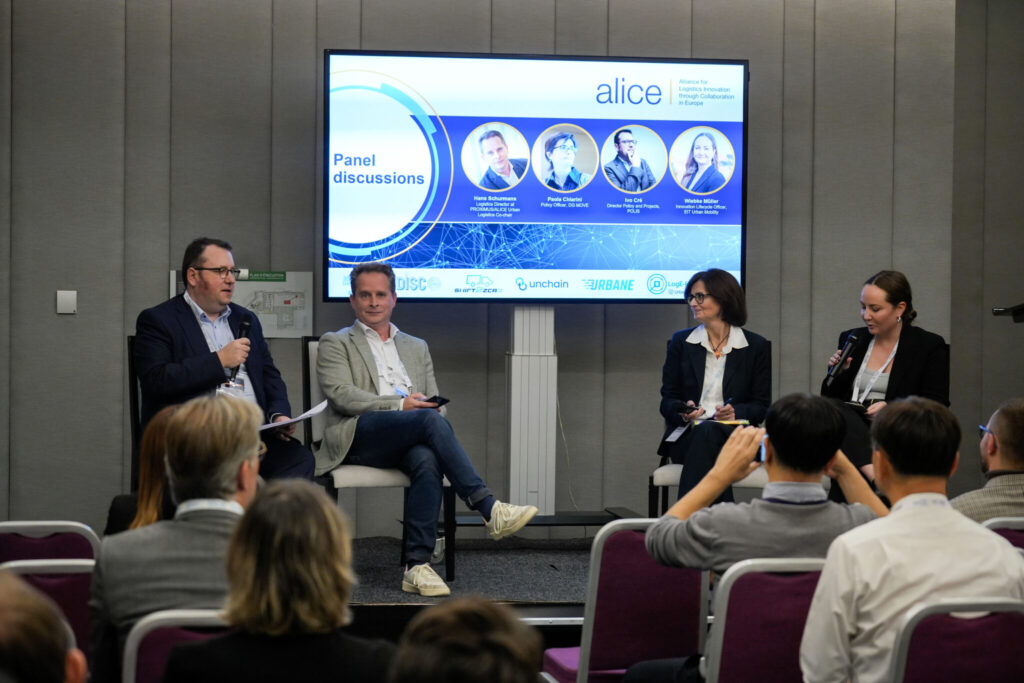
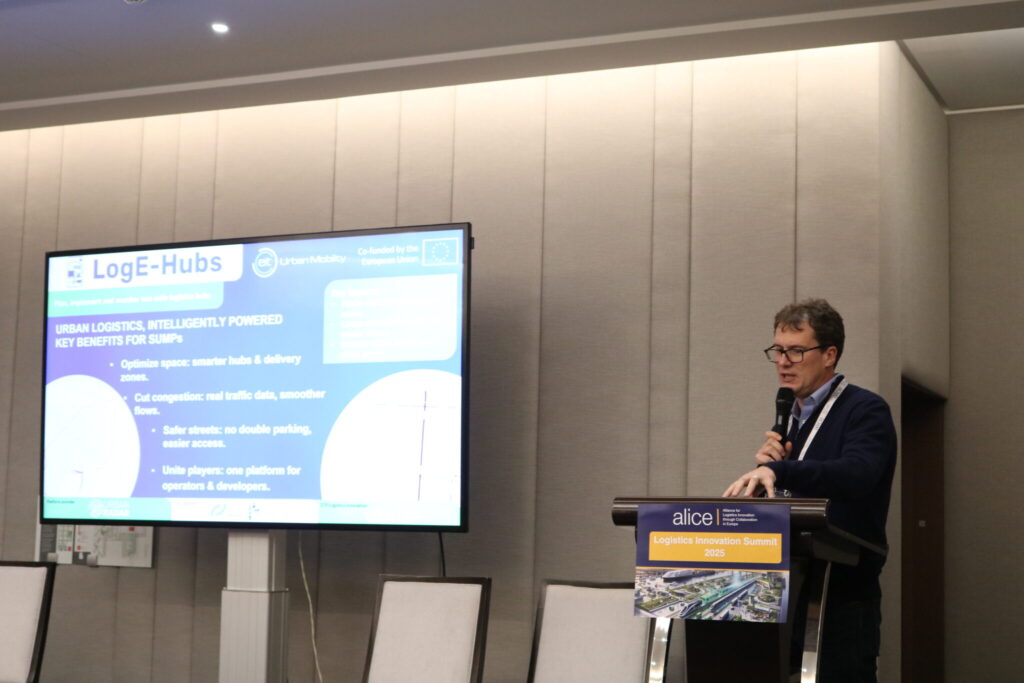
Hosted by Yanying Li, Head of Programmes and Knowledge Management at ALICE, the session brought together Paola Chiarini (European Commission DG MOVE), Eleonora Ghetti (Shift2Zero), Bartosz Kożuch (GreenTurn), Ivo Cre (POLIS) and Hans Schurmans (PROXIMUS). The discussion was also linked to several European projects supporting urban logistics innovation, including DECARBOMILE, URBANE, LogE-Hubs, UNCHAIN and Shift2Zero.
Opening the session, Paola Chiarini presented recent progress in implementing the EGUM recommendations and highlighted the growing importance of urban logistics within European transport policy. She explained that freight transport is now firmly embedded within the EU Urban Mobility Framework and the revised TEN-T Regulation, requiring 431 urban nodes to integrate freight considerations into Sustainable Urban Mobility Plans (SUMPs) by 2027.
Chiarini also outlined several supporting measures, including the establishment of National SUMP Contact Points, the revision of SUMP Guidelines to strengthen freight planning and the inclusion of urban logistics within the future European Mobility Data Space. Together, these developments demonstrate how urban logistics is becoming an integral component of sustainable urban mobility rather than a standalone policy area.
The session then explored how European research and innovation projects are translating these policy ambitions into practical solutions.
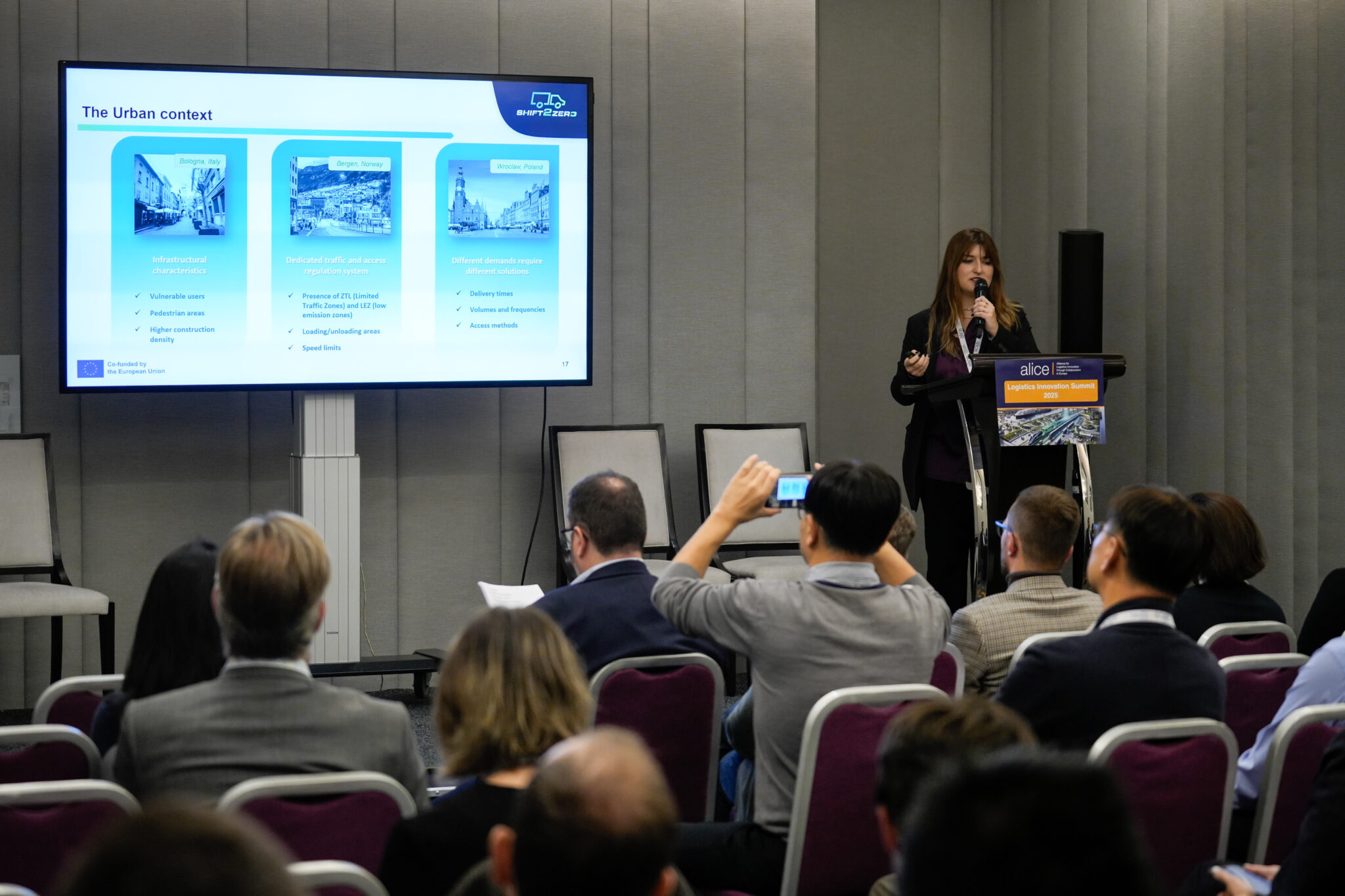
Eleonora Ghetti presented the Shift2Zero project, which is developing adaptable zero-emission vehicles and modular logistics systems for urban freight transport. Through demonstrations in Bologna, Brussels, Thessaloniki, Wrocław and Bergen/Oslo, the project is testing electric light commercial vehicles equipped with modular cargo systems and innovative concepts such as the SwapBox system, which enables efficient transfers between larger and smaller vehicles at low-emission zone boundaries. The project also explores technologies including geofencing, thermal management and advanced energy control systems to improve operational performance.
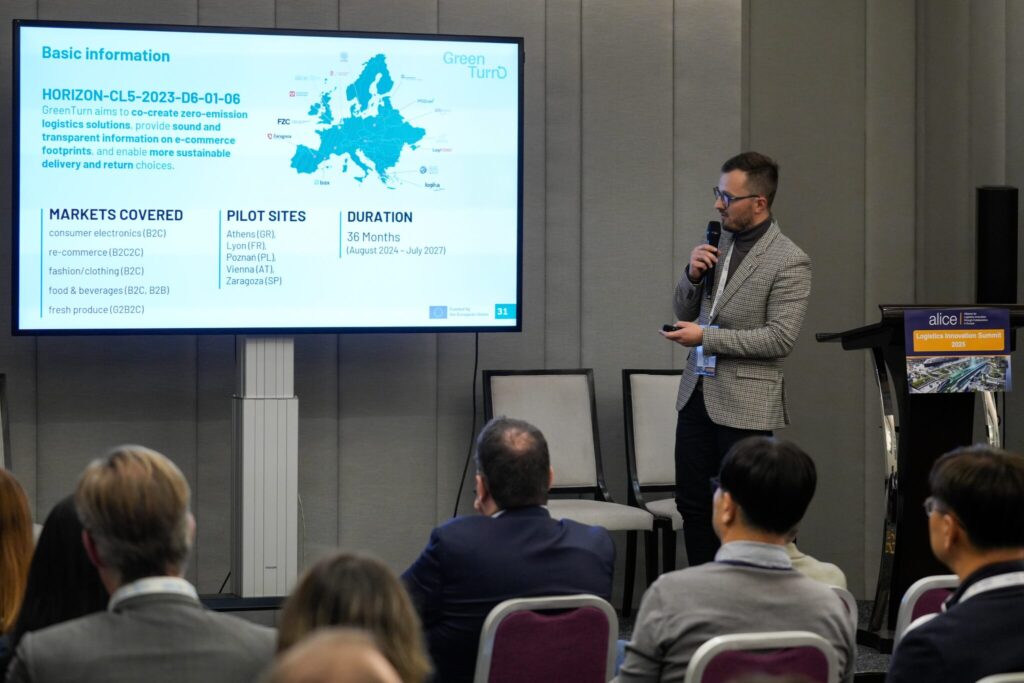
Complementing the technological perspective, Bartosz Kożuch introduced the GreenTurn project, which focuses on consumer behaviour and sustainable e-commerce logistics. Research carried out in Athens, Lyon, Poznań, Vienna and Zaragoza revealed that while most consumers continue to prefer home delivery, a significant proportion would be willing to switch to greener delivery options if they are visible, convenient and cost-neutral. The project is also examining how behavioural incentives, communication strategies and data-driven approaches can support more sustainable delivery choices and reduce the environmental impacts associated with returns.
Together, the two projects demonstrated how the core pillars of the EGUM recommendations are being implemented in practice: integrated planning through SULPs, data-driven decision-making and innovation deployment through real-world pilots.
The panel discussion shifted attention towards the challenges of long-term implementation. Ivo Cre highlighted that many cities have embraced the principles promoted by EGUM but continue to face challenges related to cross-departmental coordination, governance and funding continuity. Hans Schurmans provided the private-sector perspective, explaining that businesses are investing in electrification and digital solutions but often face regulatory fragmentation and insufficient infrastructure. He stressed the importance of harmonised standards and predictable regulatory frameworks to support investment decisions.
Throughout the discussion, data governance emerged as a critical enabler of progress. Speakers agreed that trusted and standardised data-sharing frameworks are essential for collaboration between public authorities and private stakeholders. They also emphasised the need for cultural change, arguing that logistics should be treated as a mainstream urban planning priority alongside public transport, cycling and other mobility services.
A clear message emerged from the session: Europe has moved beyond recommendations and entered a phase of institutionalisation, where urban logistics is increasingly embedded in planning frameworks, policy instruments and innovation programmes. The next challenge is scaling successful solutions, strengthening collaboration and ensuring that cities, businesses and citizens work together towards zero-emission urban logistics.
Read the full session report (restricted access) on the ALICE Knowledge Platform and download the short PDF version here https://www.etp-logistics.eu/wp-content/uploads/2025/10/1C-EGUM-Session-PDF_clear.pdf