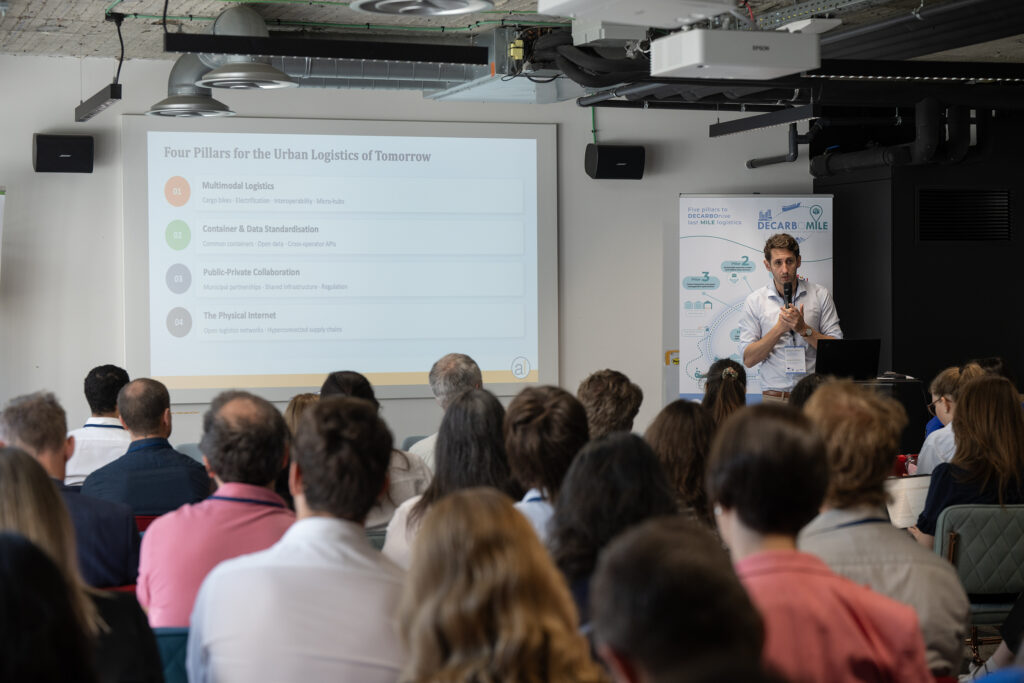
Monday, June 22nd, 2026
Urban logistics is undergoing a profound transformation. Cities face growing pressure to reduce emissions, improve efficiency, manage limited urban space and accommodate increasing delivery demand. Against this backdrop, the final event of the GREEN-LOG and DECARBOMILE projects brought together cities, logistics operators, researchers, policymakers and European projects to discuss how innovative solutions can move from pilots to large-scale deployment.
A common message emerged throughout the event: many of the technologies needed to improve urban logistics already exist. The challenge now is scaling solutions, strengthening collaboration, and creating the governance, business and policy conditions needed for long-term implementation.
The event also provided an important opportunity for ALICE members and project partners to showcase their own experiences, pilot results and innovative solutions while learning from the achievements and challenges encountered by other European projects and cities. Through the exchange of practical experiences, participants were able to identify common barriers, discover transferable solutions and strengthen collaboration across the urban logistics community.
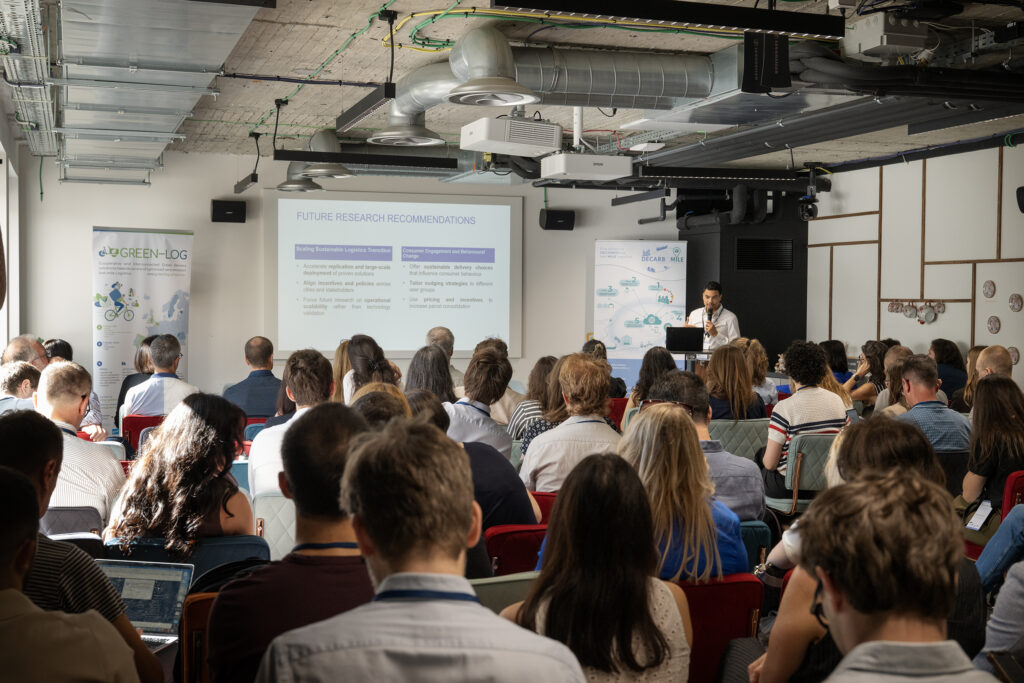
The event opened with reflections from Yannick Bousse (CINEA), Amalia Ntemou (GREEN-LOG) and Pauline Buosi (DECARBOMILE), who presented the main achievements, lessons learned and future priorities emerging from both projects. Together, they highlighted how collaborative logistics models, digital tools, multimodal solutions and shared infrastructure have demonstrated tangible benefits in real urban environments, while also underlining the importance of replication, interoperability and long-term deployment. Yannick Bousse also reflected on future research and innovation priorities, highlighting the need to accelerate the replication and scaling of proven solutions, strengthen multimodal logistics ecosystems, expand interoperable data spaces and digital tools, and further support consumer engagement in sustainable urban logistics. The session set the tone for the day by emphasising that the next challenge is no longer proving that solutions work but creating the conditions for their large-scale adoption across European cities.
Opening the event, Johan Leveque (La Poste Groupe and ALICE Vice-Chair) and Paola Chiarini (European Commission DG MOVE) highlighted the shift from research and experimentation towards deployment. Their presentations emphasized multimodality, standardization, digitalization and public-private collaboration as key enablers of future urban logistics systems.
Both speakers stressed that urban logistics is becoming a strategic European priority, supported by new policy initiatives, funding opportunities and growing recognition of its role in competitiveness, sustainability and quality of life.
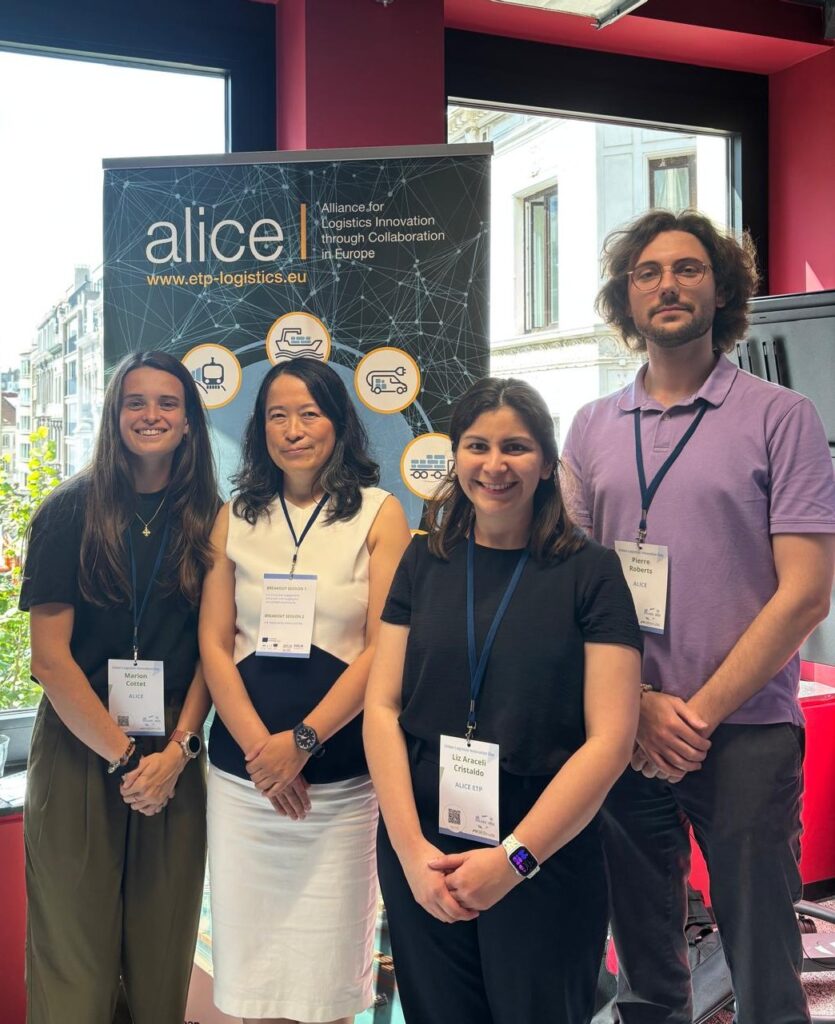
Moderated by Marion Cottet (ALICE), the plenary session explored how data spaces can support secure and trusted data sharing between cities, logistics operators and technology providers.
Partners from Vitoria Gasteiz Mobility Lab, GREEN-LOG, DECARBOMILE and DISCO projects, who all developed data spaces, exchanged on the potential of such initiatives. Facilitating data sharing, while ensuring safety, sovereignty and trust between stakeholders to level up existing digital tools and enable sustainability and efficiency of urban mobility and goods transport.
Consumer behavior emerged as a critical factor in achieving more sustainable urban logistics. Research presented through the GreenTurn project, the GREEN-LOG Logistics-as-a-Service Marketplace, the Flemish Living Lab pilots and the CodeZero initiative showed that consumers are willing to choose more sustainable delivery options when they remain convenient, affordable and easy to understand. Examples from IKEA Norway’s Click & Collect Near You pilot demonstrated how communication, visibility and behavioral incentives can influence delivery choices without restricting consumer freedom. The session also highlighted the role of digital platforms, incentives and nudging mechanisms in translating behavioral insights into operational logistics solutions.
The session reinforced that successful urban logistics solutions must consider not only operational efficiency but also how users make decisions.
This session explored how cities can make better use of existing infrastructure, urban space and transport networks to support more sustainable logistics operations. Contributions from ACS, Oxfordshire County Council, e-novia, Ferrocarrils de la Generalitat de Catalunya and the City of Logroño, drawing on experiences from the GREEN-LOG Living Labs in Athens, Oxfordshire, Barcelona and Ispra, showcased solutions ranging from collaborative logistics and shared urban infrastructure to multimodal freight transport, urban consolidation centres, autonomous technologies and flexible logistics hubs. Across all examples, a common message emerged: the greatest opportunities often lie not in building new infrastructure, but in improving coordination, sharing resources and strengthening public-private cooperation to optimise the use of existing urban assets.
The second breakout session focused on digital tools supporting logistics planning and operations.
Partners from GREEN-LOG, DECARBOMILE and Les Boîtes à Vélo presented solutions including forecasting systems, optimization tools, decision-support platforms, digital control towers and digital connectivity initiatives supporting cycle logistics operations. These tools help cities and logistics operators improve route planning, manage logistics flows, and evaluate future scenarios.
A key conclusion was that the greatest value comes not from individual tools but from connected digital ecosystems that combine forecasting, optimization, interoperability and real-time information.
One of the strongest discussions of the day was during this session moderated by Yanying Li (ALICE) which was focused on how successful innovations can move beyond isolated demonstrations.
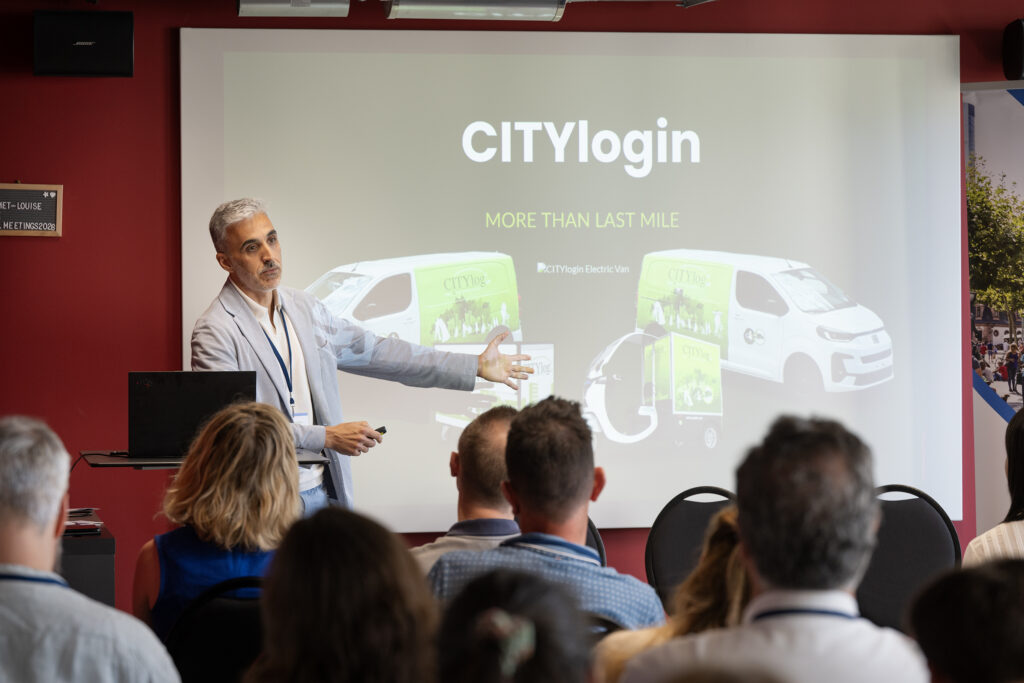
Drawing on experiences shared by Logistics Initiative Hamburg, University of Antwerp, Citylogin and Brussels Environment, as well as examples from Hamburg, Madrid, Zaragoza, Brussels and GREEN-LOG follower cities, speakers highlighted that governance, stakeholder engagement, business models and access to quality data are often more important than technology itself when scaling solutions.
The session demonstrated that successful deployment depends on strong collaboration between cities, logistics operators, infrastructure providers and policymakers, as well as the creation of ecosystems capable of supporting long-term implementation.
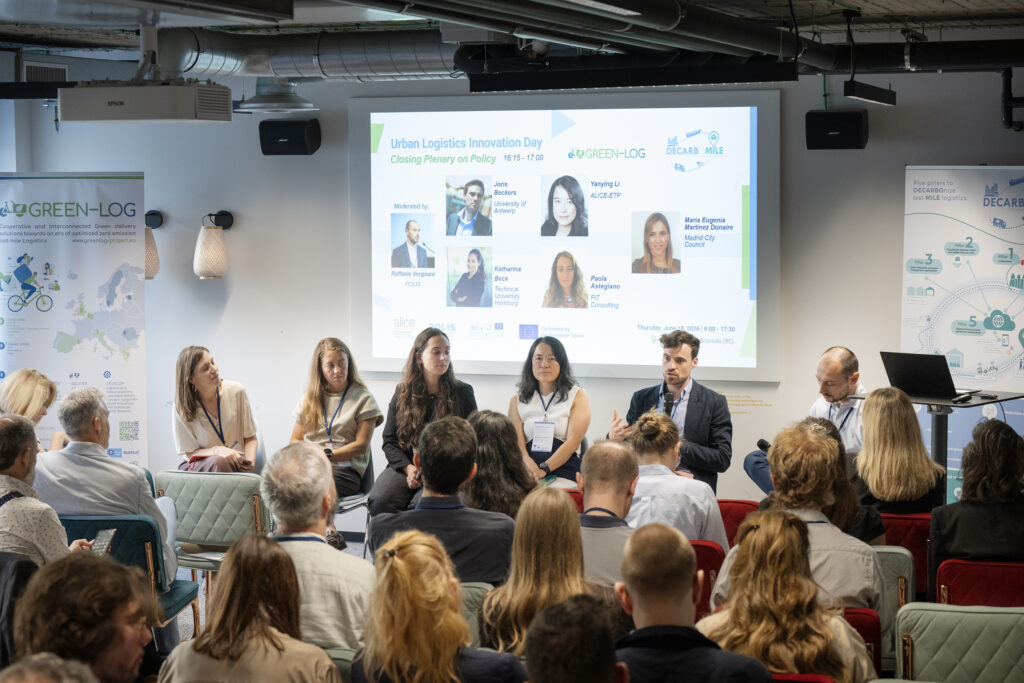
The final plenary brought together representatives from ALICE, the University of Antwerp, TUHH Technical University Hamburg, FIT Consulting and Madrid City Council to reflect on lessons emerging from GREEN-LOG, DECARBOMILE, DISCO as well as the POLIS and ALICE networks.
Panelists agreed that urban logistics is no longer primarily a technological challenge. Future progress will depend on governance, interoperability, stakeholder collaboration and supportive policy frameworks capable of turning successful pilots into lasting solutions.
The discussions also highlighted the importance of integrating freight transport into urban planning and mobility strategies while continuing to strengthen collaboration across the logistics ecosystem.
The GREEN-LOG and DECARBOMILE final event demonstrated that Europe has made significant progress in developing and testing innovative urban logistics solutions. The next challenge is ensuring these solutions can be replicated, scaled and embedded into everyday operations.
Projects such as GREEN-LOG, DECARBOMILE, DISCO, GreenTurn and CodeZero have generated valuable knowledge and practical experience. Building on these results will be essential to accelerate the transition towards more resilient, efficient and zero-emission urban logistics systems across Europe.
A detailed report of the event discussions and recommendations will be made available through the ALICE Knowledge Platform.