Artificial Intelligence (AI) and Digital Twins are rapidly moving from experimentation to real-world deployment across logistics and supply chains. The session “From data to decisions: AI and Digital Twins in the Physical Internet era” at the ALICE Logistics Innovation Summit 2025 explored how these technologies are helping organisations improve decision-making, optimise operations and advance the implementation of the Physical Internet vision.
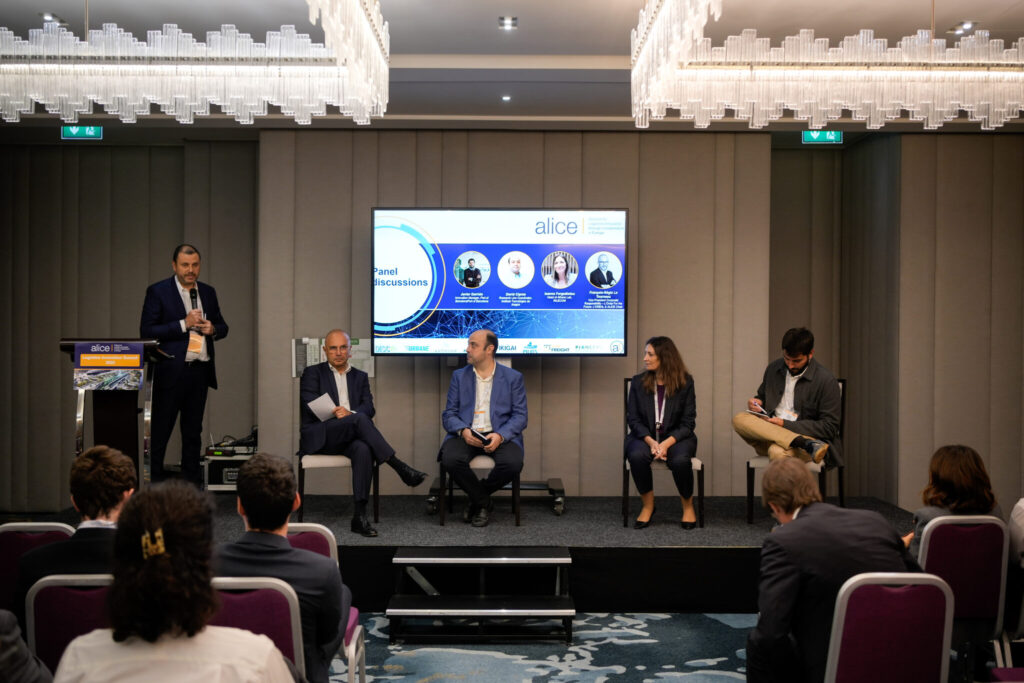
Hosted by Giuseppe Luppino, ALICE Programme Manager for Corridors, Hubs and Synchromodality and Systems & Technologies for Interconnected Logistics, the session brought together experts from academia, industry, technology providers and ports. Speakers included Alberto Curnis (Politecnico di Milano), David Cipres (Instituto Tecnológico de Aragón), Ioanna Fergadiotou (INLECOM), Javier Garrido (Port of Barcelona) and François-Régis Le Tourneau (L’Oréal and ALICE Chair). The discussion also connected to several EU-funded projects, including DISCO, URBANE, AutoSUP, AutoMoTIF, IKIGAI, PILOTS, FOR-FREIGHT, PIONEERS.
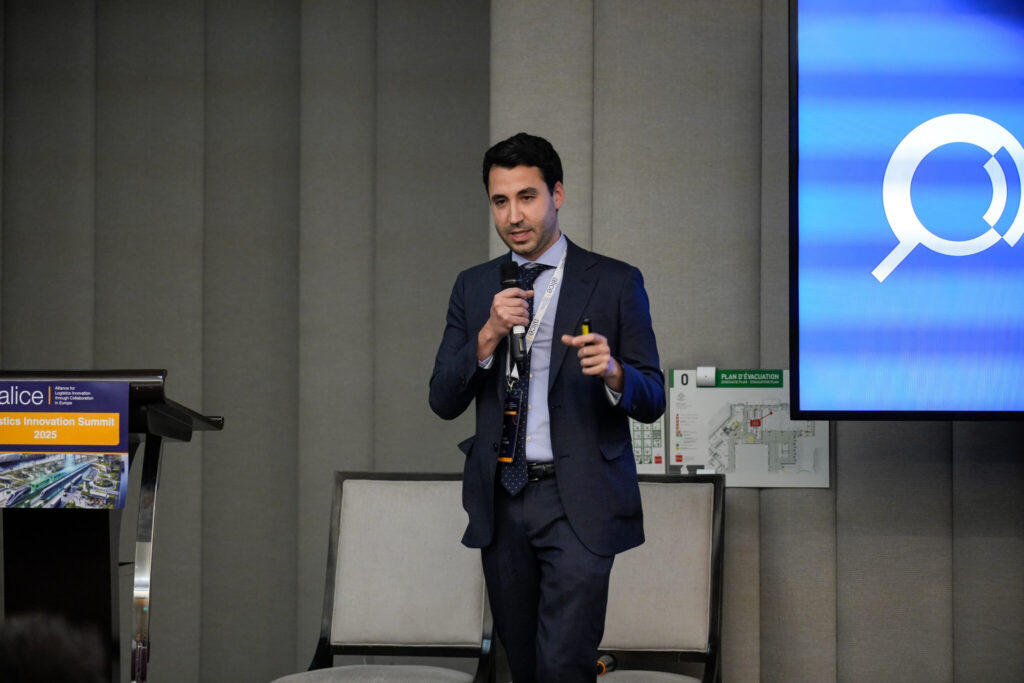
Opening the session, Alberto Curnis presented insights from research on AI adoption across logistics and supply chains. He emphasised that AI should not be viewed as a standalone innovation, but as the next step in a broader digital transformation journey built on process digitalisation, data collection, automation and analytics. He demonstrated how AI is already supporting operational activities such as document processing, forecasting, planning optimisation and resource allocation, delivering measurable improvements in service quality, productivity and efficiency.
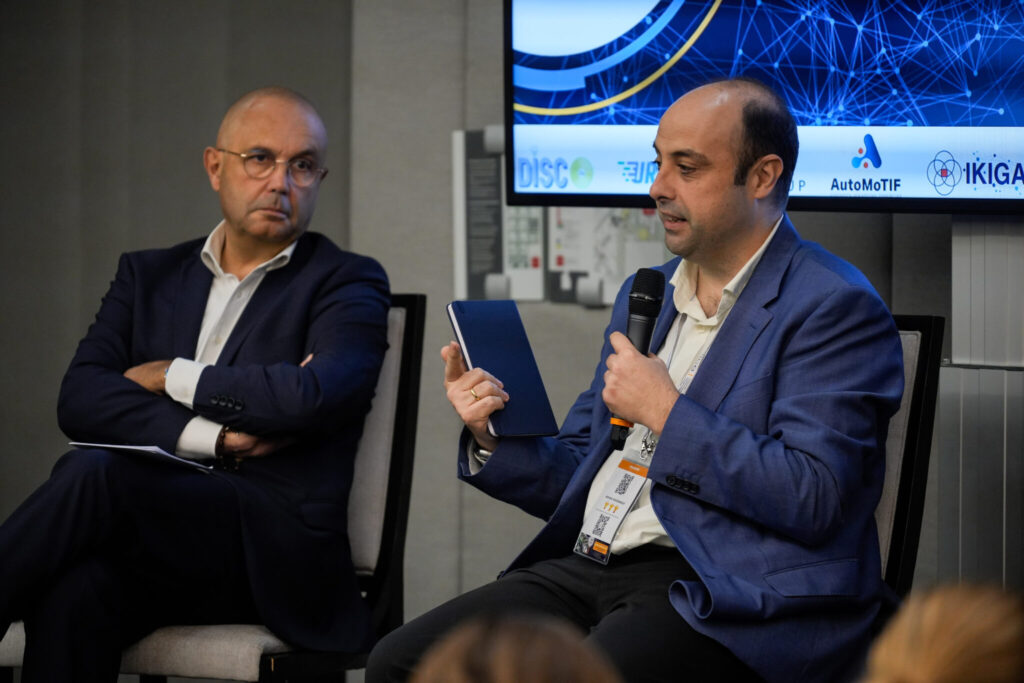
The discussion then turned to the role of Digital Twins in logistics operations. David Cipres highlighted that Digital Twins create value when they move beyond visualisation and actively support decision-making through simulations, scenario testing and operational optimisation. Building trust in these systems, he noted, is essential if organisations are to integrate them into day-to-day business processes.
A recurring theme throughout the session was interoperability. Ioanna Fergadiotou stressed that many research and innovation projects continue to develop solutions independently, creating challenges when systems need to interact or scale beyond individual pilots. She called for greater alignment on standards, architectures and data-sharing approaches, while also highlighting the growing importance of explainable AI to help users understand and trust AI-generated recommendations.
Providing a practical perspective from the port sector, Javier Garrido presented the Port of Barcelona’s experience in deploying AI and Digital Twin technologies. Examples included emissions monitoring, mobility optimisation, vessel tracking and real-time image processing supported by a private 5G network. His presentation demonstrated how ports are increasingly becoming living laboratories for digital innovation and how individual operational use cases can contribute to the gradual development of larger Digital Twin environments.
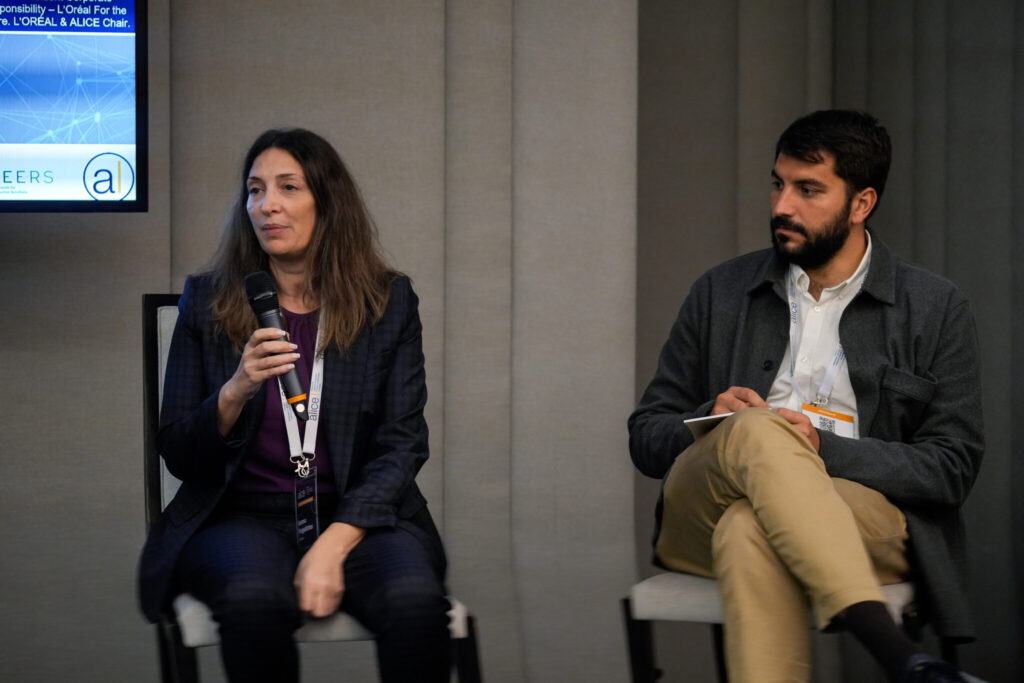
François-Régis Le Tourneau brought the perspective of a global industrial user, emphasising that successful AI adoption must be driven by clear business value. While technological capabilities continue to advance rapidly, he argued that organisational trust, governance and adoption may ultimately be greater challenges than technology deployment itself. He also highlighted the potential of AI and Digital Twins to support demand forecasting, orchestration, optimisation and interoperability within Physical Internet-enabled logistics networks.
Across all interventions, a common message emerged: AI and Digital Twins are no longer future concepts but operational tools capable of supporting more connected, predictive and resilient logistics systems. However, their large-scale adoption will depend on data quality, interoperability, trust and the ability to connect digital intelligence with real-world operational execution.