Ports are evolving beyond their traditional role as transport gateways to become innovation ecosystems, energy hubs and digital connectors within Europe’s logistics network. The session “Smart and green ports, connected hubs: Implementing the EU Port Strategy” at the ALICE Logistics Innovation Summit 2025 explored how ports can support the green and digital transition while strengthening resilience and competitiveness across European freight transport.
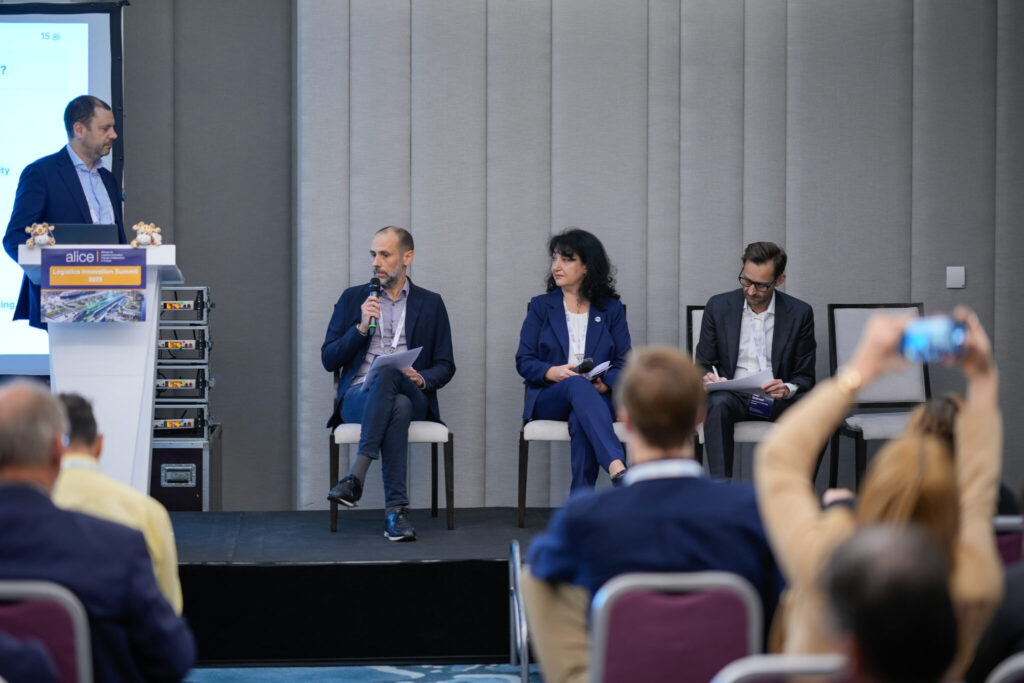
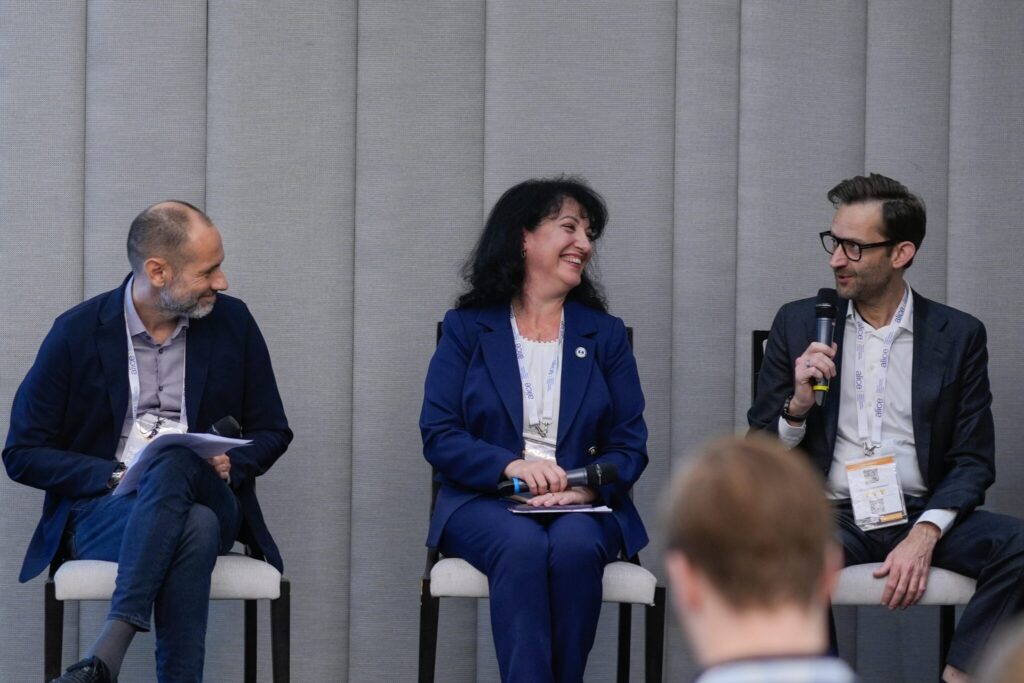
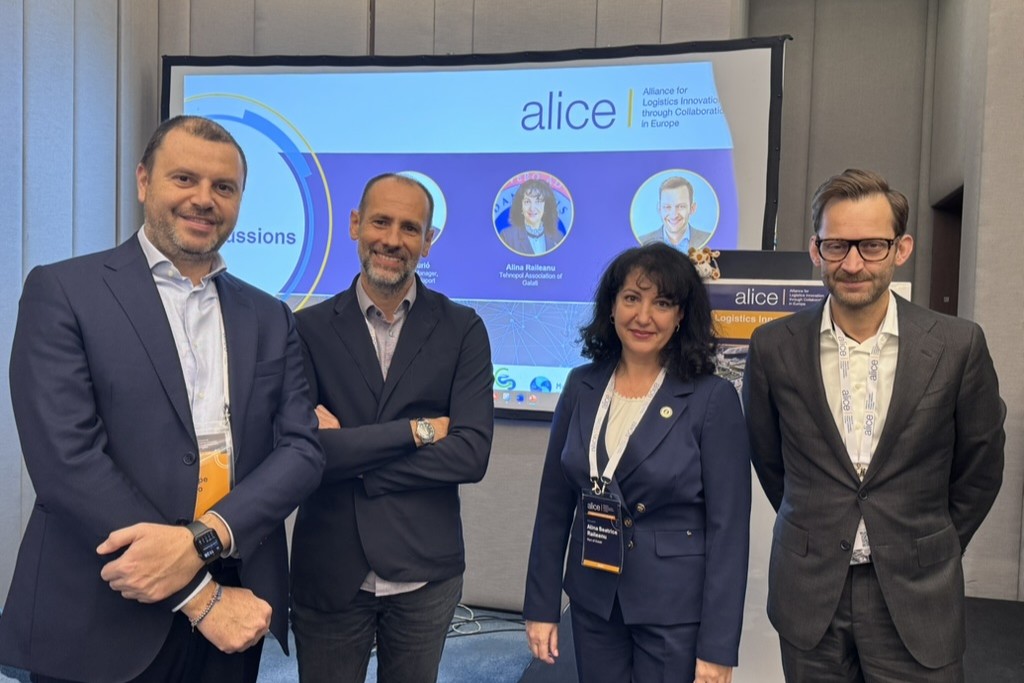
Hosted by Giuseppe Luppino, ALICE Programme Manager for Corridors, Hubs and Synchromodality, the session brought together Jaap Gebraad (Waterborne Technology Platform), Salvador Furió (Valenciaport Foundation) and Alina Beatrice Raileanu (Tehnopol Association, Galati), alongside representatives from projects including PIONEERS, FOR-FREIGHT, MultiRELOAD, TRANSCEND, AutoSUP and AutoMoTIF.
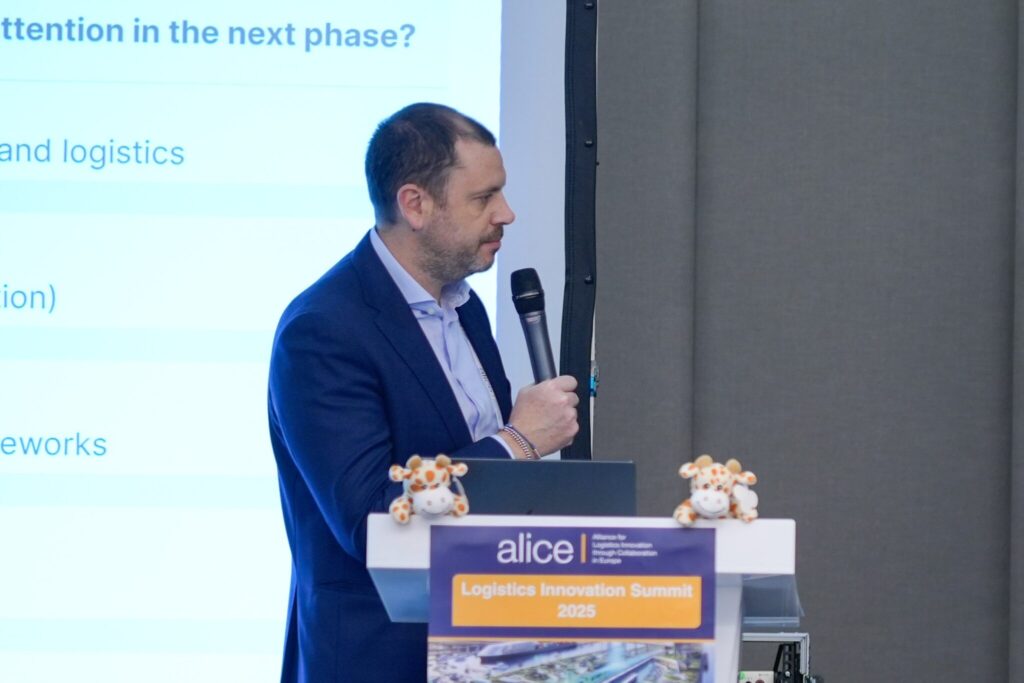
Opening the session, Giuseppe Luppino presented ALICE’s work through the Ports & Hubs Task Force, which is contributing to the development of the forthcoming EU Port Strategy. He highlighted the importance of connecting ports, logistics corridors and inland hubs to create a more efficient, resilient and zero-emission logistics system.
Jaap Gebraad emphasised that the challenge for Europe is no longer only developing innovative technologies, but ensuring their large-scale deployment. While many waterborne transport solutions have already demonstrated their technical feasibility, wider adoption depends on business readiness, investment, ecosystem coordination and stronger public-private cooperation. He also stressed that different vessel types, fuels and operational conditions require tailored pathways towards decarbonisation rather than one-size-fits-all solutions.
From the perspective of a major seaport, Salvador Furió highlighted the role of ports as complex innovation ecosystems involving public authorities, terminal operators, technology providers, research organisations and logistics companies. Drawing on experiences from Valencia, he demonstrated how European projects have supported the development of port community systems, AI-based prediction tools and digital platforms that improve multimodal transport operations. He stressed the importance of ensuring continuity beyond individual projects to maximise the impact of innovation investments.
Representing the inland port perspective, Alina Beatrice Raileanu showcased the strategic role of the Galati ecosystem in the Lower Danube region. With its proximity to Moldova and Ukraine, the region has become increasingly important for resilient and secure freight flows. Projects such as FOR-FREIGHT, PLOTO and Vital5G are supporting digitalisation, communication systems, hazard prediction and stakeholder training, while cybersecurity is becoming an increasingly important priority.
Across all interventions, a common message emerged: successful port transformation depends on more than technology alone. Governance, financing, skills, data sharing, cybersecurity and collaboration across the entire port community are essential to bridge the gap between pilot projects and large-scale deployment.
Audience discussions reinforced the importance of integrating ports with inland corridors and logistics hubs, while also highlighting opportunities in process optimisation, such as port call coordination and just-in-time arrivals. Participants agreed that the future EU Port Strategy should recognise the diversity of European ports and support flexible approaches that enable both large maritime ports and smaller inland ports to contribute to Europe’s green and digital transition.