Wednesday, June 17th, 2026
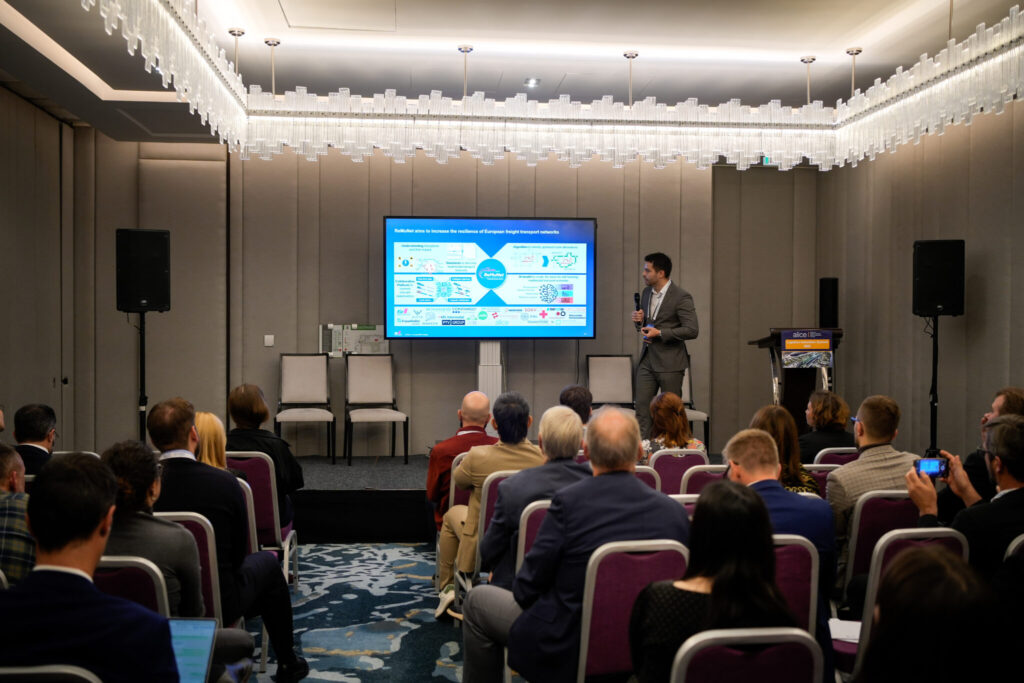
As disruptions become more frequent and complex, resilience is moving to the forefront of logistics and supply chain discussions. The session “From interfaces to resilience: Future-proofing Europe’s supply chains” at the ALICE Logistics Innovation Summit 2025 explored how digital innovation, multimodal connectivity and stakeholder collaboration can strengthen Europe’s freight transport networks while supporting sustainability and competitiveness.
Hosted by Pablo Segura, Junior Project Manager at ALICE, the session brought together experts from industry, research and European projects to discuss how resilience can be embedded into logistics systems and supply chain decision-making. Speakers included Sophie Punte (Life-Links), John von Stamm (FIR at RWTH Aachen), Kris Schroven (Fraunhofer EMI) and Sofoklis Dais (CERTH). The discussion drew on experiences and lessons from several EU-funded projects, including ReMuNet, SARIL, and FOR-FREIGHT. Other projects connected with these topics are TRANSCEND, CRISTAL, PLOTO, , MultiRELOAD and PIONEERS, which are helping strengthen the resilience, sustainability and interoperability of Europe’s freight transport networks.
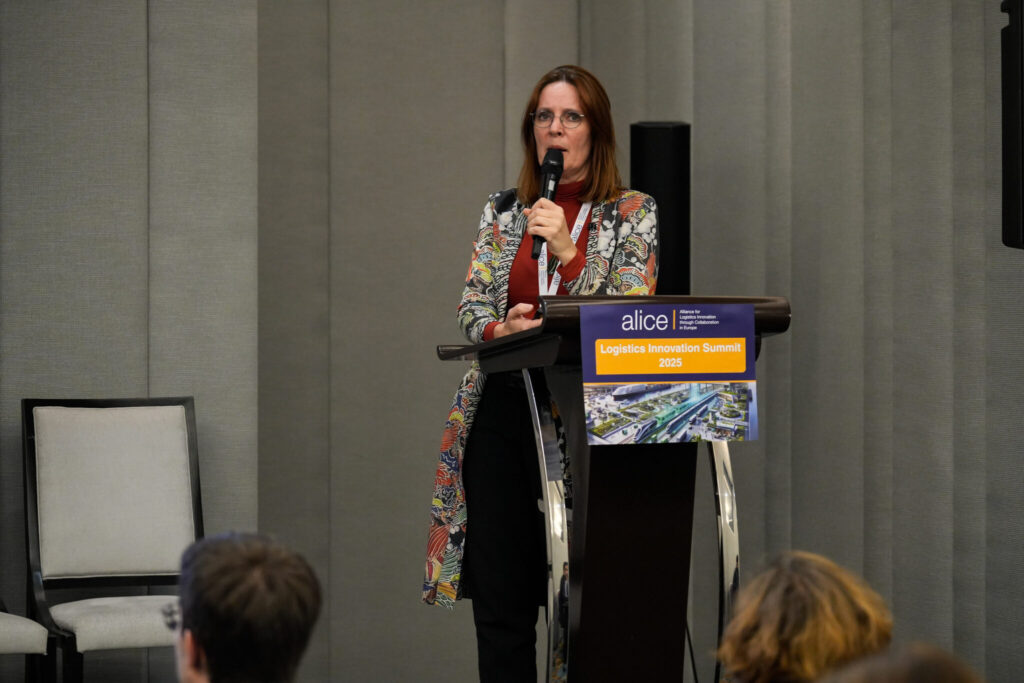
Opening the discussion, Sophie Punte highlighted the growing exposure of global supply chains to disruptions ranging from climate-related events to geopolitical instability. She emphasised that transport links are often overlooked despite being critical to supply chain resilience, particularly for vulnerable communities. Through practical examples from agricultural supply chains, she demonstrated how collaborative risk assessment and targeted interventions can strengthen logistics networks and reduce vulnerabilities.
John von Stamm focused on Europe’s increasing dependence on external sources of critical raw materials and the risks this creates for economic resilience. He argued that the transition towards a circular economy is not only an environmental necessity but also a strategic response to growing resource dependencies. Digital technologies, including digital product passports and collaborative data sharing, were highlighted as important enablers of more predictive and resilient supply chains, while reverse logistics was identified as a key component of future circular systems.
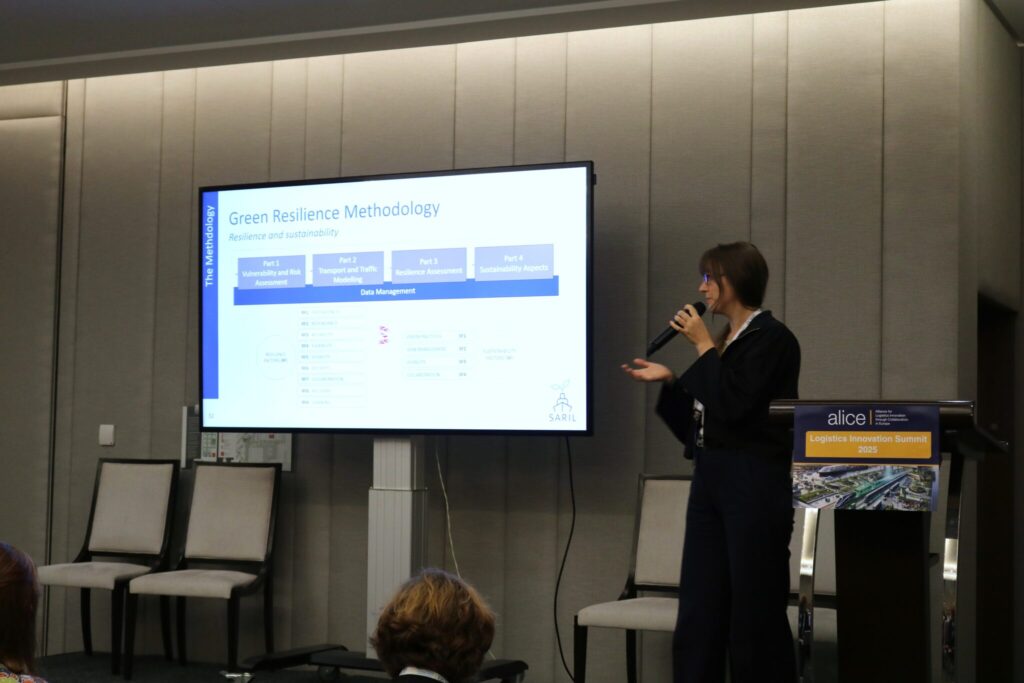
The role of digital tools in strengthening resilience was further explored through the SARIL project. Kris Schroven presented how the project analyses disruptions ranging from pandemics and geopolitical crises to floods, wildfires and cyberattacks. By combining risk assessment, transport modelling and sustainability analysis, SARIL is developing decision-support tools that help stakeholders better anticipate, assess and mitigate disruptions across freight transport networks.
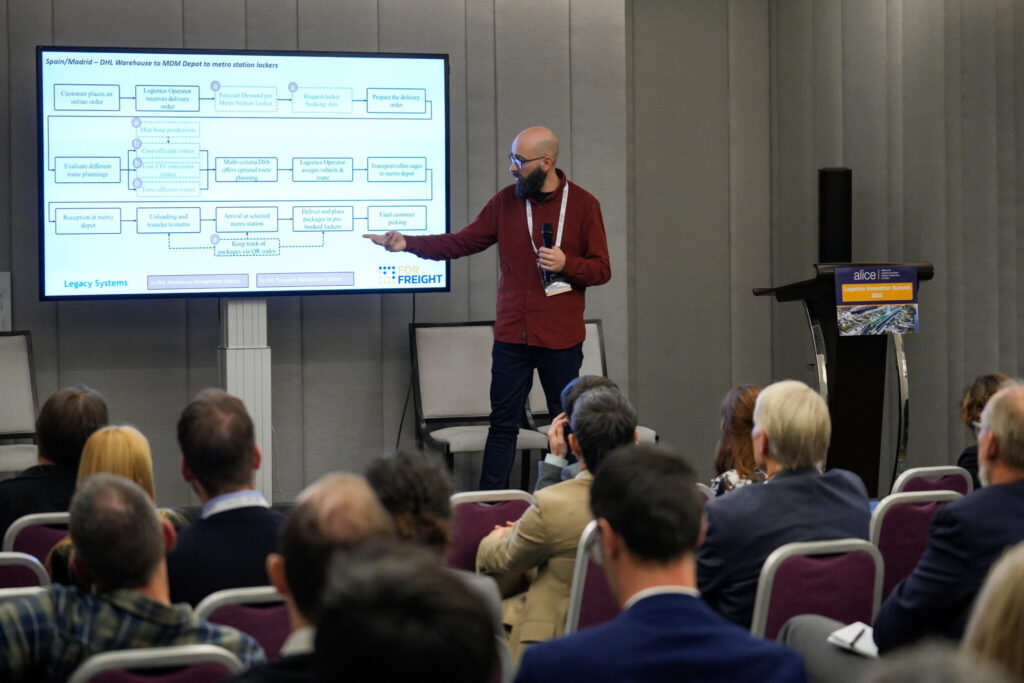
Sofoklis Dais showcased the FOR-FREIGHT project, which focuses on improving multimodal freight transport by addressing inefficiencies at key transport interfaces. Through the use of AI, IoT, digital twins and blockchain technologies, the project supports collaboration between stakeholders and improves operational performance across multimodal supply chains. Pilot implementations in Greece, Romania and Spain have already demonstrated measurable operational and environmental benefits.
Throughout the session, a common message emerged: resilience should not be viewed as separate from efficiency or sustainability. Instead, these objectives must be addressed together. Participants stressed that logistics systems designed solely for efficiency may struggle to cope with unexpected disruptions, while resilient systems are better positioned to maintain performance, support decarbonisation objectives and adapt to changing conditions.
The panel discussion also highlighted the distinction between reliability and resilience. While reliability focuses on maintaining stable operations under expected conditions, resilience is the ability to absorb, adapt to and recover from disruptions. Achieving this requires greater flexibility, redundancy and collaboration across supply chain actors, as well as a shift in mindset towards proactive risk management and long-term system robustness.
The discussion also connected to a broader portfolio of European research and innovation initiatives. Projects such as ReMuNet, TRANSCEND, CRISTAL, PLOTO, MultiRELOAD and PIONEERS are exploring solutions ranging from resilient multimodal networks and collaborative logistics to digitalisation, interoperability and sustainable freight operations. Together with SARIL and FOR-FREIGHT, these initiatives demonstrate how research and innovation can support more adaptive and future-proof supply chains.
The session concluded that building resilient transport networks will be essential for Europe’s future competitiveness. By combining digital innovation, multimodal connectivity and stronger collaboration across stakeholders, logistics systems can become more adaptable, sustainable and better prepared for future challenges.
Read the full session report (restricted access) on the ALICE Knowledge Platform and download the short PDF version here https://www.etp-logistics.eu/wp-content/uploads/2025/10/2C.-Session-Proposal_Resilient-Transport-Net.pdf