Wednesday, June 10th, 2026
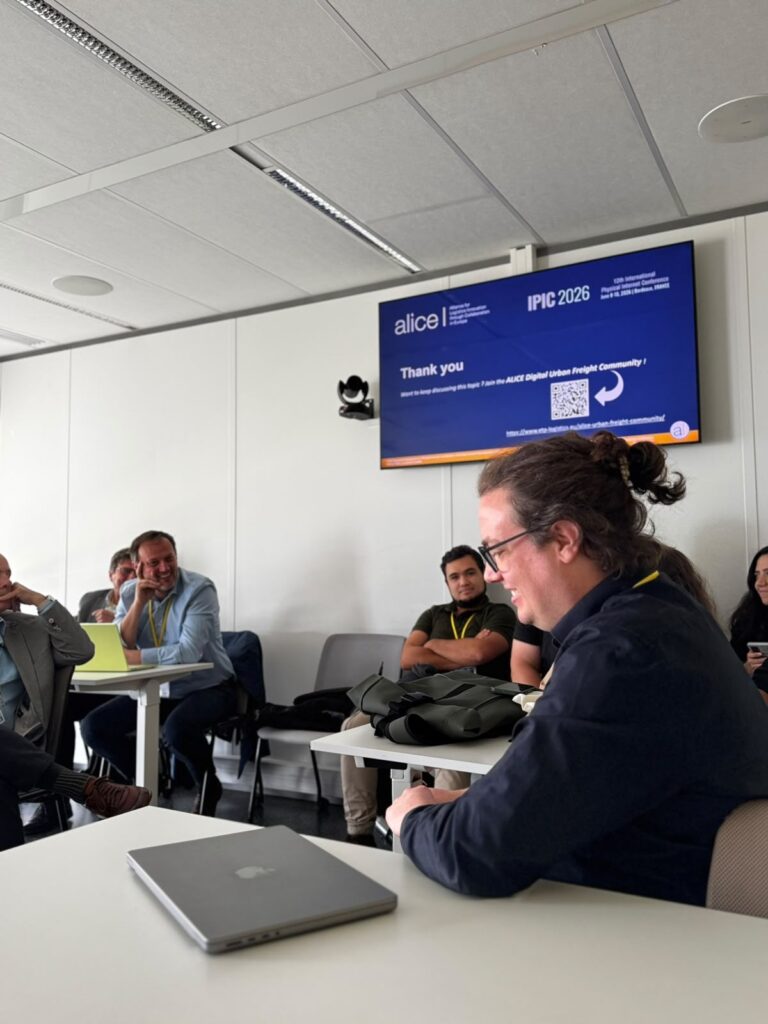
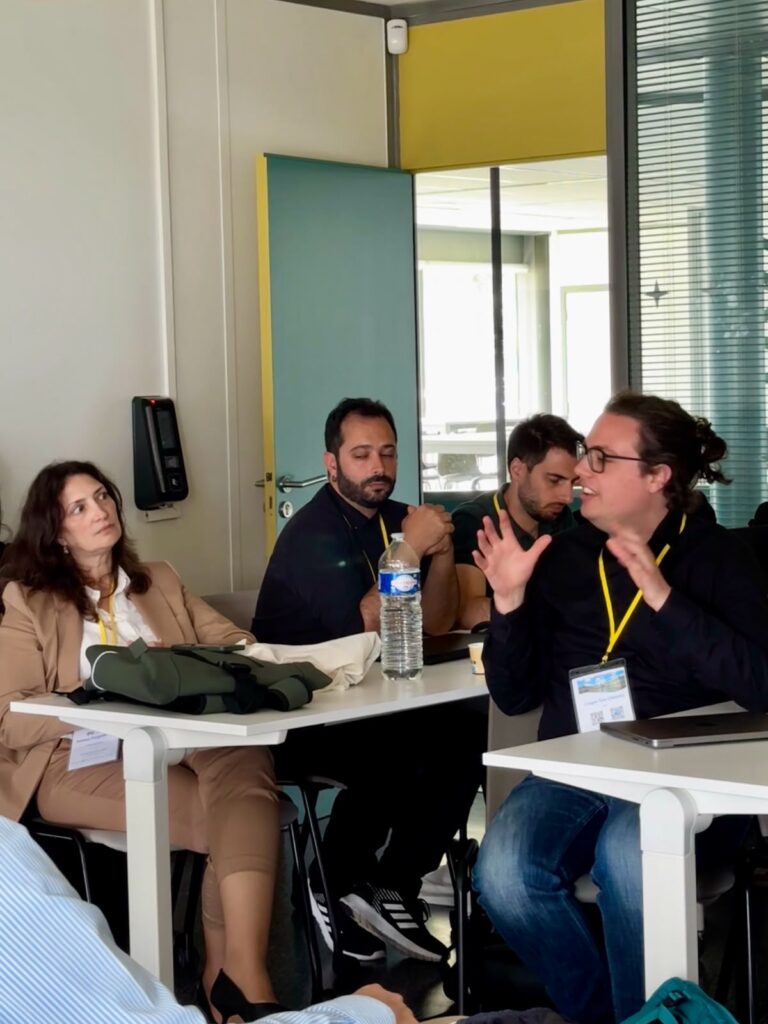
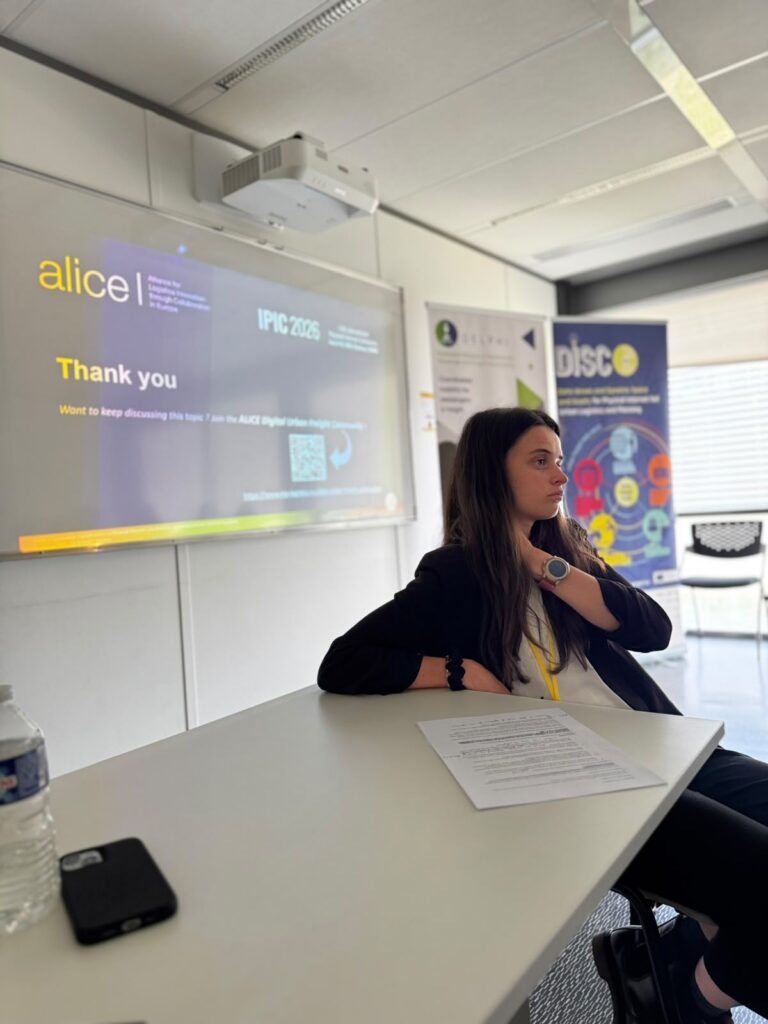
During IPIC 2026, the Practical & Innovation Contributions session “Data Spaces as Enablers of Sustainable and Integrated Urban Logistics” brought together European projects and experts working on interoperability, federated ecosystems and data-sharing frameworks for logistics and mobility.
Moderated by Marion Cottet, the session explored how data spaces are evolving from data-sharing infrastructures into practical enablers of collaboration, optimisation and innovation across urban logistics systems.
Ioanna Fergadiotou (INLECOM) presented the work of the DISCO and URBANE projects, demonstrating how urban freight data spaces can support collaboration between logistics operators while protecting commercially sensitive information.
Using the example of shared parcel locker networks, she showed how data spaces can enable operators to access information about available capacity and infrastructure without revealing customer data or commercial details. This allows logistics providers to optimise deliveries, increase utilisation of existing assets and reduce unnecessary vehicle kilometres while maintaining data sovereignty.
The presentation highlighted how data spaces can create value for operators, cities and citizens simultaneously by enabling infrastructure sharing, improving operational efficiency and supporting urban decarbonisation objectives.
Giannis Kanellopoulos (ICCS) presented the DELPHI project and its work on developing a federated transport management data space supporting combined passenger and freight transport services.
The project demonstrated how different mobility and logistics platforms can be connected through a common interoperability layer while allowing participants to maintain their own technologies and systems. DELPHI developed and tested data-space-enabled services across several European cities, including multimodal parcel delivery concepts, bike-sharing services and smart parking solutions.
A key message from the presentation was that data spaces should be viewed as practical interoperability facilitator rather than complex technical architectures. By providing trusted and secure data exchange, they enable new collaborative services and support the development of integrated mobility and logistics ecosystems.
Casper Van Gheluwe (imec) provided insights from the DeployEMDS project and the emerging European mobility data space ecosystem.
The presentation demonstrated how data spaces can improve the reuse and interoperability of mobility data across cities and regions. Examples included traffic monitoring and AI-enabled transfer learning approaches that allow smaller cities to benefit from advanced analytics without requiring extensive local datasets.
Casper also introduced the BoostEDICM&L initiative, which aims to support the development of a European digital infrastructure for mobility and logistics. The initiative seeks to identify interoperability gaps, support cross-border data-sharing use cases and accelerate the deployment of common digital infrastructures across Europe.
Didac Columinas (EURECAT) presented the GREENLOG project and its work on integrating agentic AI systems within logistics data spaces.
The project explores how AI agents can support decision-making for policymakers, logistics operators and urban stakeholders by combining operational logistics data, urban regulations and sustainability objectives. The approach enables intelligent recommendations while ensuring that data remains under the control of its owners and complies with agreed governance frameworks.
Didac mentioned that particular attention was given to data governance, security and trust mechanisms required to support AI-enabled services in collaborative logistics environments.
Christophe Maurin (Logist-X) concluded the session by focusing on one of the most critical challenges facing logistics digitalisation: semantic interoperability.
His presentation argued that the future of logistics collaboration depends not only on exchanging data but on creating a shared understanding of logistics concepts, processes and business objects. He emphasised the need for common semantic models, interoperable event structures and shared digital identities for logistics assets and services.
Rather than creating additional data silos or proprietary platforms, the proposed approach focuses on enabling organisations to keep ownership of their data while sharing a common language that supports interoperability across supply chains.
A recurring theme throughout the session was that data spaces are not simply tools for exchanging data. Their real value lies in enabling collaboration, resource sharing and coordinated decision-making while preserving trust and data sovereignty.
The discussions highlighted that future logistics systems will require not only technical interoperability but also common governance frameworks, semantic standards and business models that support collaboration at scale.
As Physical Internet concepts continue to move from research to deployment, data spaces are emerging as a key mechanism for enabling the interconnected, transparent and collaborative logistics ecosystems needed to improve efficiency, resilience and sustainability across Europe.