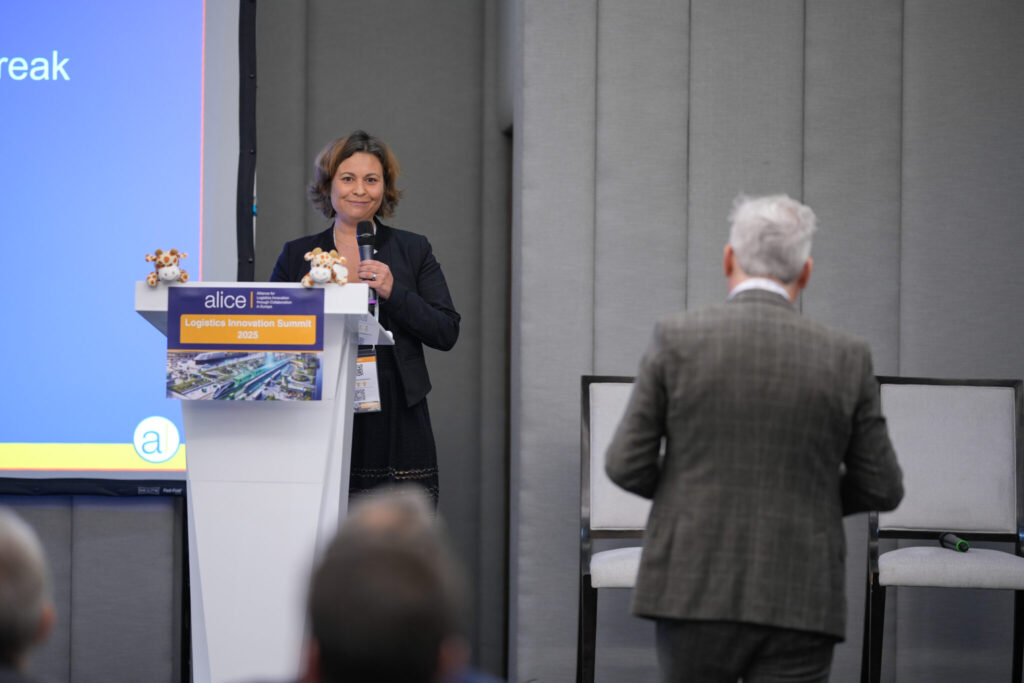
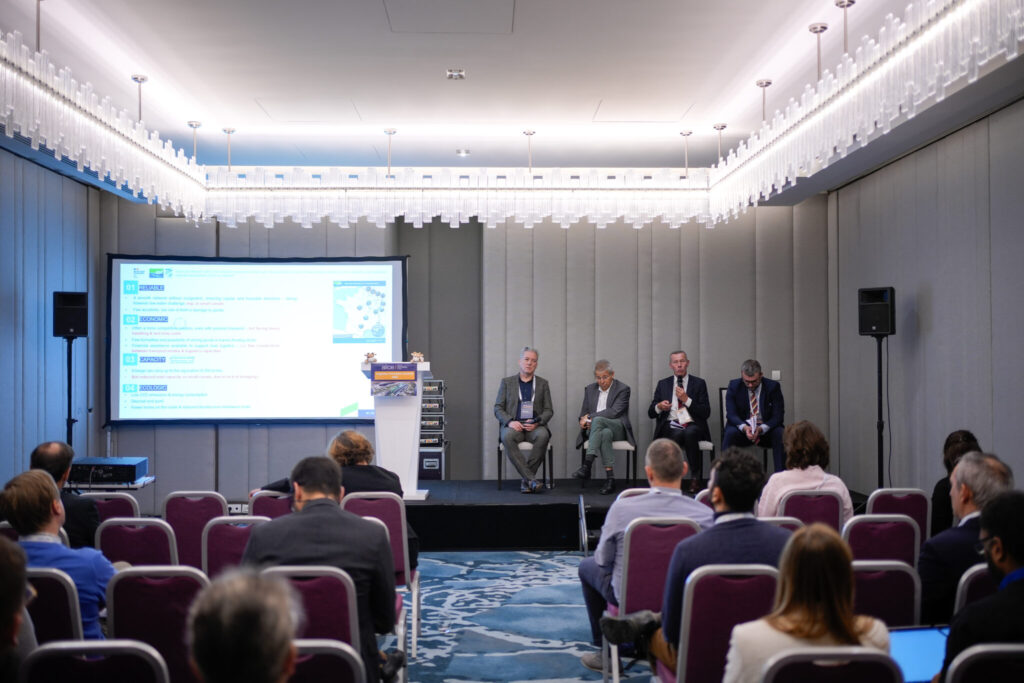
The ALICE Logistics Innovation Summit 2025 highlighted the untapped potential of Europe’s rivers and canals with the session “Rivers of Opportunity: Unlocking Inland Waterways for Urban and Long-Distance Freight”. As the EU accelerates its decarbonisation agenda, inland waterways are increasingly recognised as a clean, efficient, and underused transport mode capable of supporting both urban logistics and long-distance freight flows, while contributing to congestion reduction, emission cuts, and system resilience.
The session was hosted by Elvina Nowak, Project Manager at ETP-ALICE, and coordinated by Nik Delmeire, Senior Expert at ETP-ALICE, together with Marion Cottet, Urban Logistics Deputy Programme Manager and Project Manager at ALICE. It brought together policymakers, innovators, and practitioners active in inland waterway transport, with contributions linked to ALICE-related projects MULTIRELOAD, CRISTAL, FOREMAST, PLOTO, IKIGAI, and DECARBOMILE.
Discussions opened with a shared recognition that inland waterways, despite being one of the most energy-efficient and low-emission transport modes, remain underutilised-particularly in urban contexts. Participants stressed that increasing the use of inland waterway transport is essential to meet Europe’s climate and sustainability objectives, as outlined in EU strategies such as NAIADES III and initiatives supporting the integration of inland waterways into the TEN-T network and local supply chains. At the same time, limited integration with last-mile logistics, fragmented governance between cities and ports, and the need for innovative vessels, terminals, and digital solutions continue to hinder wider uptake.
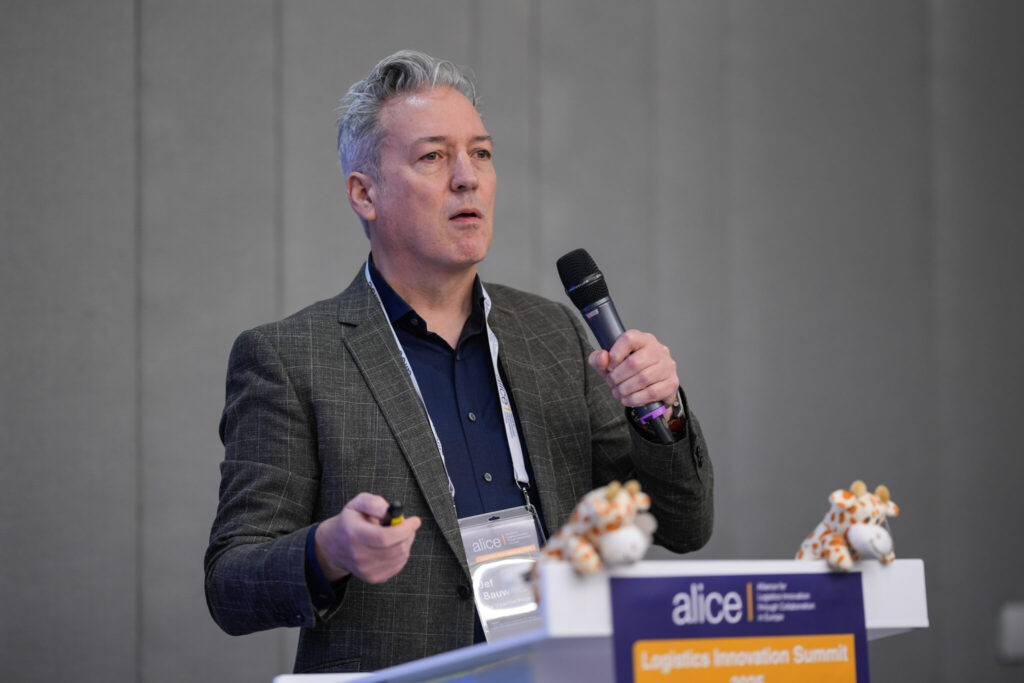
The first part of the session focused on the role of inland navigation within the Physical Internet. Jef Bauwens, Project Manager at De Vlaamse Waterweg, presented how inland waterway transport could align with Physical Internet principles and questioned whether inland navigation is ready to operate within open, modular, and interoperable logistics systems. His presentation was followed by an interactive discussion with participants and panellists, exploring the implications for standardisation, digitalisation, and governance.
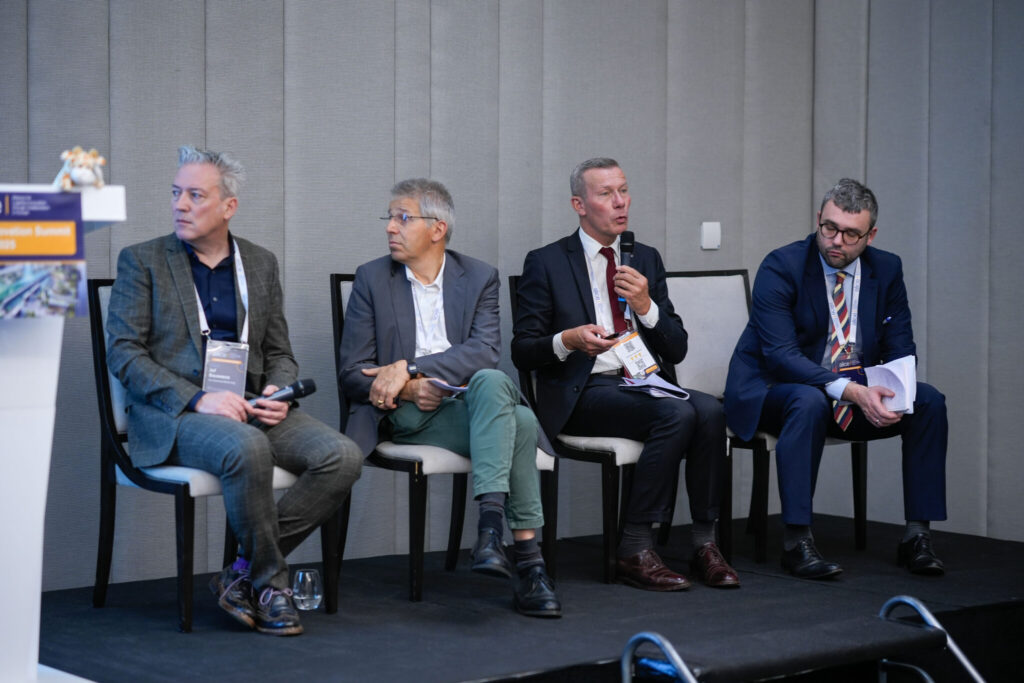
The second part of the session turned to the practical challenges and opportunities of connecting the hinterland with urban nodes. Under the moderation of Nik Delmeire, the panel brought together Eloi Flipo (Voies Navigables de France), Herfried Leitner (TTS), Yves de Blic (Multitel), Matteo Matarazzo (IWT Platform), and Jef Bauwens (De Vlaamse Waterweg). Panellists discussed barriers faced by inland waterway transport, as well as opportunities to ease congestion, reduce emissions, and improve liveability in city centres by shifting freight flows from roads to rivers and canals.
The session confirmed strong interest in positioning inland waterways as an integral part of Europe’s future logistics ecosystem. Participants agreed that unlocking their full potential requires closer integration with urban logistics strategies, improved coordination between ports and cities, and continued innovation in vessels, terminals, and digital solutions. The discussion also reinforced the importance of integrating inland waterways into the Physical Internet vision, enabling seamless connections with road and rail transport.
Several ALICE-related projects are already supporting this transition. MULTIRELOAD and CRISTAL demonstrate multimodal and synchromodal concepts in European corridors, developing governance and digital frameworks applicable to inland waterways. FOREMAST explores future-proof and energy-efficient vessels and terminal solutions aligned with zero-emission goals. PLOTO and DECARBOMILE contribute through innovative digital platforms, decarbonisation pathways, and demonstration pilots improving the operational efficiency and sustainability of inland navigation.
The session contributes directly to ALICE Thematic Groups TG2 (Corridors, Hubs and Synchromodality), TG3 (Systems and Technologies for Interconnected Logistics), and TG5 (Urban Logistics), and supports future EU research and innovation directions, including the call CL5-2025-01-D6-10 – Integrating inland waterway transport in smart shipping and multimodal logistics chains.
Read the full session report (restricted access) on the ALICE Knowledge Platform and download the short PDF version here https://www.etp-logistics.eu/wp-content/uploads/2025/10/3.A_-Rivers-of-opportunity_-COM-Final.pdf