Electrification is redefining Europe’s long-haul logistics. The session “Beyond Diesel: How Transport Companies Are Powering the Green Shift” at the ALICE Logistics Innovation Summit 2025 explored how transport operators and manufacturers are putting zero-emission freight into practice – and what systemic changes are needed to make it scalable.
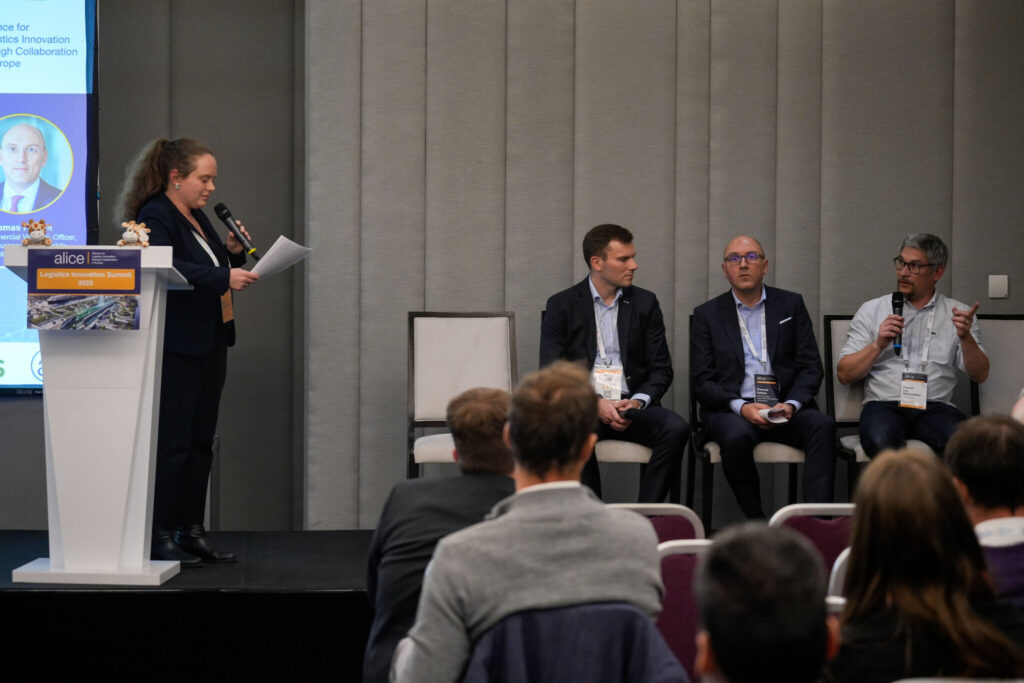
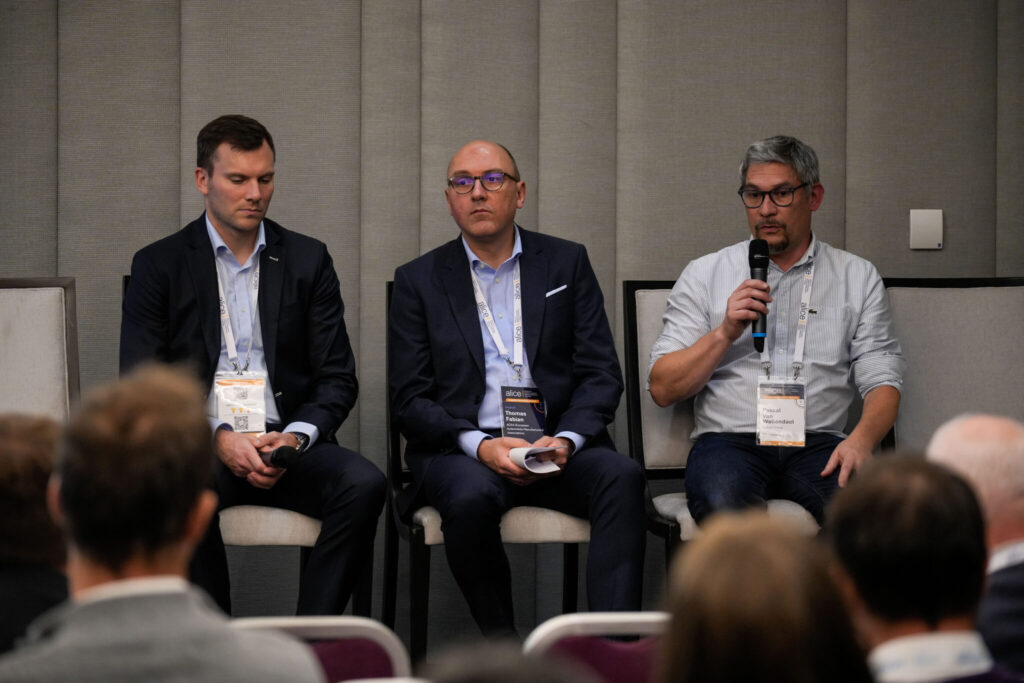
Hosted by Stefanie Van Damme, ALICE Deputy Programme Manager for Efficient and Low-Emission Assets and Energy and ZEFES Project Manager, the session gathered frontrunners from across the logistics value chain: Andrea Condotta (Gruber Logistics), Mads Rasmussen (DFDS), Thomas Fabian (ACEA), and Pascal Van Wallendael (Colruyt Group). It was linked to six EU-funded projects driving this transformation: CLEVER, ESCALATE, FLEXMCS, NextETRUCK, MACBETH, and ZEFES.
Andrea Condotta (Gruber Logistics) opened the discussion with a reality check: while electrification is the only scalable path toward decarbonising long-haul freight, economic and social sustainability still lag behind environmental ambition. The Total Cost of Ownership (TCO) of electric trucks remains uncompetitive in most use cases, but systemic innovation – supported by initiatives such as the Clean Transport Corridor Initiative – can make the transition viable. Condotta underlined that zero-emission logistics will only succeed through coordinated efforts across the entire supply chain and proactive engagement by logistics companies and shippers.
Mads Rasmussen (DFDS) shared insights from operating 146 electric heavy-duty trucks across Europe. He described how the shift to battery-electric vehicles transforms network design, adding parameters such as energy efficiency, resilience, and biodiversity alongside traditional cost and performance metrics. Rasmussen called for faster solutions to long lead times for vehicles and grid connections, and policies that close the cost gap between diesel and clean energy sources.
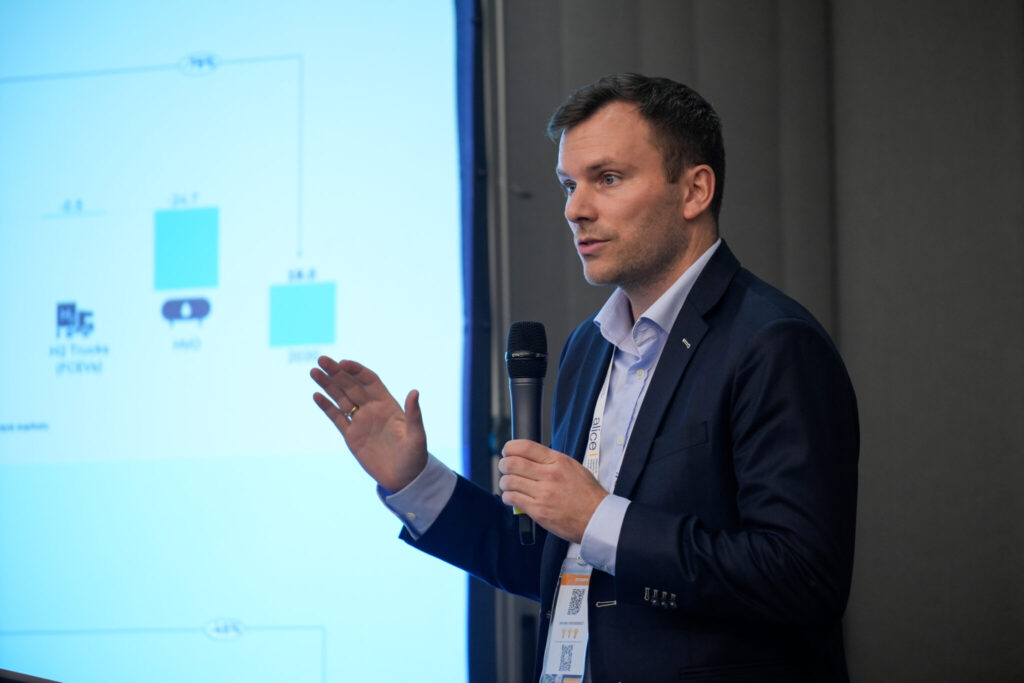
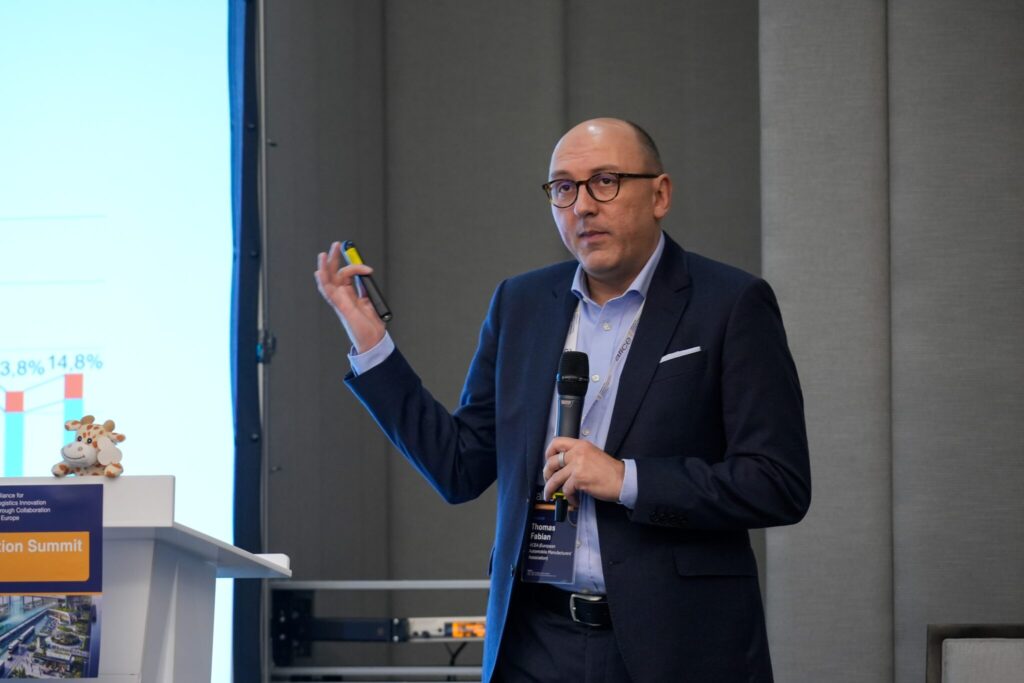
Thomas Fabian (ACEA) provided a data-driven overview of the market. In mid-2025, only 1.5% of new heavy-duty trucks sold in Europe were electric, compared to 14.8% of medium-duty vehicles. To meet the 2030 CO₂ reduction target, at least 400,000 electric trucks, 50,000 public chargers, and 2,000 hydrogen stations are needed – requiring the installation of about 500 HDV chargers per month. Fabian stressed that infrastructure deployment, policy alignment, and grid transparency are essential to accelerate progress.
In the panel discussion, Pascal Van Wallendael (Colruyt Group) shared the retailer’s practical experience in electrifying its fleet. Colruyt is deploying both battery-electric (BE-HDV) and fuel-cell (FCE-HDV) trucks, while installing charging infrastructure at its hubs to support suppliers and lower Scope 3 emissions. The group is also launching bundled procurement programmes to help outbound transport partners access zero-emission trucks at competitive rates. Van Wallendael emphasised that optimised planning of deliveries and charging will be crucial to scale efficiently.
All speakers agreed that electrification is advancing – but not fast enough. Long lead times, high costs, and fragmented permitting continue to slow deployment. Achieving the 45% emission reduction target by 2030 will require a holistic approach, addressing vehicles, infrastructure, logistics processes, and supportive regulation in parallel.
Projects such as ZEFES, FLEXMCS, and MACBETH are already demonstrating solutions: real-life long-haul use cases, multi-point megawatt charging systems, and new interoperability models that connect fleets and grids. Meanwhile, CLEVER, helps advancing emission accounting, and ESCALATE, and NextETRUCK are work on vehicle innovation, and new operational models to make electrified logistics both feasible and competitive.
Read the full session report 1A_Beyond diesel – session report.pdf on the ALICE Knowledge Platform and download the short PDF version here: 1A_Beyond-diesel-final.pdf