Friday, June 19th, 2026
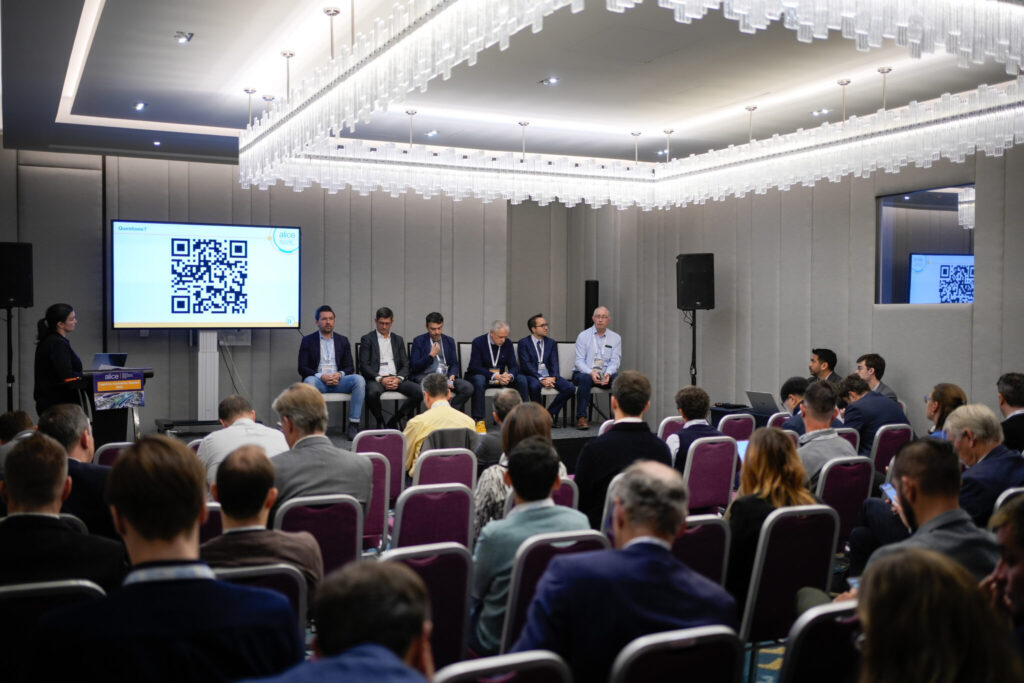
Achieving Europe’s ambitions for greener, more resilient freight transport requires a significant shift from road to rail. Yet challenges such as fragmented data, capacity constraints, regulatory complexity and investment risks continue to slow progress. The session “The multimodal leap: ALICE EXPRESS and integrated logistics” at the ALICE Logistics Innovation Summit 2025 explored how collaboration across the logistics ecosystem can help overcome these barriers and accelerate multimodal freight transport.
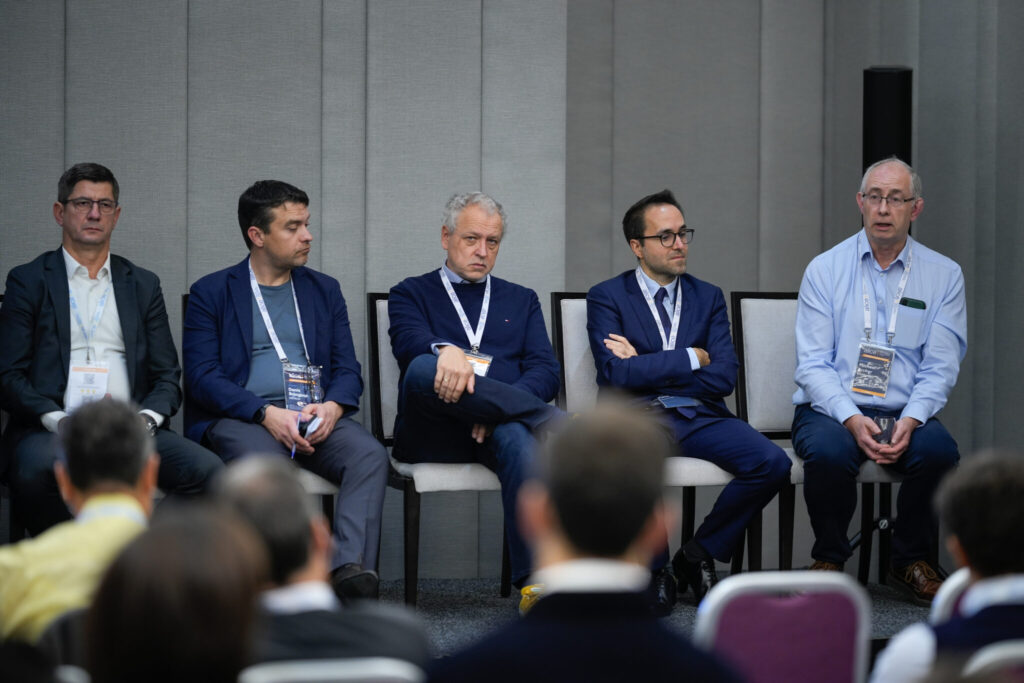
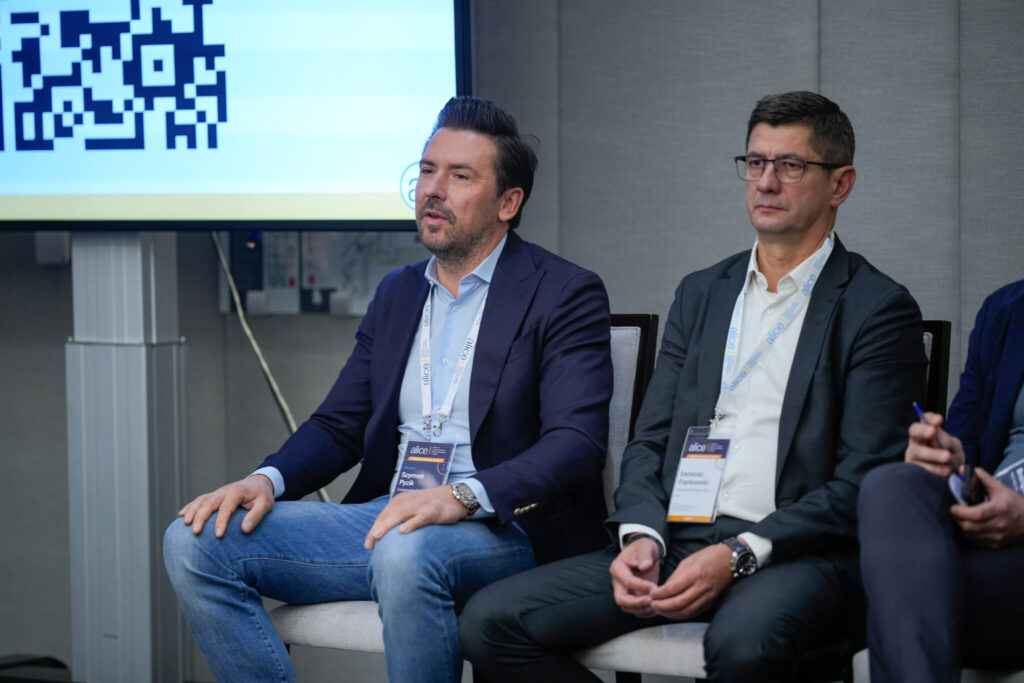
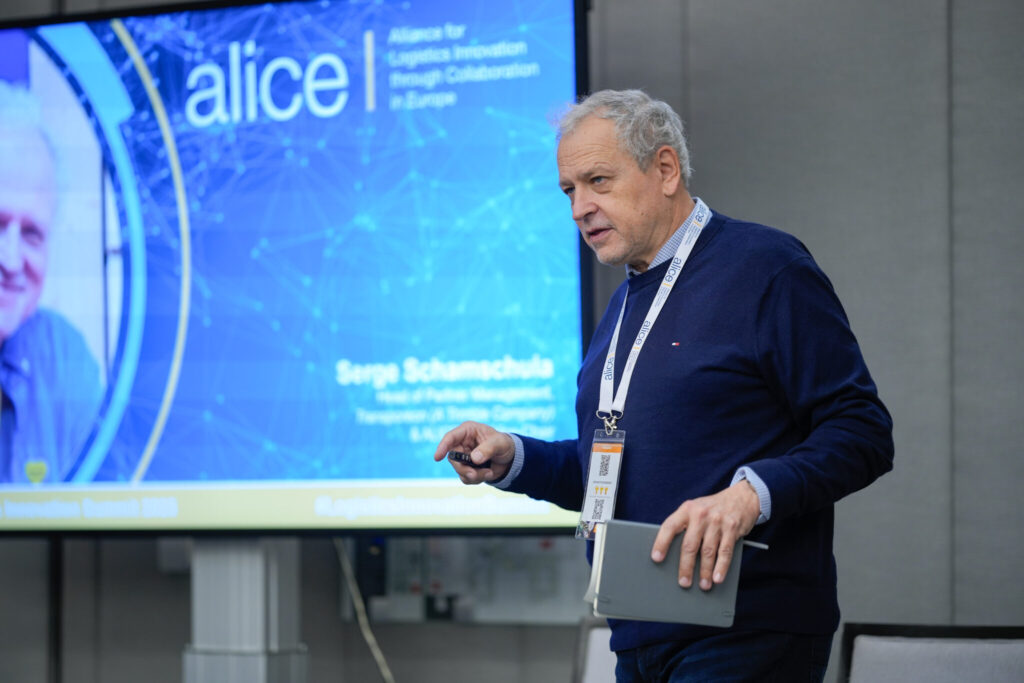
Hosted by Andreea Calin, ALICE Senior Innovation Manager and ALICE EXPRESS Project Lead, the session brought together shippers, logistics service providers, technology platforms and rail innovation experts to discuss practical pathways for scaling rail freight and multimodal logistics. Speakers included Michael Archer (CHEP Europe and ALICE TG4 Chair), Serge Schamschula (Transporeon and ALICE TG4 Vice Chair), Nicolas Furio (Europe’s Rail Joint Undertaking), Denis Brangeon (Michelin), Szymon Pizyk (Codognotto Italia) and Ireneusz Frankowski (Miratrans).
At the heart of the discussion was ALICE EXPRESS, a collaborative initiative designed to help shippers pool freight volumes, enable logistics service providers to develop viable multimodal services and create the visibility needed to support trust and long-term investment decisions. Participants agreed that no single actor can deliver the modal shift alone and that collaboration is essential to unlock the full potential of rail freight.
Insights from the ALICE-Transporeon Intermodal Survey challenged several common assumptions about intermodal transport. The findings showed that intermodal services can often match or even outperform road transport on long-distance corridors. The discussion also revealed that many delays occur during first- and last-mile operations rather than on the rail leg itself, highlighting the importance of integrated planning across the entire transport chain.
Digital visibility emerged as another critical enabler. Participants stressed that successful multimodal operations require transparent and interoperable data sharing across shippers, logistics providers, terminals and digital platforms. Real-time visibility not only improves operational planning but also helps build trust between partners and reduces uncertainty when shifting freight to rail.
The perspective of logistics service providers reinforced the importance of stable demand. Representatives from Codognotto and Miratrans explained that intermodal services can be economically viable when freight volumes are predictable and terminal operations are efficient. Collaborative approaches such as ALICE EXPRESS can reduce investment risks and support the development of new services, terminals and corridor connections.
The session also highlighted ongoing innovation efforts led by Europe’s Rail. Nicolas Furio presented developments in areas such as Digital Automatic Coupling (DAC), digital capacity management and cross-border harmonisation, all of which aim to improve the efficiency and competitiveness of rail freight. However, speakers agreed that innovation alone is not enough. Successful deployment requires market uptake, coordinated action and practical implementation on real transport corridors.
Several European initiatives contribute to this transition. ALICE EXPRESS builds on lessons from broader innovation activities and complements projects supporting multimodal, sustainable and resilient freight transport across Europe. The discussion connected with wider efforts across the ALICE community to improve collaboration, digitalisation and corridor performance.
A clear message emerged throughout the session: the future of multimodal logistics depends on cooperation rather than competition. By aligning shipper demand, logistics capacity, digital visibility and rail innovation, Europe can create the conditions needed to scale rail freight and achieve its sustainability and resilience objectives.
The session concluded with a call for concrete action. Participants encouraged shippers, logistics service providers, technology providers and policymakers to work together on first-mover corridors, share experiences and data, and accelerate the deployment of practical multimodal solutions capable of delivering measurable modal shift across Europe.
Read the full session report (restricted access) on the ALICE Knowledge Platform and download the short PDF version here https://www.etp-logistics.eu/wp-content/uploads/2025/10/3C.-Multimodal-Leap_ALICE-EXPRESS_Com.pdf