[Workshop] SEAMLESS: Legal status and regulatory framework of automated ships in its practical and theoretical aspects
Tuesday, December 23rd, 2025
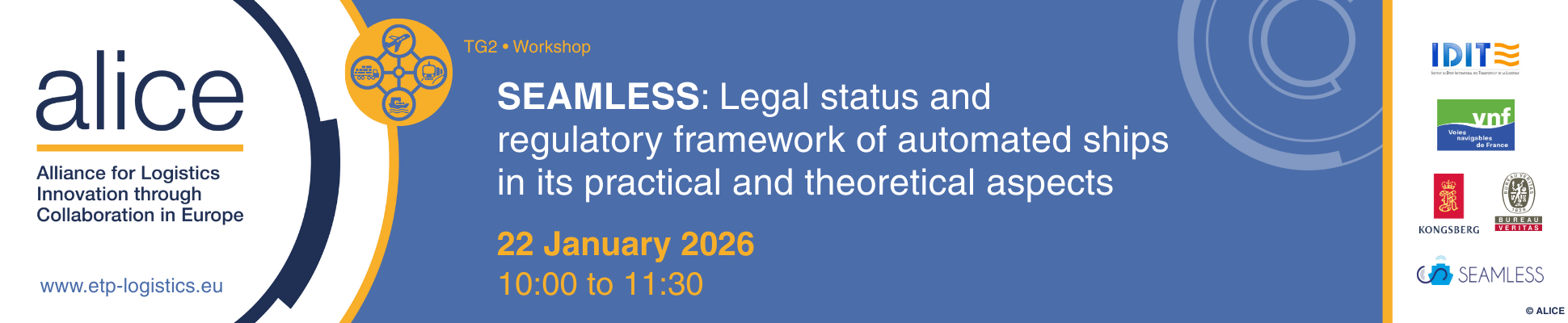
The webinar will explore how autonomy challenges traditional maritime law, asking whether automated ships can be regulated “just like any other” or if new frameworks are needed. It will examine practical implications such as certification, safety assurance, and liability allocation, alongside theoretical considerations of legal personality and compliance under international conventions. By combining these perspectives, the session aims to clarify how automation reshapes the foundations of shipping regulation and what this means for future governance of maritime operations.
PRELIMINARY AGENDA
IDIT presentation, “Automated ships: just like any other?”. Naijma Djoubri & Iolande Viricel (IDIT)
Updates on the developments of the IMO MASS Code. Jérôme Faivre (BV)
The regulatory approval processes required to secure flag administration acceptance for autonomous or remotely operated vessel operations in national waters, along with the transition of the chief engineer on board role moved to the ROC and successful operation of one engineer operating three vessels(ASKO fleet and Yara Birkeland) Claudia Hessen (KONGSBERG)
Updates from the inland waterways sector to offer a relevant point of comparison and potentially serve as a concluding perspective for the overall discussion. Fionn Halleman (VNF)
REGISTRATION
Participation is for members and non members. ALICE TG2 members will receive a calendar invitation with connection details.
The recorded session videos and presentations will be available in the ALICE Knowledge Platform General Assembly event page:
SEAMLESS is funded by the European Union under grant agreement number 101096923. Views and opinions expressed are however those of the author(s) only and do not necessarily reflect those of the European Union or the European Climate, Infrastructure and Environment Executive Agency (CINEA). Neither the European Union nor the granting authority can be held responsible for them.