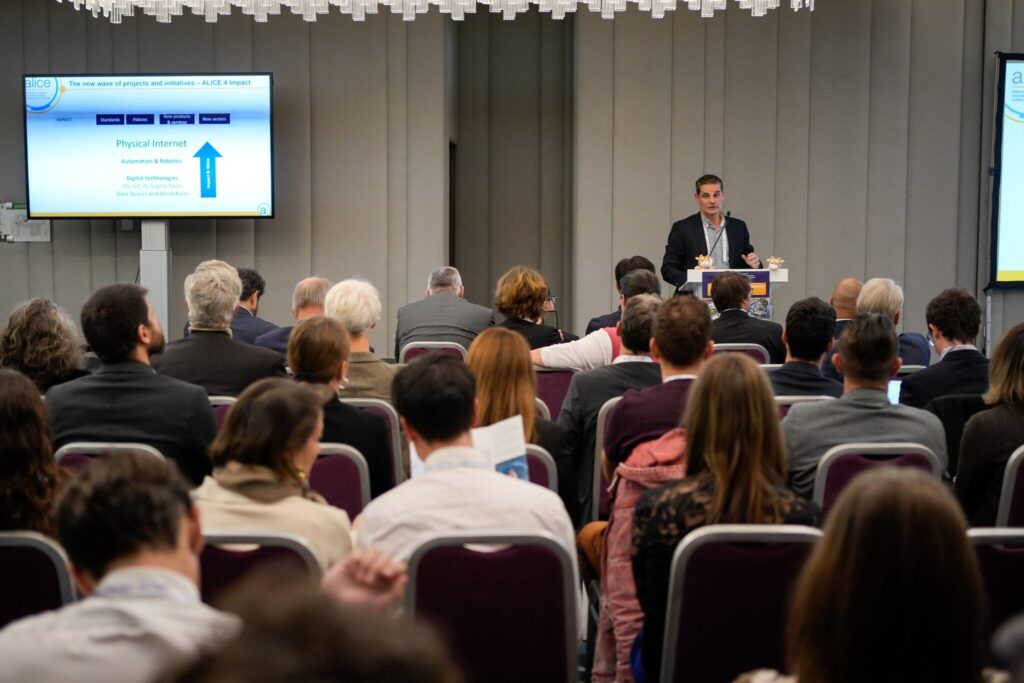
The Physical Internet (PI) is gaining momentum worldwide, with Asia advancing rapidly in innovation, implementation, and standardisation. The plenary session “Physical Internet and Standardisation – Global Forum” at the ALICE Logistics Innovation Summit 2025 explored how regions across the world are shaping PI development, and why global, coordinated standardisation has become the critical enabler for a future interoperable logistics system.
Hosted by Eric Ballot (MINES Paris), the session gathered international leaders in PI standardisation and development: Bruno Gadal (Geopost), Jongkyoung Kim (Korea Conformity Laboratories / ISO TC344), Professor Takayuki Mori (Japan PI Centre), and Fernando Liesa (ALICE). Together, they examined 20+ years of global work on PI, emerging ISO structures, and the need for common, internationally aligned standards.
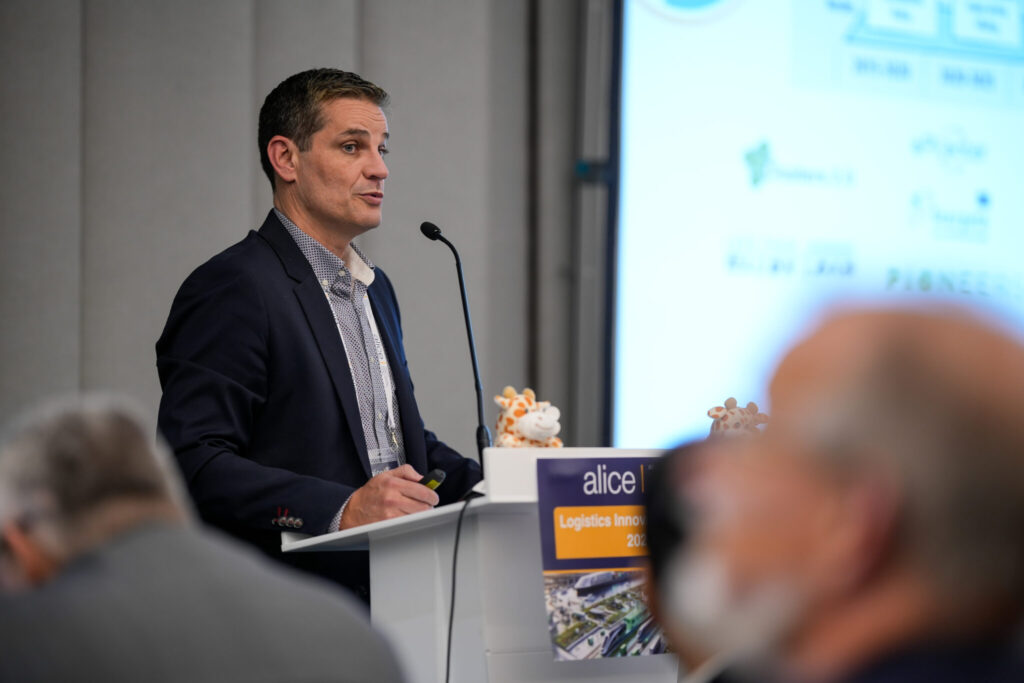
Bruno Gadal (Geopost) opened the session by highlighting the strategic breadth of logistics standardisation – covering terminology, identifiers, event models, shipment formats, physical interfaces, packaging, service levels, and environmental reporting. He warned that Asia, through ISO/TC 344 and ISO/TC 315, is progressing far more quickly than Europe. With limited European participation and inactive CEN committees, Europe risks adopting foreign standards instead of shaping them. He stressed that European research must be systematically converted into CEN–ISO contributions to ensure strategic autonomy in the future Physical Internet.
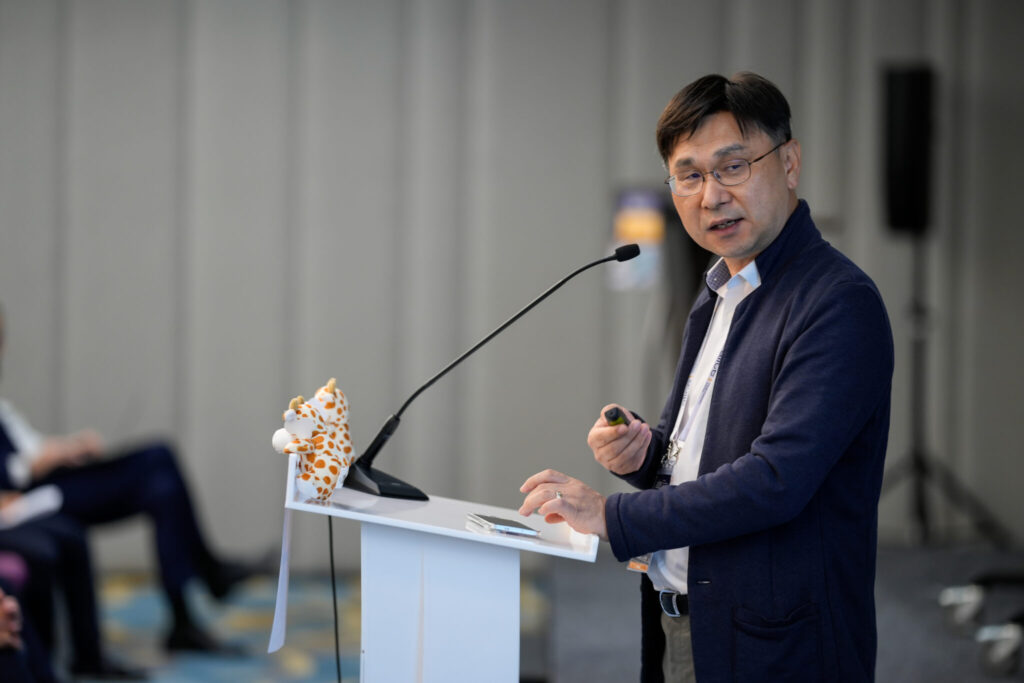
Dr. Jongkyoung Kim (ISO TC344) presented a structured, five-layer global roadmap for PI implementation: shared interoperability foundations, standardized PI containers, harmonized PI nodes, interoperable data/platform architectures, and coordinated routing and network management. He insisted that none of these layers work without shared terminology, process standards, and data models. He also stressed that global convergence – particularly EU-Japan-Korea alignment – is essential to prevent fragmented regional PI systems, noting that standardisation cycles take years and must accelerate now.
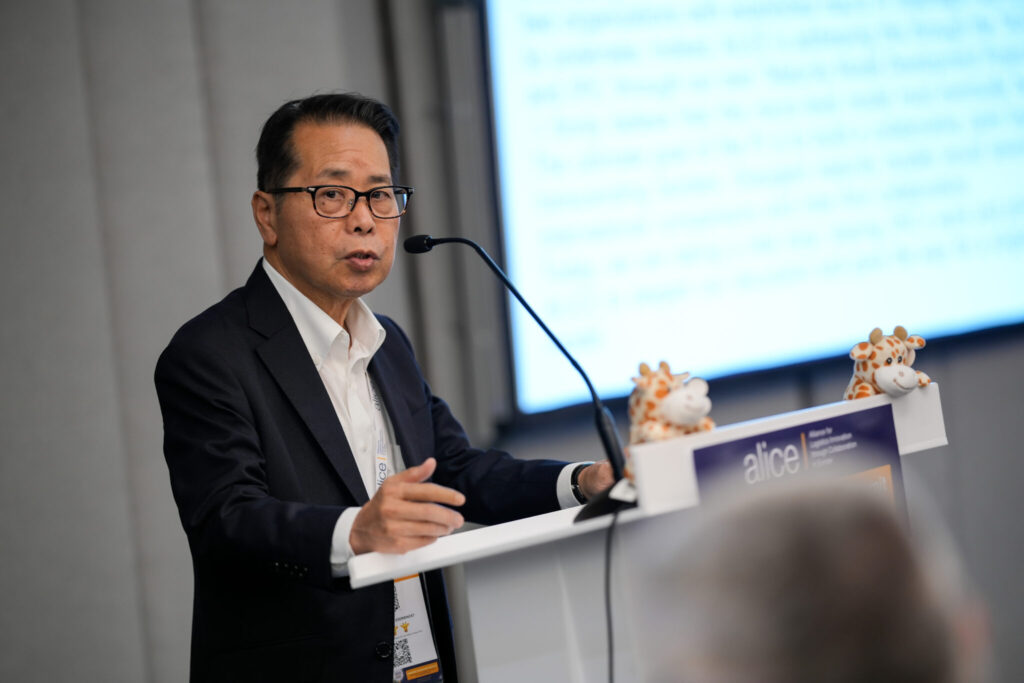
Professor Takayuki Mori (Japan Physical Internet Centre) introduced the PI Maturity Model (PIMM), a practical framework for companies to assess their PI-readiness. Built around four pillars – asset sharing, process synchronization, data utilisation, and ecosystem formation – the model provides measurable criteria for investment and progress tracking. Mori positioned PIMM as the missing link between PI roadmaps and real implementation, with pilots planned for 2025-2026. He explicitly invited ALICE to co-develop the model and push it toward CEN-ISO standardisation.
Fernando Liesa (ALICE) emphasised that standardisation is the bridge between research and real-world adoption. Europe has strong R&I outputs, multimodal pilots, governance frameworks, resilience models, harmonisation tools, but these remain unscalable unless transformed into interoperable, standardisation-ready specifications. He stressed that logistics nodes, orchestration frameworks, digital twins, and data-space connectivity are immediate areas where convergence is needed. Europe can lead PI deployment, he argued, if it channels project results into CEN-ISO structures and strengthens cooperation with Japan and Korea.
All speakers agreed that the Physical Internet cannot scale without global standardisation. Shared terminology, data models, container specifications, node interfaces, and governance frameworks are indispensable. Asia’s rapid progress in ISO means Europe must act decisively to remain competitive, accelerate its standardisation processes, and convert R&I outputs into globally relevant standards.
Read the full plenary report (restricted access) on the ALICE Knowledge Platform and download the short PDF version here https://www.etp-logistics.eu/wp-content/uploads/2025/10/P2-PI-and-Standardisation-PDF.pdf