Wednesday, June 24th, 2026
Climate change, digital transformation, artificial intelligence are reshaping the logistics sector at an unprecedented pace. As supply chains become increasingly exposed to environmental, economic and geopolitical pressures, logistics is evolving from a facilitator of trade into a strategic driver of resilience, sustainability and competitiveness.
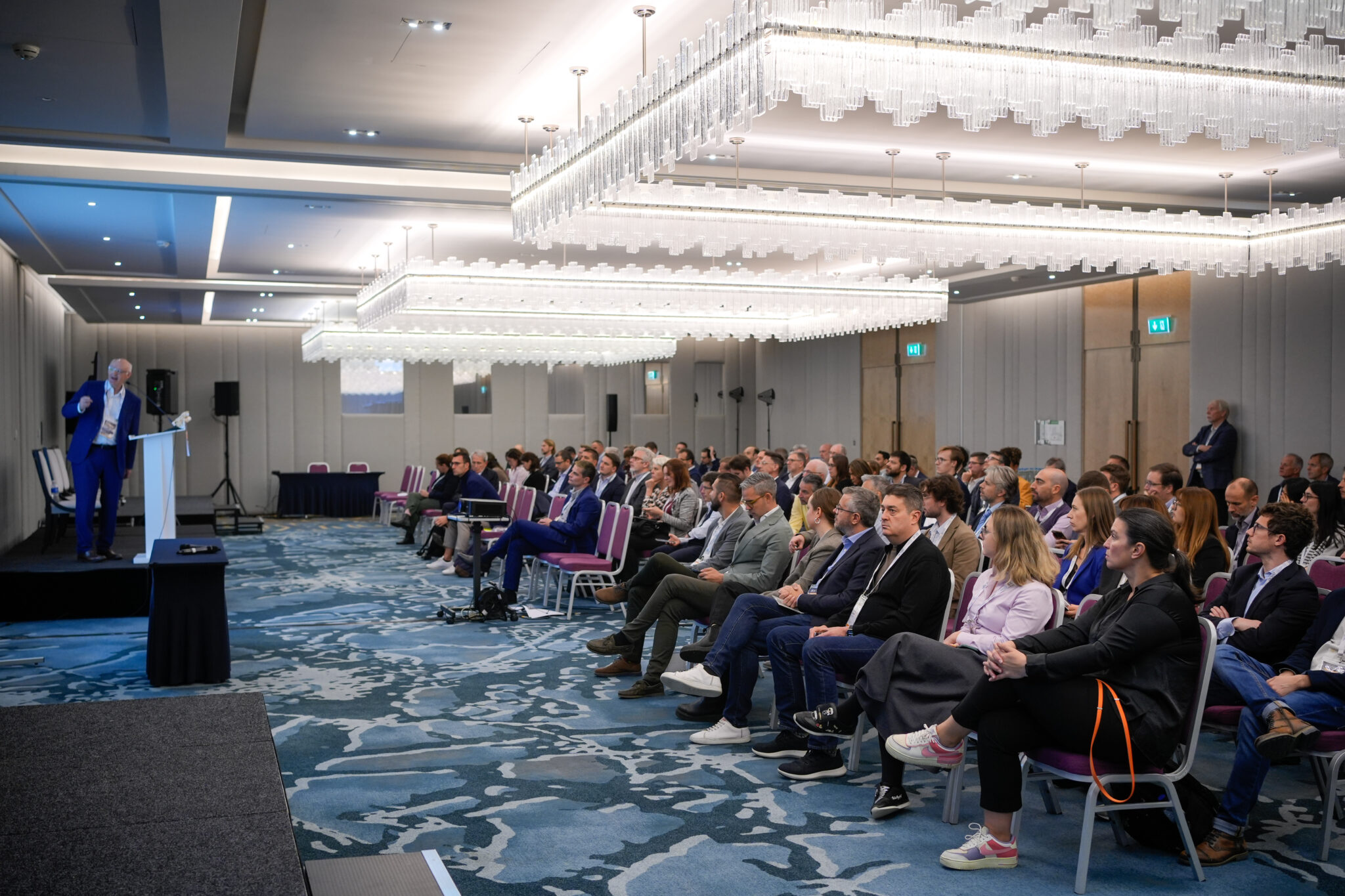
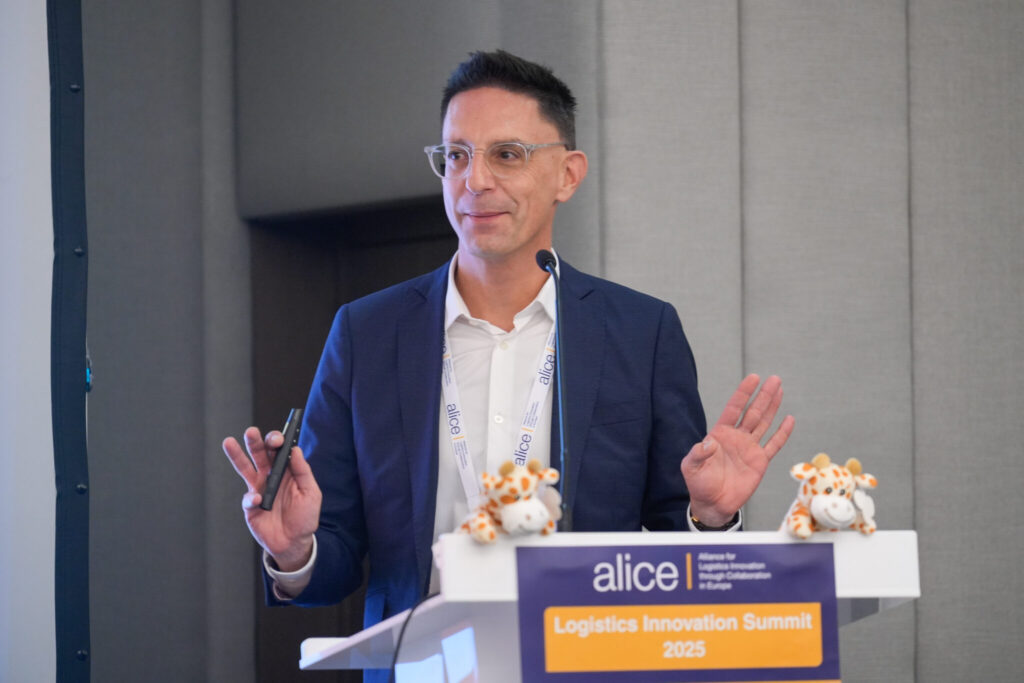
The plenary session “New logistics playground: Megatrends, policy and technology in action” at the ALICE Logistics Innovation Summit 2025 explored how these global trends are transforming logistics and creating both challenges and opportunities for the sector. Moderated by Fernando Liesa, Secretary General of ALICE, the session brought together Professor Alan McKinnon (KLU Kühne Logistics University), Sebastien Lacombe (Geopost) and Marianna Levtov (Hoopo) to provide perspectives from academia, industry and entrepreneurship.
Opening the session, Professor Alan McKinnon challenged participants to rethink the relationship between logistics and climate change through the concept of “Climate Logistics”. Drawing on the latest climate science, he highlighted growing evidence that climate change is accelerating and that its impacts are becoming increasingly visible through rising temperatures, extreme weather events and growing disruption risks for supply chains.
McKinnon argued that logistics should no longer be viewed solely as a contributor to climate change. Instead, he identified several interconnected roles that logistics will play in addressing the climate crisis. Beyond being a source of greenhouse gas emissions that must be reduced, logistics acts as a decarbonized through efficiency improvements and renewable energy adoption, an adaptor helping societies respond to climate impacts, a facilitator of renewable energy deployment and circular economy systems, a rescuer supporting humanitarian response and disaster relief, and increasingly a remover by enabling future carbon capture and carbon removal activities.
His intervention highlighted that decarbonisation, while essential, is only one part of a much broader climate agenda. Future logistics systems will need to become more resilient, adaptive and capable of supporting wider societal transitions towards climate neutrality.
Providing the industry perspective, Sebastien Lacombe demonstrated how Geopost is integrating sustainability and digital transformation into its business strategy. He explained how environmental objectives, operational excellence and data-driven decision-making are increasingly interconnected and can reinforce one another when embedded into core business processes.
Lacombe highlighted Geopost’s commitment to achieving net-zero emissions by 2040 and showcased how investments in low-emission vehicles, alternative fuels, carbon measurement and operational optimisation are already contributing to measurable results. He also presented the role of the Geopost Lab, which serves as an innovation platform supporting the identification, testing and scaling of new solutions across the organisation.
Examples ranged from artificial intelligence and predictive analytics to robotics, automation, electric heavy-duty vehicles, urban logistics innovations and smart parcel lockers. Through these initiatives, Geopost is demonstrating how innovation can become a strategic capability that simultaneously improves competitiveness and sustainability.
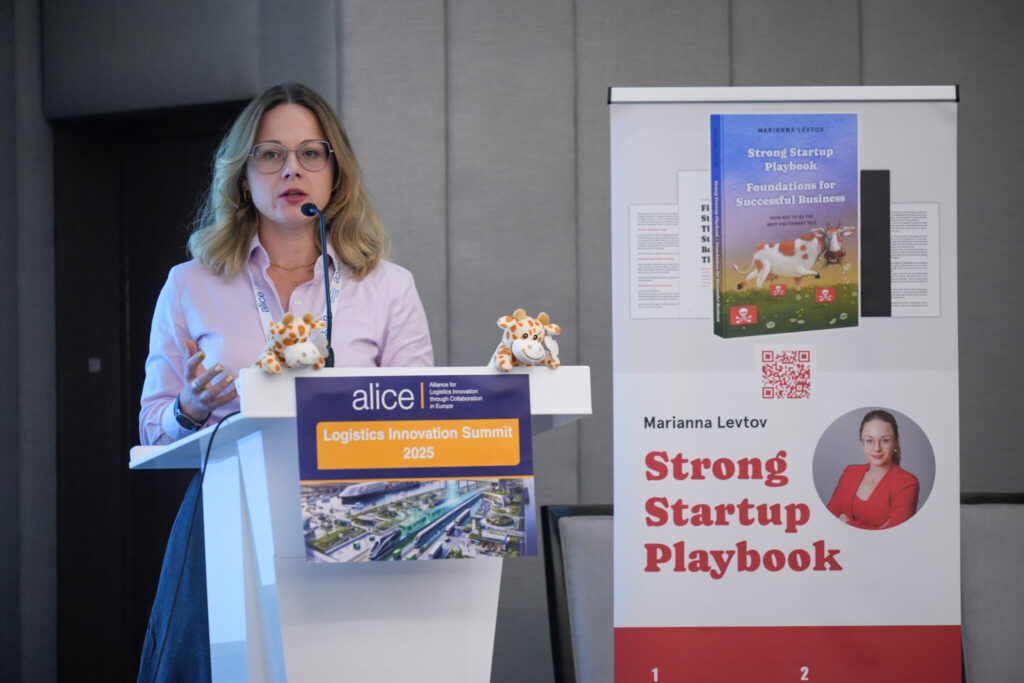
The entrepreneurial perspective was provided by Marianna Levtov, who focused on the role of startups and innovation ecosystems in shaping the future of logistics. Drawing on her experience supporting supply chain technology ventures, she highlighted the unique challenges startups face when bringing disruptive solutions into a traditionally conservative and operationally complex industry.
Levtov stressed that successful innovation depends on much more than technology. Leadership, organisational culture, customer relationships, trust and long-term partnerships are often decisive factors in determining whether promising ideas can achieve market adoption and scale. She argued that creating stronger connections between startups, established companies, researchers and policymakers is essential to accelerate innovation and strengthen Europe’s competitiveness.
Across all interventions, a common message emerged: the future of logistics will be defined by the ability to integrate climate action, digital technologies and innovation into coherent and scalable business strategies. Climate adaptation, resilience, artificial intelligence, automation and entrepreneurship are no longer separate topics but increasingly interconnected drivers of transformation and competitiveness.
The discussion reinforced the importance of collaboration across industry, research, policymakers and entrepreneurs. By fostering innovation ecosystems and accelerating the deployment of new solutions, the logistics sector can play a central role in supporting Europe’s economic competitiveness while contributing to broader environmental and societal objectives.
Read the full session report (restricted access) on the ALICE Knowledge Platform and download the short PDF version here https://www.etp-logistics.eu/wp-content/uploads/2025/10/P3.-New-Logistics-playground.pdf