Tuesday, June 9th, 2026
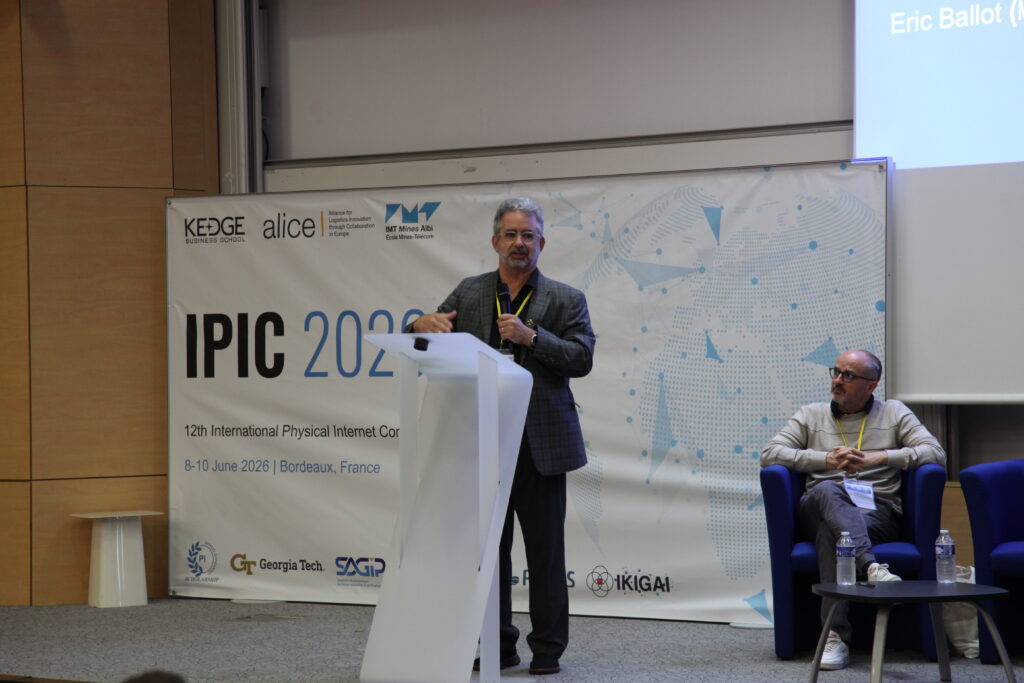
On 9 June 2026, the International Physical Internet Conference (IPIC 2026) hosted a plenary session dedicated to Physical Internet Scientific Roadmaps, bringing together leading researchers to discuss the priorities, challenges and opportunities shaping the future of interconnected logistics systems.
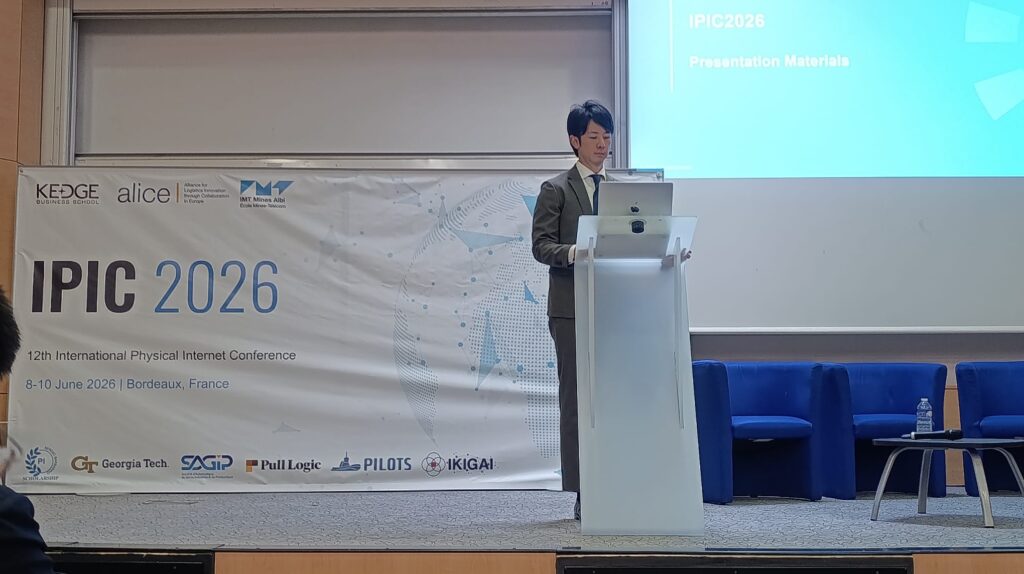
The session featured presentations by Russell G. Thompson, Eric Ballot and Benoit Montreuil, who shared perspectives on the scientific foundations required to accelerate the transition towards Physical Internet-enabled logistics networks.
Opening the session, Russell G. Thompson highlighted the complexity of designing Physical Internet networks, where infrastructure, transport services and demand continuously influence one another. He emphasised the need for new approaches that integrate logistics, economics, marketing, energy systems and emerging technologies to address this highly interconnected challenge.
Attention was given to the development of new business models capable of supporting collaborative logistics ecosystems. Thompson discussed the importance of creating incentives for resource sharing, designing governance structures that distribute benefits fairly among stakeholders, and developing economic frameworks that support large-scale adoption of Physical Internet principles.
The transition towards zero-emission freight transport was also identified as a major research priority. Thompson argued that logistics and energy systems must increasingly be considered together, particularly as electrification and alternative energy technologies reshape transport operations. The integration of Physical Internet concepts with emerging Energy Internet approaches was highlighted as an important area for future research and deployment.
Eric Ballot focused on the role of standardisation, modularity and interoperability in enabling scalable logistics networks.
He highlighted the importance of modular load units and containers as fundamental building blocks of the Physical Internet, while noting that significant challenges remain in achieving widespread adoption and standardisation. Ballot stressed that logistics systems continue to rely on fragmented solutions and that greater coordination is needed to unlock the full benefits of interconnected networks.
Digitalisation was presented as another critical enabler. Ballot discussed advances in digital twins, connected assets, data spaces and shared data languages that can facilitate trusted information exchange between supply-chain actors while preserving commercial confidentiality. He also emphasised the need to ensure that small and medium-sized enterprises can participate in future Physical Internet ecosystems through accessible and affordable digital solutions.
Benoit Montreuil concluded the session by presenting a structured view of the key scientific domains that require continued research and innovation.
These include:
Montreuil emphasised that research must address both technological and organisational dimensions. While advances in AI, digital twins, autonomous systems and connected assets offer significant opportunities, successful deployment ultimately depends on collaboration, governance frameworks and the ability to scale solutions across industries, regions and countries.
He also stressed the importance of connecting Physical Internet development with broader transformations taking place in energy systems, digital infrastructures and global supply chains. According to Montreuil, future research should increasingly focus on how these domains can evolve together to support more resilient, efficient and sustainable logistics networks.
The discussion that followed reinforced several common themes across the presentations. Participants highlighted the importance of trusted data sharing, interoperable standards, collaborative governance models and scalable business cases as essential conditions for broader Physical Internet adoption.
The session demonstrated that while significant progress has been made in developing Physical Internet concepts and technologies, substantial research and innovation efforts are still needed to translate these advances into large-scale operational reality.
IPIC 2026 continues to provide a global platform for researchers, industry leaders and policymakers to advance the scientific foundations and practical deployment of interconnected logistics systems capable of supporting Europe’s and the world’s sustainability, resilience and competitiveness objectives.