Friday, May 29th, 2026
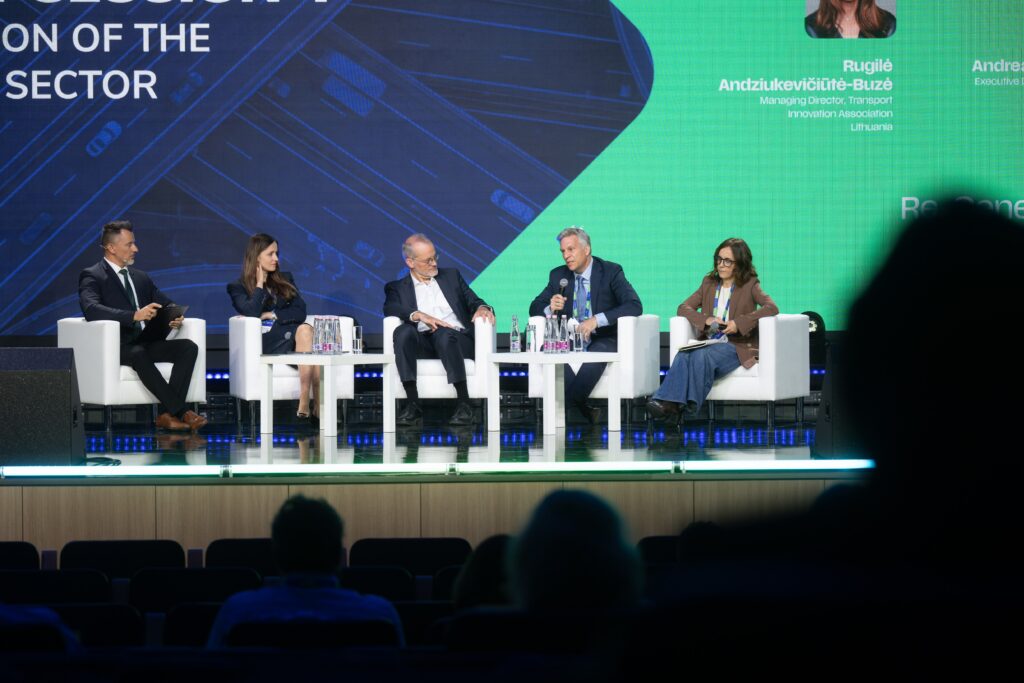
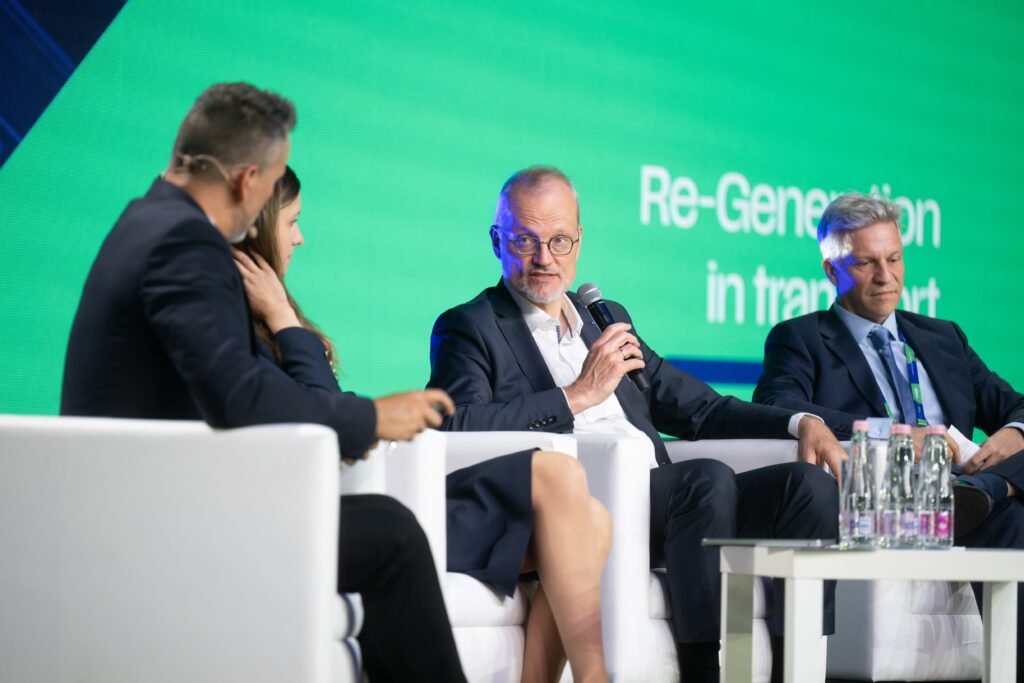
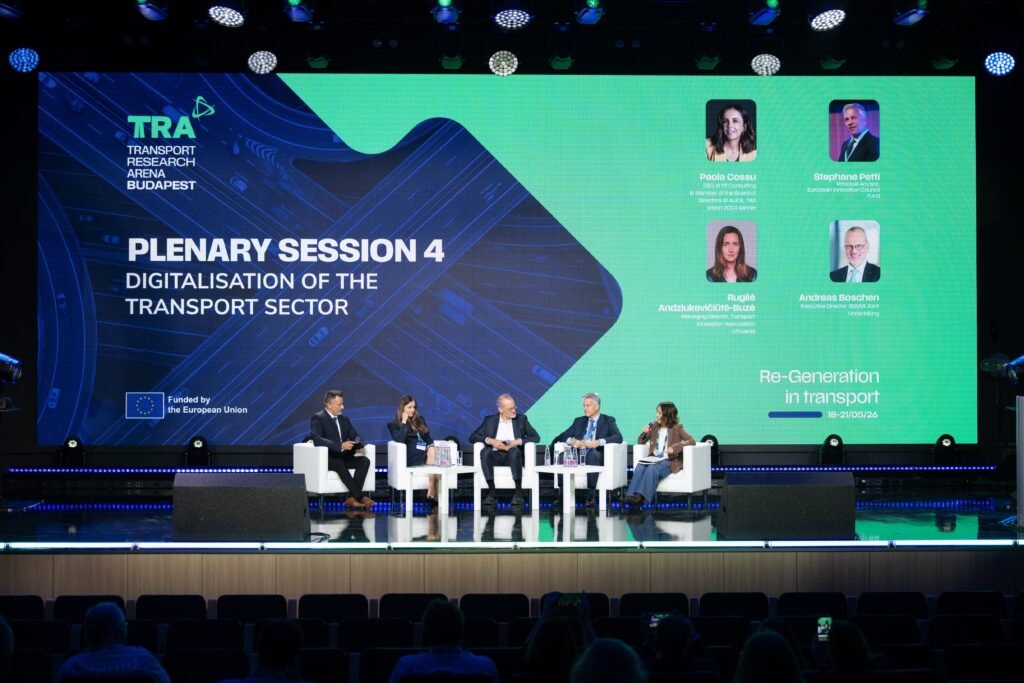
Digitalisation was at the centre of discussions during the “Digitalisation of the Transport Sector” plenary session at Transport Research Arena 2026, where representatives from transportation modes, logistics, research and industry explored how AI, automation, trusted data sharing and cybersecurity are reshaping Europe’s transportation industry sectors, mobility and logistics systems.
The session highlighted that Europe already possesses many of the technological and regulatory building blocks required for digital transformation. The challenge now is deployment at scale: ensuring interoperability, operational integration and trust across value chains and addressing transport ecosystems fragmentation.
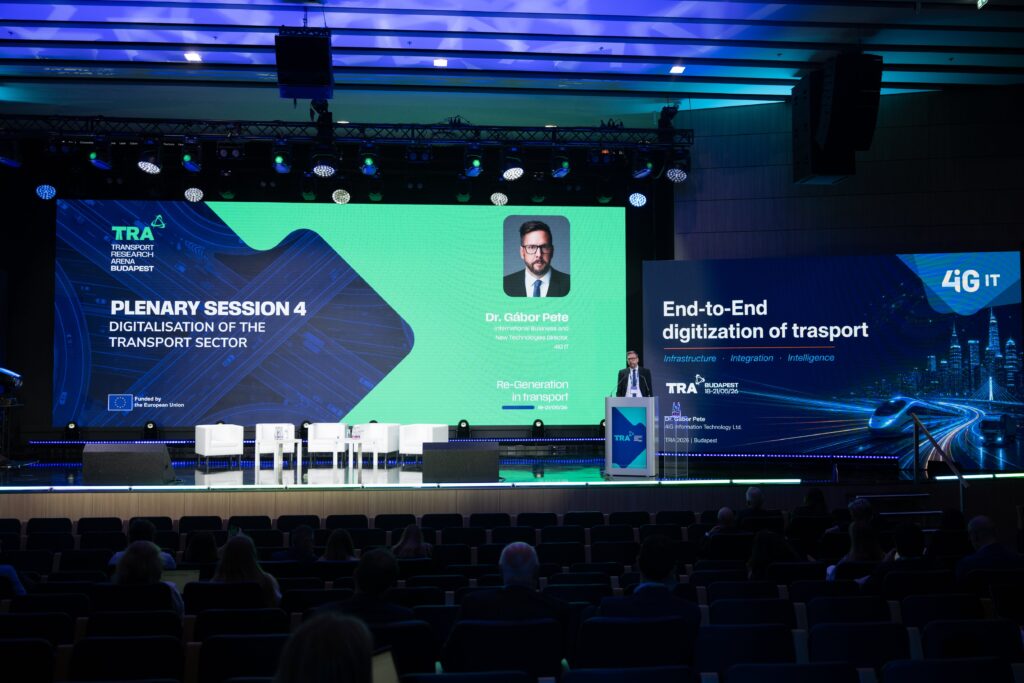
Opening the session, Gábor Peté from 4iG stressed that digitalisation starts with secure, interoperable and connected data infrastructures. He highlighted that fragmented and underused data remains a major barrier for transport digitalisation and argued that digital transport systems should increasingly be treated as critical infrastructure requiring strong cybersecurity and resilient architectures.
A central message emerging from the plenary was that trusted and interoperable data exchange is now the key enabler of transport digitalisation, more important than the availability of technology itself.
Representing ALICE and FIT consulting, Paola Cossu highlighted that logistics does not require technology “for its own sake”, but solutions responding to concrete operational and market needs. According to Paola Cossu, trust remains the essential condition enabling collaboration and effective data exchange across multimodal supply chains.
The role of the European Electronic Freight Transport Information (eFTI) Regulation was strongly emphasised throughout the discussion. Rugilė Andziukevičiūtė-Buzė explained that from 2027 public authorities will be required to accept freight transport information digitally, creating the legal foundation for trusted digital freight operations. She noted that federated and non-centralised systems enabled through eFTI can help operators maintain control over commercially sensitive data while improving interoperability and cross-border information exchange.
The discussion reinforced the importance of harmonised implementation across Member States to avoid fragmentation and unlock efficient cross-border digital freight operations.
Another strong message from the plenary was that Europe’s priority is no longer defining new frameworks but deploying and integrating the tools and systems already available.
Speakers highlighted that Europe already has many of the necessary building blocks, including eFTI, DTLF outputs and emerging logistics data spaces. However, operational deployment remains fragmented and slow.
Examples presented during the session illustrated how digital collaboration can already deliver practical operational value. Paola Cossu discussed Horizon Europe projects such as DISCO, which developed urban freight data spaces enabling operators to share selected operational data, such as idle logistics capacity and locker availability, while preserving commercial confidentiality and competition.
The discussion also highlighted the importance of coordination between Member States, industry and digital initiatives to ensure interoperable deployment across Europe’s transport ecosystem. DTLF was repeatedly referenced as an important governance mechanism capable of supporting this coordinated implementation approach.
The plenary also examined the growing role of AI and automation in transport operations. Speakers highlighted the immediate value AI can bring to planning, predictive analytics, operational efficiency and digital freight processes. At the same time, discussions stressed that certification, liability and trust frameworks for safety-critical applications remain insufficient and require further development.
From the aviation perspective, Andreas Boschen explained that digitalisation is already improving operational planning, efficiency and capacity management across Europe’s aviation systems. However, he stressed that mission-critical applications still require strong certification procedures, cybersecurity integration and human oversight.
Cybersecurity and digital sovereignty also emerged as central elements of Europe’s future competitiveness. Speakers agreed that secure and resilient digital ecosystems are no longer optional add-ons, but prerequisites for future transport systems.
The investment perspective was provided by Stephane Petti, who addressed the challenge European startups and SMEs face when scaling innovative digital solutions. A key message emerging from the discussion was that SMEs need clients and deployment opportunities, not only subsidies. According to the discussion, public procurement, long-term partnerships and patient capital will be essential to help European digital solutions move beyond pilots and achieve large-scale operational deployment.
Across the plenary, a common conclusion emerged: Europe already possesses strong technological, industrial and research capabilities in transport digitalisation. The next challenge is coordinated deployment at scale through trusted data sharing, interoperable systems, operational integration and stronger collaboration between public authorities, industry and logistics stakeholders.