Tuesday, September 15th, 2026
Automation has the potential to transform logistics operations, but deploying automated solutions across complex supply chains requires more than technological readiness. When several organisations are involved in the same logistics flow, questions around responsibilities, data sharing, governance, costs and benefits can determine whether a technically viable solution can actually move forward.
What happens, for example, when a logistics challenge and a potential automation solution have been identified, but the business case is not strong enough for individual actors to invest independently?
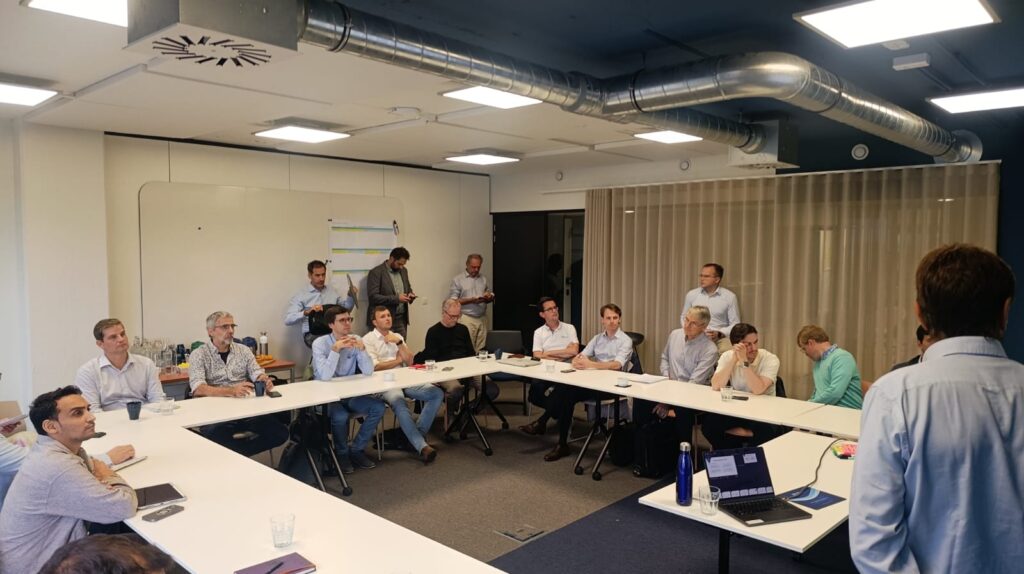
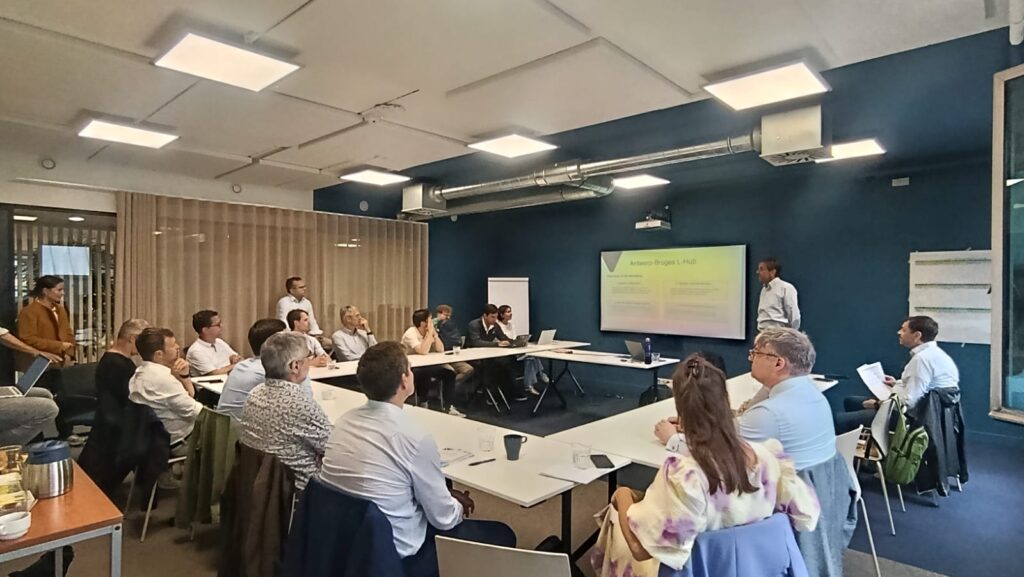
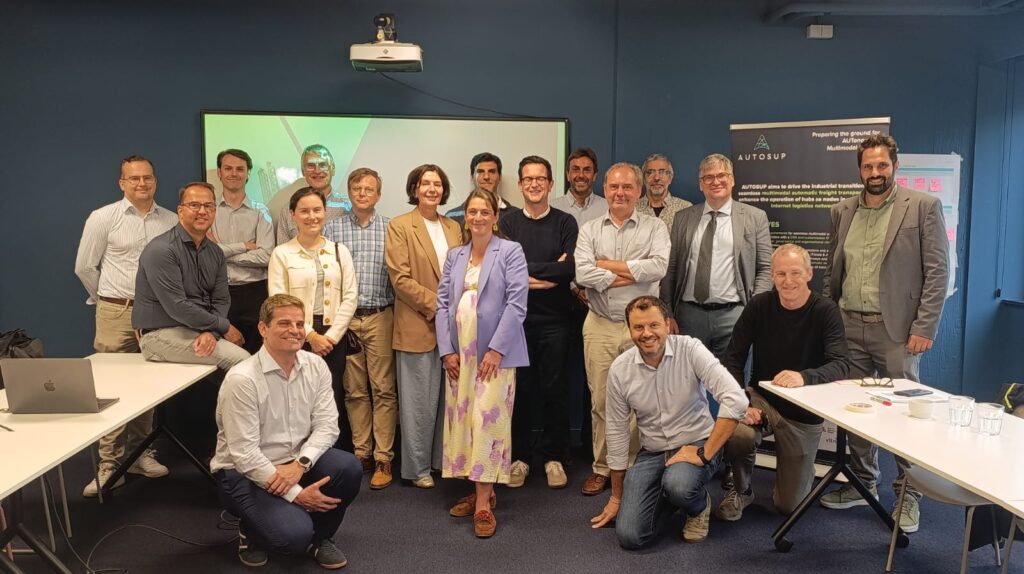
This question was at the centre of the latest AUTOSUP workshop in Antwerp, coordinated by ALICE, FIT Consulting, INLECOM, Port of Antwerp-Bruges and VIL. Bringing together 26 participants from across the logistics ecosystem, the workshop explored the organisational and business conditions needed to make automation-driven logistics work across company and institutional boundaries.
The workshop focused on the Antwerp-Bruges use case, using a logistics set-up based on cargo hubs, night logistics and autonomous or electric truck movements as a concrete scenario for discussion.
The objective was not simply to examine whether automation could support logistics flows in and around the port. Participants looked beyond the technology to consider what would be required for multiple actors to participate in such a system: how decisions would be made, which information would need to be exchanged, how responsibilities could be distributed and whether costs, benefits and risks could be allocated in a way that creates sufficient value for the organisations involved.
This becomes particularly relevant when no individual actor has a sufficiently strong business case to initiate the required investment alone. The workshop therefore explored whether a bottom-up collaboration mechanism could help create the conditions for organisations to move forward collectively where purely market-driven investment is insufficient.
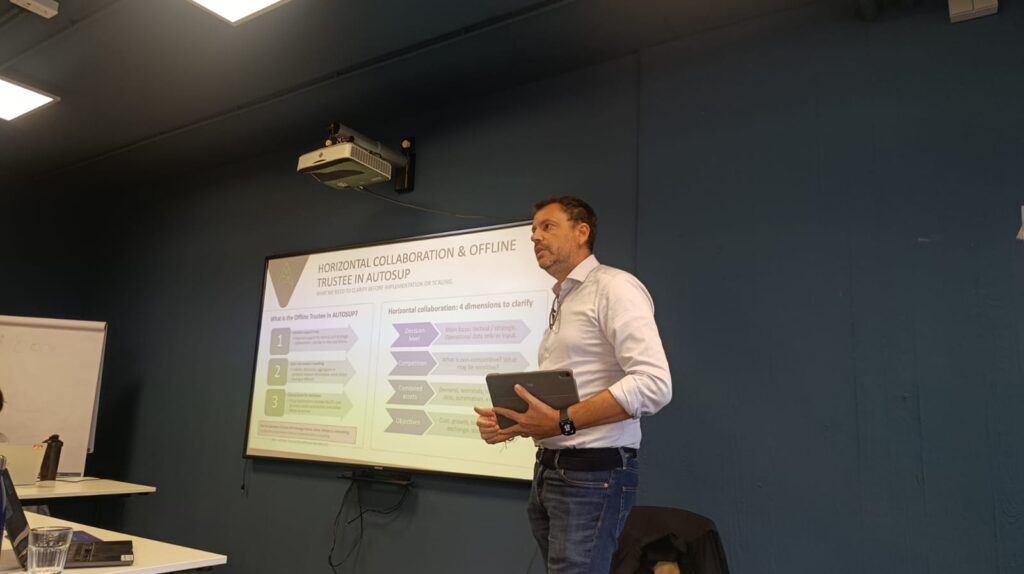
A central element of the workshop was the Offline Trustee concept being explored within AUTOSUP. Participants analysed the same logistics scenario from two perspectives: first without an Offline Trustee and then with an Offline Trustee.
The comparison was designed to examine whether a neutral support function could help address coordination challenges that emerge when organisations have different responsibilities, information, incentives and commercial interests.
Within AUTOSUP, the Offline Trustee is being explored as a neutral strategic and tactical support function. Its purpose is not to manage day-to-day transport operations. Instead, it could support the framework within which organisations collaborate, particularly where data sharing, governance arrangements, responsibilities or business interests make coordination difficult.
This distinction is important. Automated logistics increasingly involves interconnected operations rather than isolated assets. An autonomous vehicle, automated hub or decision-support system may be technologically capable of performing its function, but deployment across a logistics chain depends on whether the organisations around it can agree on how the overall system should operate.
To examine these conditions systematically, participants worked across four interactive canvases covering organisational collaboration and decision rights; information and data exchange; legal and contractual aspects; and costs, benefits, risks and incentives.
Looking at these dimensions together enabled participants to consider automation as an ecosystem challenge rather than as an isolated technology deployment.
Organisational collaboration raises questions about which actors participate, who has responsibility for particular decisions and how collective decisions can be made when organisations remain operationally and commercially independent. Information exchange introduces another layer: automated and coordinated logistics requires relevant information to move between actors, but organisations need clarity about what should be shared, with whom and under which conditions.
Legal and contractual arrangements must then support these relationships and clarify responsibilities between participating organisations. At the same time, a collaboration model must make economic sense. If one actor bears a disproportionate share of the investment or risk while another captures most of the benefits, even a technically successful solution may struggle to progress beyond demonstration.
Considering these dimensions simultaneously helped expose the interdependencies between technology, governance and business models that influence whether automated logistics solutions can scale.
The workshop brought together participants representing ports, terminals and hub managers, logistics service providers, forwarders and users, transport operators, public authorities, technology providers, advisors and project partners.
This diversity was particularly important because the challenges under discussion cannot be resolved from the perspective of a single organisation. Participants challenged assumptions and brought different operational and commercial perspectives to the same logistics scenario, creating a shared reflection around a fundamental question: how can organisations collaborate and create shared value when their interests, responsibilities and information are not always aligned?
From ALICE, Fernando Liesa, Giuseppe Luppino and Yuliya Sahitava contributed to the workshop and its facilitation.
The discussions generated valuable input for AUTOSUP’s work on collaboration and governance around automation, complementing the project’s technical activities on Digital Twins and decision support.
Together, these strands reflect an important aspect of automation deployment. Technical solutions can provide new capabilities for planning, coordination and execution, but their practical value depends on the organisational environment in which they are introduced.
The Antwerp workshop therefore moved the discussion from asking only “Can this logistics process be automated?” towards a broader implementation question: “Under which collaborative, governance and business conditions can different actors make automation work together?”
As logistics becomes increasingly automated and interconnected, solving this second question may become just as important as developing the technology itself. For AUTOSUP, the insights gathered in Antwerp will help further explore how collaboration mechanisms can support automation across organisational boundaries and create the conditions for more coordinated, scalable logistics solutions.