Wednesday, February 18th, 2026
The European Commission has launched the European Connected and Autonomous Vehicle Alliance (ECAVA), a new strategic initiative aimed at accelerating Europe’s progress in connected and autonomous vehicle technologies and strengthening industrial deployment at scale, at a time when Europe faces increasing global competition in software, artificial intelligence and compute platforms.
ALICE has joined ECAVA as a Participant Organisation and is actively contributing to the Autonomous Driving Working Group, positioning freight transport and logistics as a core deployment domain within Europe’s autonomous driving agenda.
ECAVA was announced as part of the Industrial Action Plan for the European Automotive Sector, in a context of increasing global competition and rapid advances in software, artificial intelligence, data and compute platforms. The Alliance is designed to reduce fragmentation across initiatives and actors, and to help convert Europe’s strong research and industrial capabilities into real-world deployment and industrial scale.
The Alliance brings together industry, research organisations, associations and public authorities, and is organised around four thematic Working Groups covering software-defined vehicles, AI and data, automotive hardware and compute, and autonomous vehicle deployment. Importantly, ECAVA is not positioned as a long-term discussion forum: Working Groups are expected to move quickly, deliver concrete outputs, and feed into upcoming EU deployment instruments and policy initiatives. In addition to shaping technology priorities, ECAVA outputs are expected to inform the future FP10 programme and the design of new Joint Undertaking initiatives to accelerate Connected, Cooperative and Automated Mobility (CCAM) deployment.
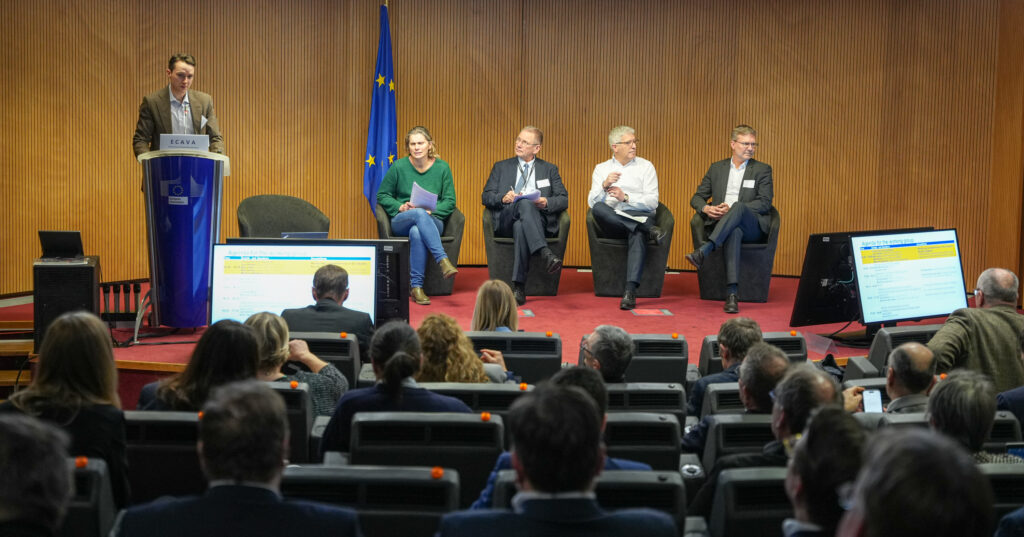
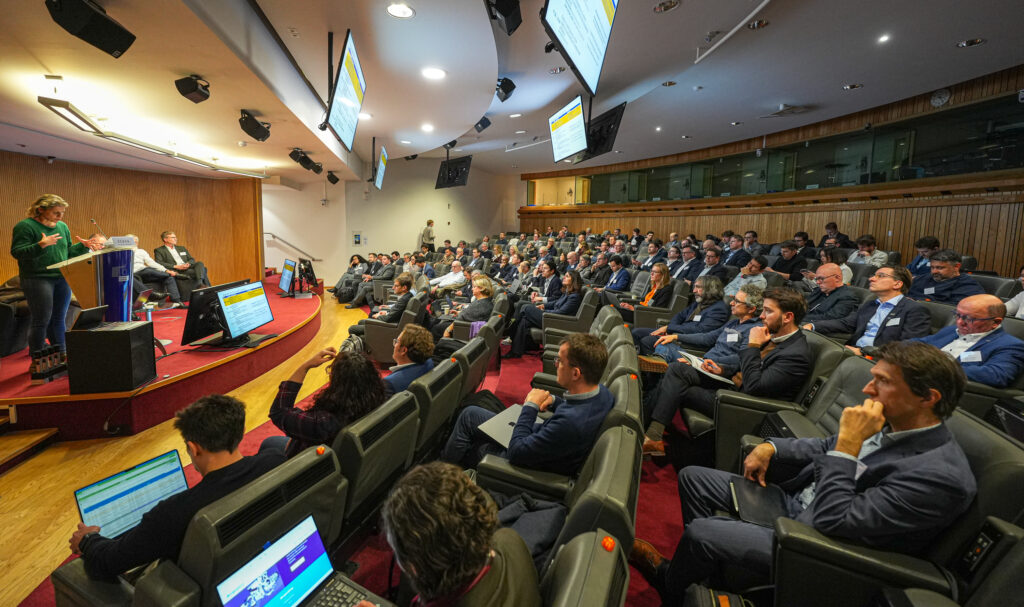
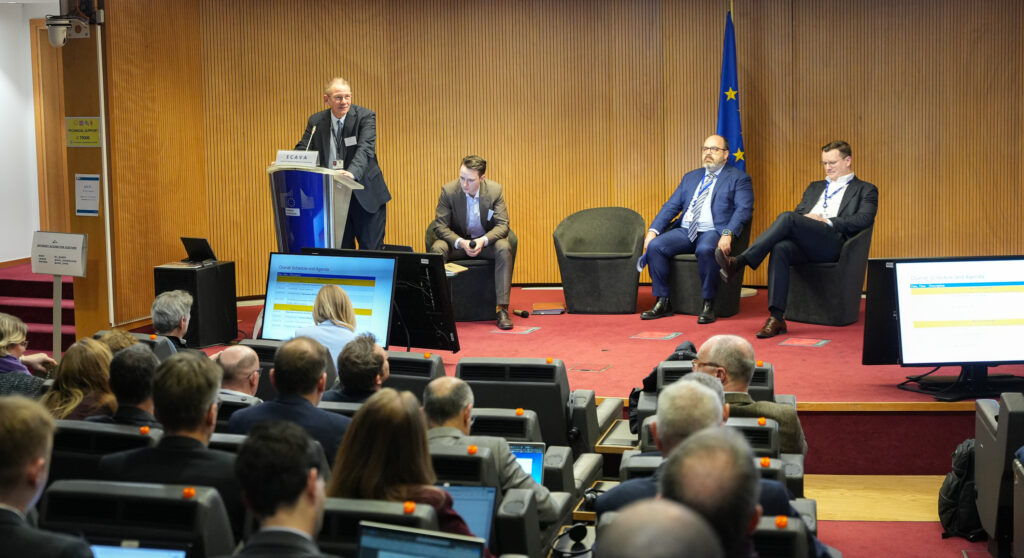
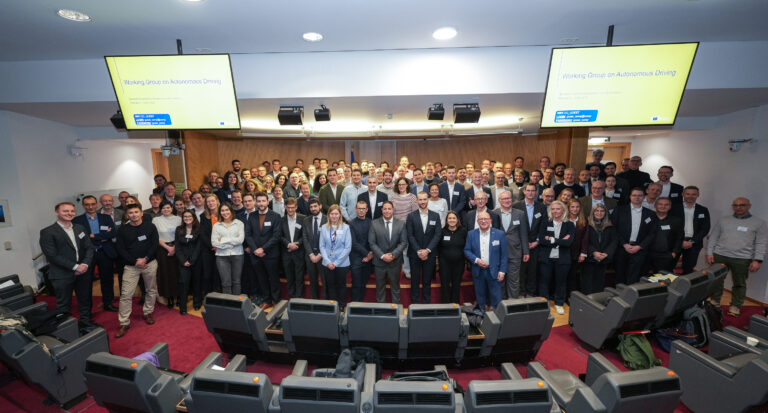
ALICE participated in the first in-person ECAVA Working Group meetings, held in Brussels on 5-6 February 2026, and joined the Autonomous Driving Working Group. ALICE was represented by Fernando Liesa (Secretary General) and Angjelo Andoni (Project Manager & CCAM Lead).
During the discussions, ALICE actively intervened on data governance, commercialisation pathways and the role of freight corridors and hubs in large-scale deployment.
From the outset, discussions in the Autonomous Driving Working Group were clearly deployment-oriented and closely linked to upcoming EU initiatives, in particular Large-Scale Cross-Border Testbeds and Autonomous Drive Ambition Cities (ADACities – being framed). These initiatives are intended to move autonomous driving beyond pilots and fragmented demonstrations, towards continuous testing, validation and early commercial operation.
A key outcome for the logistics community is that freight logistics is now explicitly included within the Large-Scale Cross-Border Testbeds framework. This inclusion reflects sustained engagement by the ALICE secretariat and its members with DG MOVE, freight corridors and logistics hubs have been recognised as core deployment assets rather than secondary use cases.
Within ECAVA, ALICE contributes as the European reference platform for freight logistics, bringing an operational and service-oriented perspective to the autonomous driving agenda. ALICE’s position is that automation must be addressed not only as a technology challenge, but as an operations challenge, where corridor continuity, hub integration, supervision, safety management, regulatory permissions and economic viability determine whether solutions can scale.
During the Working Group discussion on commercialisation, Fernando Liesa highlighted the scale of the European freight market: approximately 6 million trucks in operation, annual truck sales exceeding €50 billion, and road freight transport services accounting for around €700 billion per year. He stressed that once viable business cases are demonstrated, the market will create a powerful acceleration effect, allowing the transition from public support to private capital.
ALICE also builds on its involvement in European initiatives and EU-funded projects addressing automated logistics and corridor-based deployment. Through this work, ALICE and its members have accumulated practical experience on deployment conditions, regulatory constraints, safety and acceptance, and the organisational changes required for real operations. This experience helps ground ECAVA discussions in operational reality.
In discussions on cooperation mechanisms, including data sharing and the potential creation of AI sandboxes, ALICE underlined that governance frameworks must be defined with strong industry leadership. Freight operators must be able to participate without disproportionate legal or operational burden, and data-sharing models must be practical and scalable.
Several ALICE members are already active participants in ECAVA, including Einride, ERTICO, ICCS, imec, Michelin, TRATON, TNO, Vicomtech, and Volvo Group. Their presence strengthens the logistics voice within the Alliance and strengthens alignment between technology roadmaps and operational freight realities.
ECAVA is moving rapidly. Working Groups are now entering a phase focused on concrete deliverables, governance decisions and alignment with upcoming EU initiatives. A virtual ECAVA Steering Committee meeting is planned for March, followed by an international forum later in the year.
The coming months will be decisive in translating freight inclusion into structured cross-border deployments supported by member assets, corridors and operational expertise.
ALICE will remain actively engaged in the Autonomous Driving Working Group and will coordinate member input through its internal structures, including CCAM-related activities. In parallel, ALICE will continue its dialogue with the European Commission to translate the current freight inclusion into concrete cross-border testbeds and scalable deployment pathways anchored in real logistics operations.
📄 A detailed report summarising ECAVA’s purpose, ALICE’s role and the outcomes of the first Autonomous Driving Working Group meeting is available to ALICE members on the ALICE Knowledge Platform.
In case any ALICE member is interested on knowing more about ECAVA or engage in its activities please reach out to Angjelo Andoni at angjelo.andoni@etp-alice.eu.