Tuesday, June 23rd, 2026
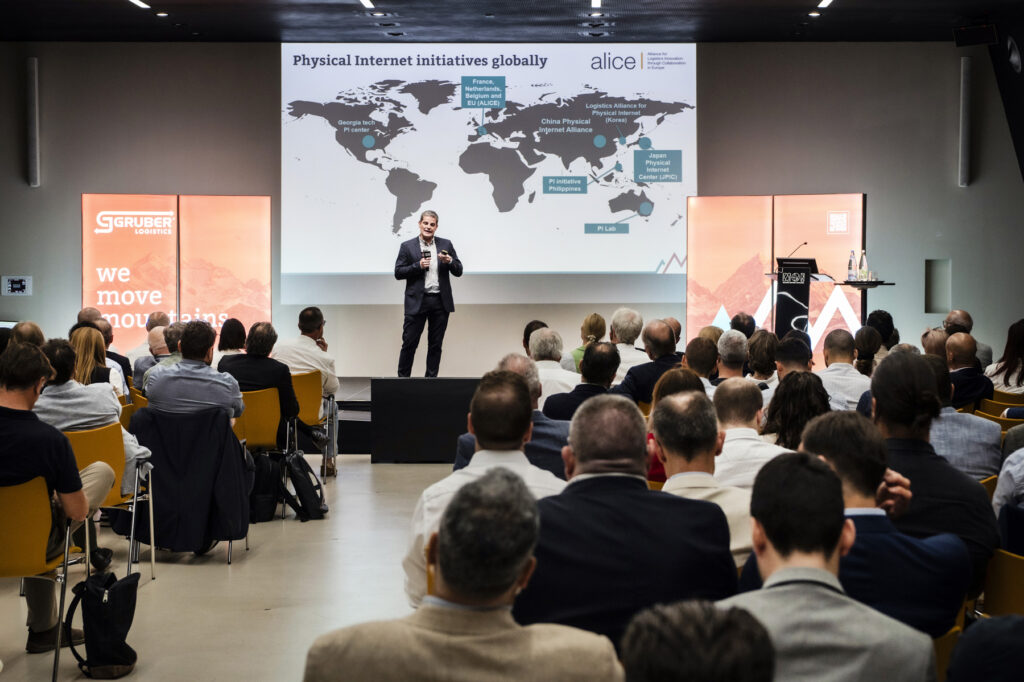
On 28 May 2026, ALICE participated in the Gruber Logistics Innovation Summit in Bolzano, Italy, bringing together industry leaders, researchers and innovation experts to discuss the major transformations shaping the future of logistics. The event explored how companies can respond to growing pressures linked to decarbonisation, digitalisation, resource scarcity, geopolitical uncertainty and workforce challenges.
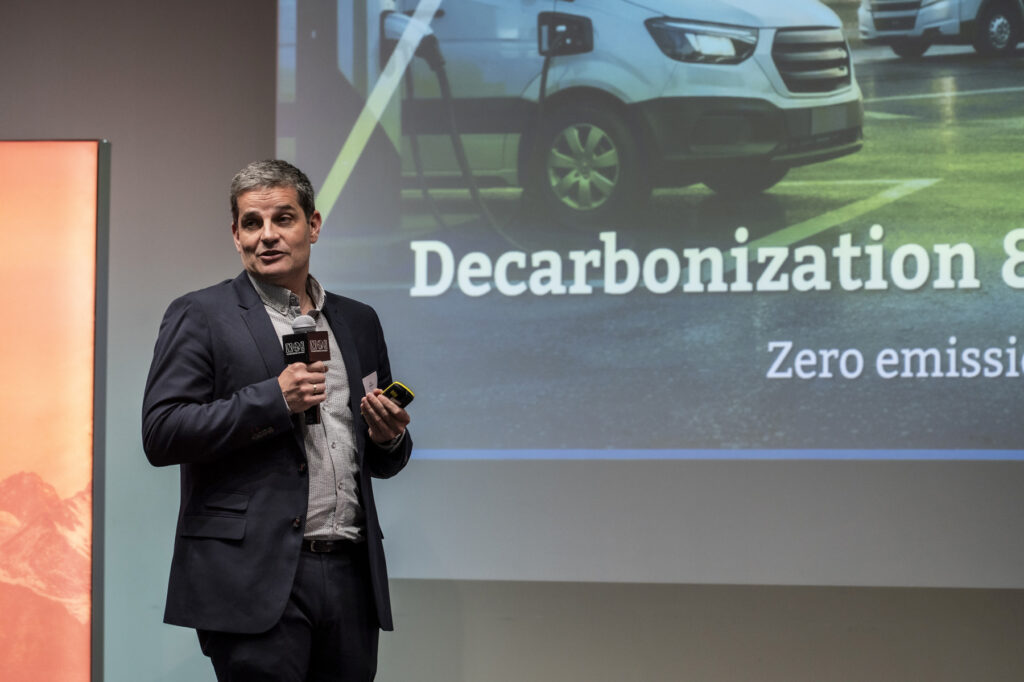
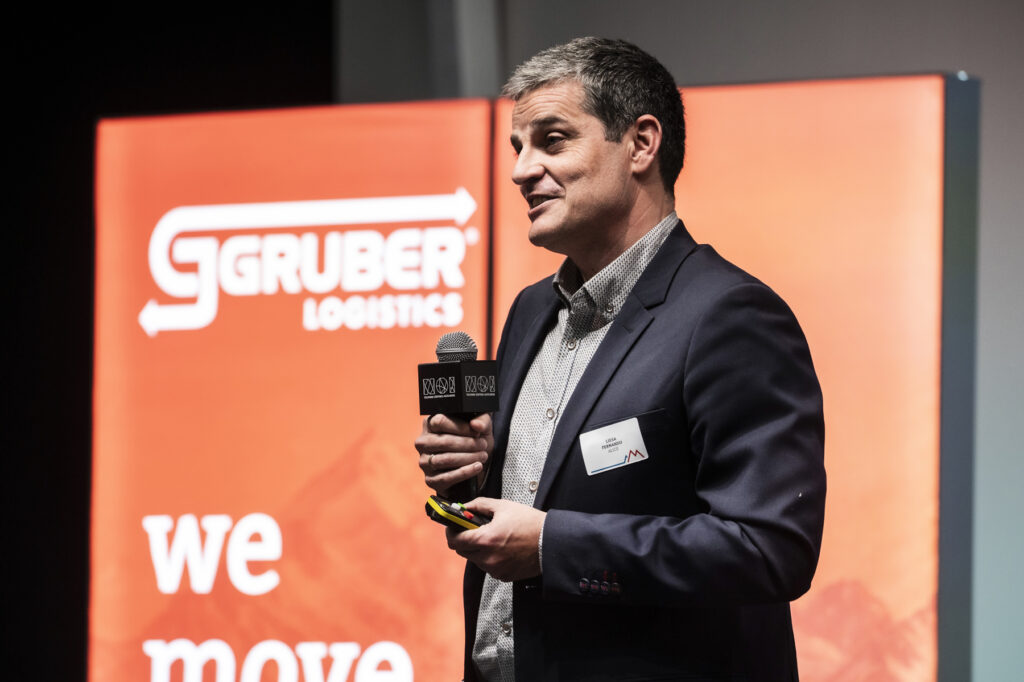
Fernando Liesa, Secretary General of ALICE, delivered a keynote presentation titled “Driving Innovation through Collaboration: Emerging Trends”, highlighting the systemic changes affecting European supply chains and the importance of collaborative innovation to ensure competitiveness, sustainability and resilience.
In his presentation, Fernando outlined how supply chains are increasingly operating at the intersection of several major transformations. Decarbonisation and the transition towards renewable energy, accelerating digitalisation and automation, growing resource scarcity, and rising uncertainty driven by climate change and geopolitical developments are reshaping logistics systems across Europe.
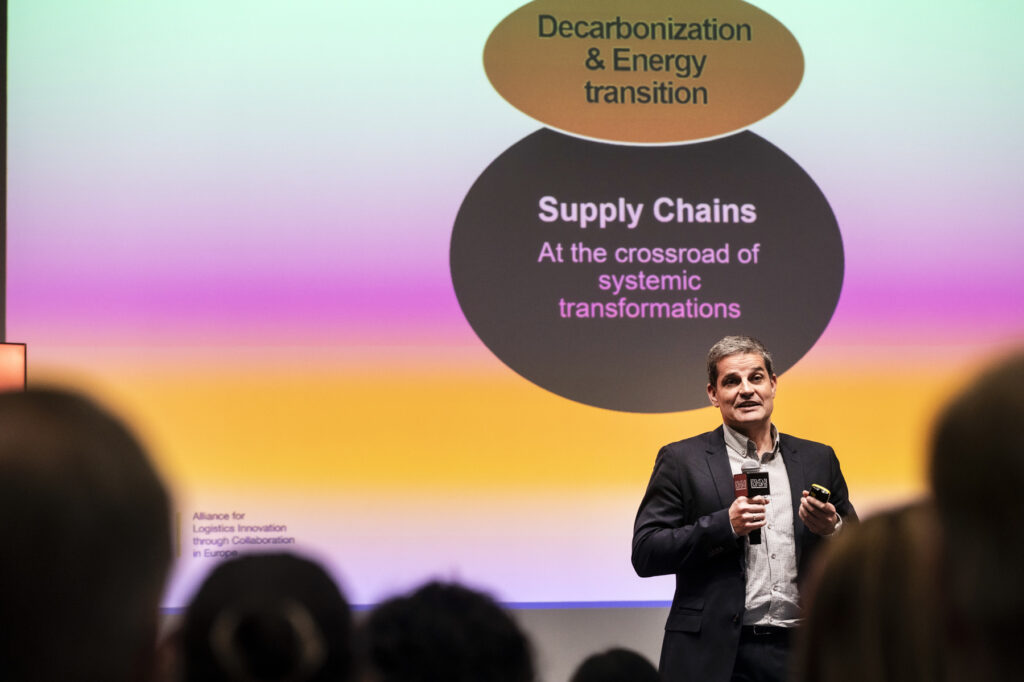
He emphasised that these challenges cannot be addressed independently. Freight transport, energy systems, infrastructure development and digital technologies are becoming increasingly interconnected, requiring coordinated action across the entire logistics ecosystem.
Particular attention was given to the scale of the infrastructure and workforce challenge. Fernando highlighted the significant investment gap facing Europe and the projected shortage of 745,000 truck drivers by 2028, underlining the need for innovation not only in technologies but also in business models and operational practices.
A central message of the presentation was that collaboration must become a strategic capability for the logistics sector.
Fernando presented the Physical Internet vision as a practical framework for enabling more efficient, sustainable and resilient logistics networks. By combining shared resources, interoperable systems, common standards and real-time data exchange, the Physical Internet enables organisations to collaborate at scale while maintaining operational flexibility.
The presentation highlighted how Physical Internet initiatives are advancing globally, with Europe playing a leading role through ALICE and its network of members and partners. The objective is to move from fragmented supply chains towards interconnected logistics networks capable of improving asset utilisation, reducing emissions and increasing resilience. Fernando also highlighted initiatives such as the IKIGAI project, which is demonstrating how Physical Internet principles can support collaborative, multimodal and zero-emission freight transport solutions.
Fernando also presented ALICE’s innovation framework, ALICE 4 IMPACT, which aims to accelerate the transition from research and innovation results to large-scale deployment. The framework focuses on connecting market needs, technology development, standards, policy frameworks and commercial implementation to bridge the gap between successful pilot projects and widespread market adoption.
The Innovation Summit also examined why innovation often struggles to move beyond pilot phases and achieve large-scale implementation.
Michal Silhacek explored barriers to innovation adoption, including organisational resistance to change, lack of strategic focus, insufficient resources and challenges related to collaboration and governance. His presentation emphasised that successful innovation requires not only technological advances but also appropriate business models, leadership and stakeholder alignment.
Marco Manfredini addressed the relationship between market realities and innovation investments, highlighting how logistics has become a strategic and geopolitical asset. He stressed that competitiveness increasingly depends on the ability of organisations to invest in innovation while maintaining the flexibility required to operate in volatile markets.
The afternoon programme featured interactive thematic sessions focused on key areas of logistics transformation, including automation and artificial intelligence, intermodal transport, autonomous vehicles, and zero-emission road freight.
One of the sessions, “Automation and AI: How Are They Reshaping Roles and Skills in Logistics?”, was moderated by Sergio Barbarino, a recognised expert in collaborative innovation, logistics and supply chain management. The discussion explored how digital technologies and artificial intelligence are changing operational processes, workforce requirements and decision-making across logistics networks.
The discussions closely reflected ongoing developments in projects such as MODI, which is advancing the deployment of connected and automated freight transport through large-scale cross-border demonstrations of autonomous logistics operations across Europe.
Additional sessions addressed the barriers to large-scale adoption of intermodal transport, the deployment of hydrogen and battery-electric trucks, and the future role of autonomous vehicles in freight transport. Discussions on zero-emission road freight were particularly relevant to initiatives such as ZEFES, which is demonstrating the operational feasibility of battery-electric and fuel-cell heavy-duty vehicles under real logistics conditions. Together, these discussions reflected the industry’s growing focus on scaling innovation from demonstration projects to real-world operations.
The Gruber Logistics Innovation Summit reinforced a key message shared throughout the event: the future of logistics will depend on the ability of organisations to collaborate across sectors, technologies and supply chain boundaries.
For ALICE, this vision remains central. Through initiatives such as the Physical Internet, collaborative innovation projects and the ALICE 4 IMPACT framework, the platform continues to support the development of a logistics system that is more sustainable, resilient, efficient and competitive.
As highlighted during Fernando Liesa’s presentation, addressing the challenges facing logistics today requires more than technological innovation alone. It requires shared standards, trusted data exchange, coordinated investments and strong collaboration between industry, research organisations and public authorities. Only through this collective effort can Europe successfully navigate the transformations shaping the future of freight transport and logistics.