Wednesday, October 21st, 2026
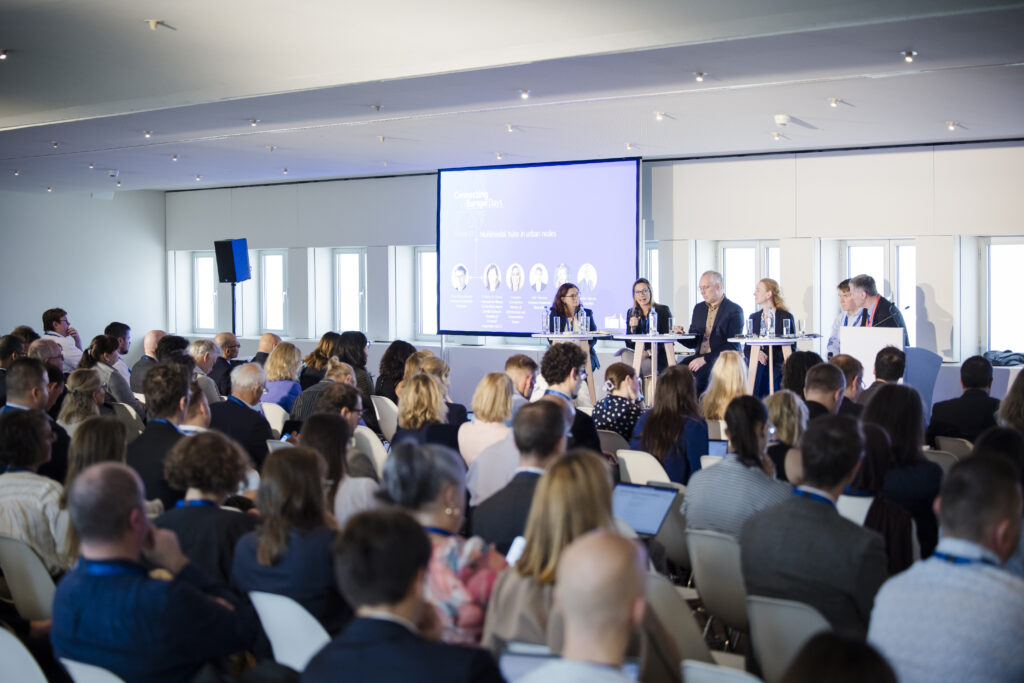
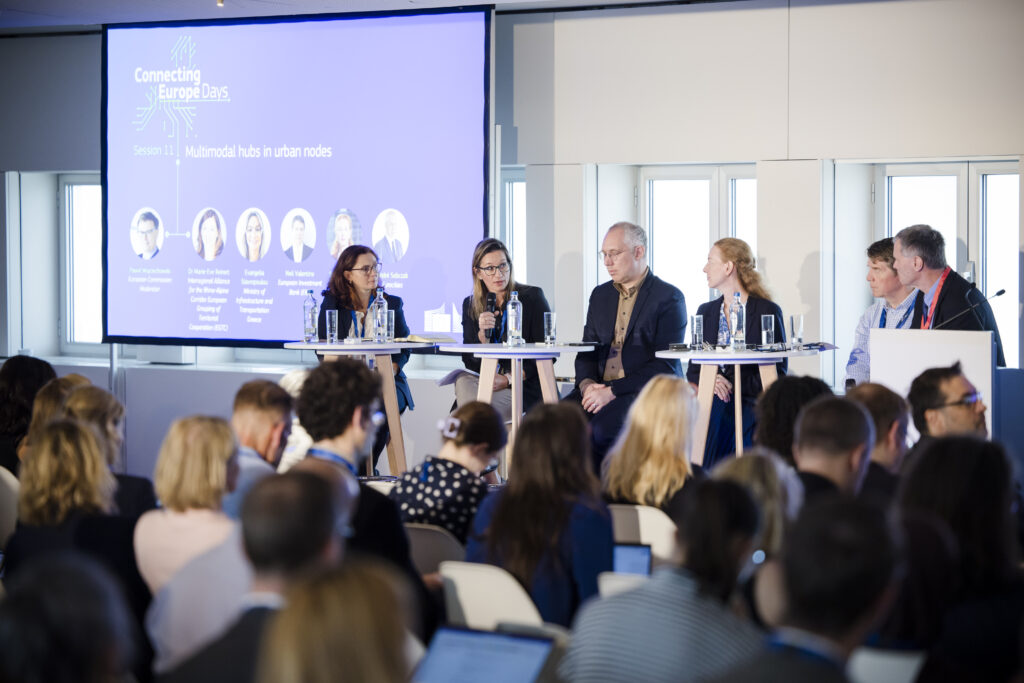
How can Europe’s urban nodes become more effective connections between cities, regions and European transport corridors? This question was explored during a session at Connecting Europe Days 2026, held in Brussels from 28 September to 1 October. The discussion focused on the governance, planning and investment needed to develop multimodal hubs that improve connectivity and make better use of existing transport infrastructure.
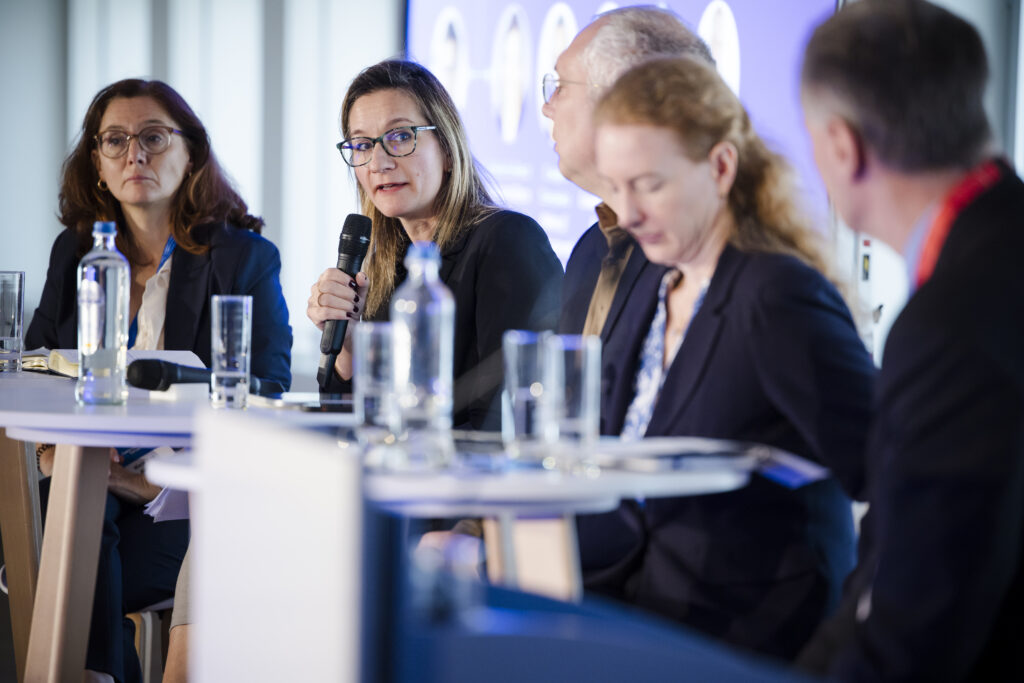
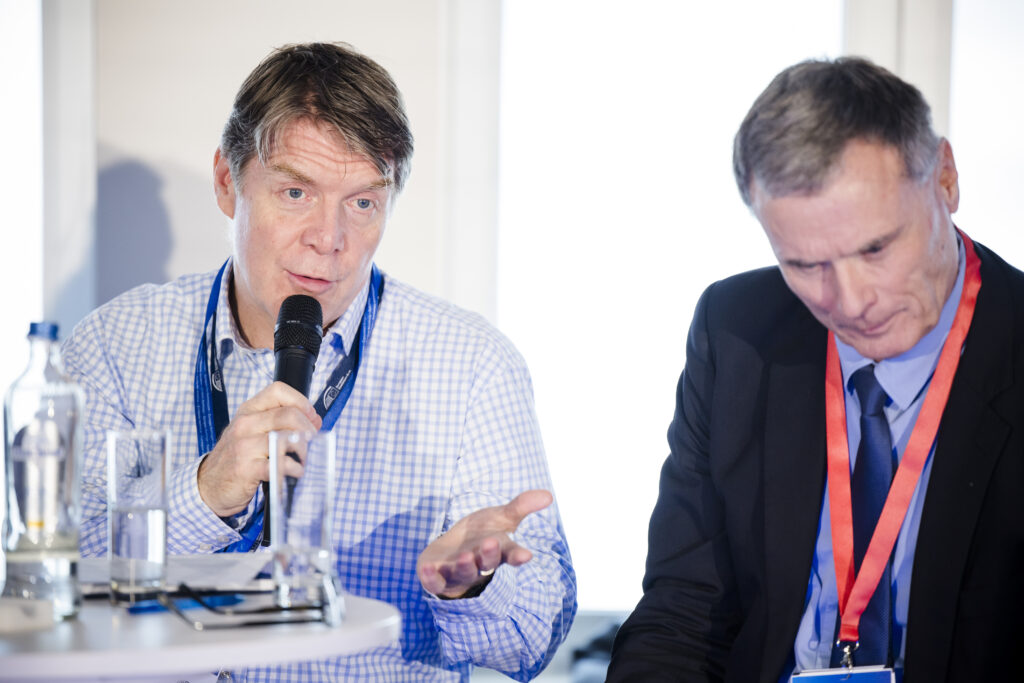
Moderated by Paweł Wojciechowski, European Coordinator for the North Sea–Rhine–Mediterranean European Transport Corridor, the session brought together representatives from the Florence School of Regulation, Île-de-France Europe, the Rhine-Alpine Corridor EGTC, the Greek Ministry of Infrastructure and Transport, the European Investment Bank (EIB), RATP Group and Eurocities.
Juan José Montero Pascual, Director Transport at the Florence School of Regulation, introduced the concept of a “network of networks”, emphasising that multimodal hubs should be considered part of interconnected urban, regional and European transport systems rather than isolated infrastructure projects.
While urban nodes create opportunities to connect transport modes and aggregate flows, they can also generate challenges such as congestion and competing demands for infrastructure capacity. Effective integration therefore requires more than physical connections. It depends on coordinated planning, capacity allocation and governance arrangements that allow different networks to operate together.
Françoise Guaspare, Senior Policy Advisor at Île-de-France Europe and Urban Nodes subgroup leader within the Expert Group on Urban Mobility, also contributed to the session’s discussion on urban nodes and their role in European transport connectivity.
Governance emerged as one of the main themes of the panel. Dr Marie-Eve Reinert, Director of the Rhine-Alpine Corridor EGTC, highlighted the need to connect European corridor governance with territorial planning. Rather than introducing additional administrative structures, she advocated making better use of existing cooperation mechanisms and involving cities and regions in identifying practical needs and use cases. This would help move from individual infrastructure projects towards more systematic transport planning.
Evangelia Stavropoulou, representing Greece’s Ministry of Infrastructure and Transport, described efforts to improve coordination between transport authorities at national, regional and local levels. Greece is developing a clearer legislative framework for multimodal hubs, building on its Sustainable Urban Mobility Plan (SUMP) legislation. The objective is to encourage stakeholder cooperation and integrate multimodal hubs into existing planning processes without creating unnecessary additional mechanisms.
From the financing perspective, Neil Valentine, Head of Division for Urban Mobility at the EIB, emphasised the importance of coherent transport planning. Beyond providing financing, the EIB supports cities and authorities through training and knowledge exchange related to SUMPs. He noted that investment decisions must reflect the different institutional, operational and financial conditions across European cities and Member States.
André Sobczak, Secretary General of Eurocities, argued that the strength of the Trans-European Transport Network ultimately depends on what happens inside cities as much as on the links between them. Where urban nodes lack the capacity to handle rising passenger and freight volumes, he warned, congestion in cities can erode the returns on investments made elsewhere in the network. Well-functioning hubs, by contrast, act as catalysts for connectivity, competitiveness and decarbonisation. Achieving this goes beyond building infrastructure and requires closer cooperation among cities, regions, national authorities, infrastructure managers and operators; hubs that are accessible and easy to navigate, guided by universal design principles; and funding directed not only at new projects but also at maintaining and upgrading existing assets. He called for EU funding instruments should treat urban nodes as integral to the success of the wider European transport network, and for the negotiations on the next EU budget to preserve urban nodes’ eligibility under a future Connecting Europe Facility, give cities a stronger voice in national and regional planning, and open future European funding instruments to innovation around multimodal hubs.
Sophie Mourlon, Secretary General of RATP Group, highlighted the importance of considering multimodal hubs from the passenger’s perspective. Their effectiveness depends on how easily people can move between transport services, rather than simply on the availability of infrastructure. Using Paris as an example, she noted that connections between the city’s major railway stations remain challenging despite its extensive transport network. Improving these interfaces requires clear responsibilities and sustained cooperation between the organisations involved. She also referred to Lyon as an example of how regional authorities can help coordinate stakeholders around shared objectives. Her contribution reinforced a broader message from the session: multimodal hubs need a common long-term vision, developed collectively by the authorities, infrastructure managers and operators responsible for their implementation and operation.
Although several contributions focused on passenger mobility, the challenges discussed are also relevant to freight transport. Urban nodes connect cities with logistics hubs, terminals and European transport corridors, making coordination between infrastructure managers, transport operators and public authorities essential for efficient multimodal operations.
The discussion aligns with ALICE’s work on multimodal transport, interconnected logistics networks and the Physical Internet, particularly the need to improve interoperability, capacity utilisation and collaboration across organisational and geographical boundaries. Integrating freight requirements into urban and regional planning is important to ensure that multimodal hubs support both passenger mobility and logistics operations.
The session demonstrated that improving European transport connectivity is not solely a question of developing infrastructure. Effective multimodal hubs require coordinated governance, integrated planning and sustained cooperation between stakeholders. Strengthening these connections will be essential for creating more efficient, resilient and interconnected European transport and logistics networks.