Friday, October 2nd, 2026
European ports are under growing pressure to decarbonise while remaining competitive, resilient and capable of responding to rapidly changing energy, infrastructure and logistics needs. The challenge is no longer only to develop new technologies, but to turn successful innovation into solutions that can be implemented, replicated and scaled.
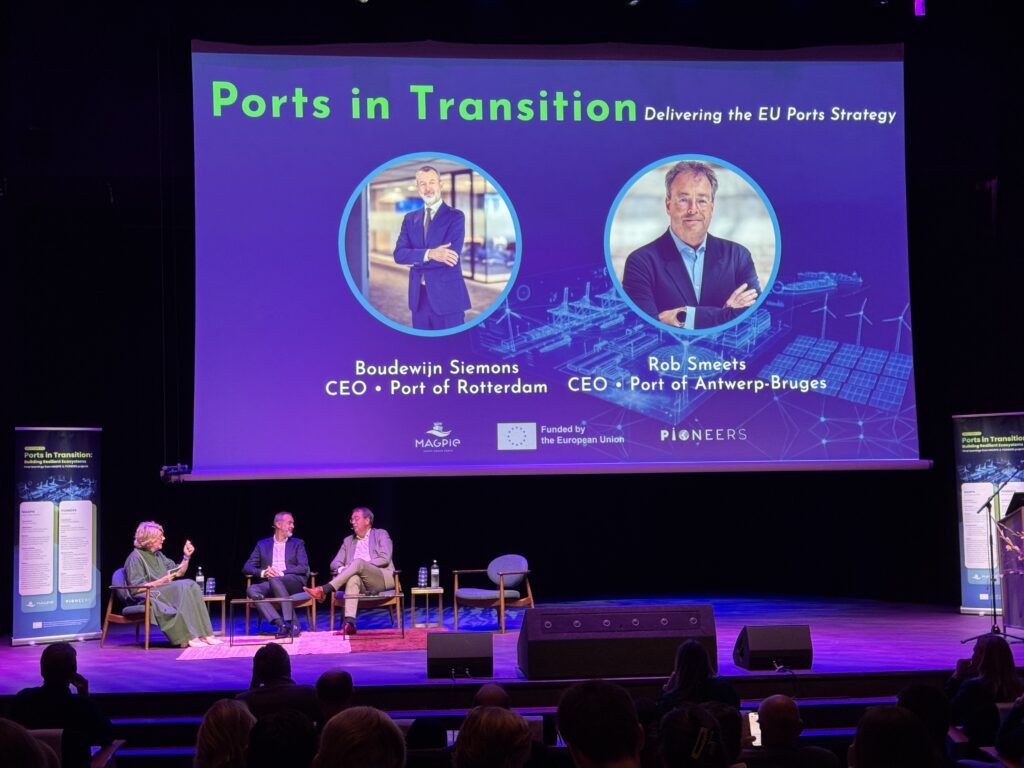
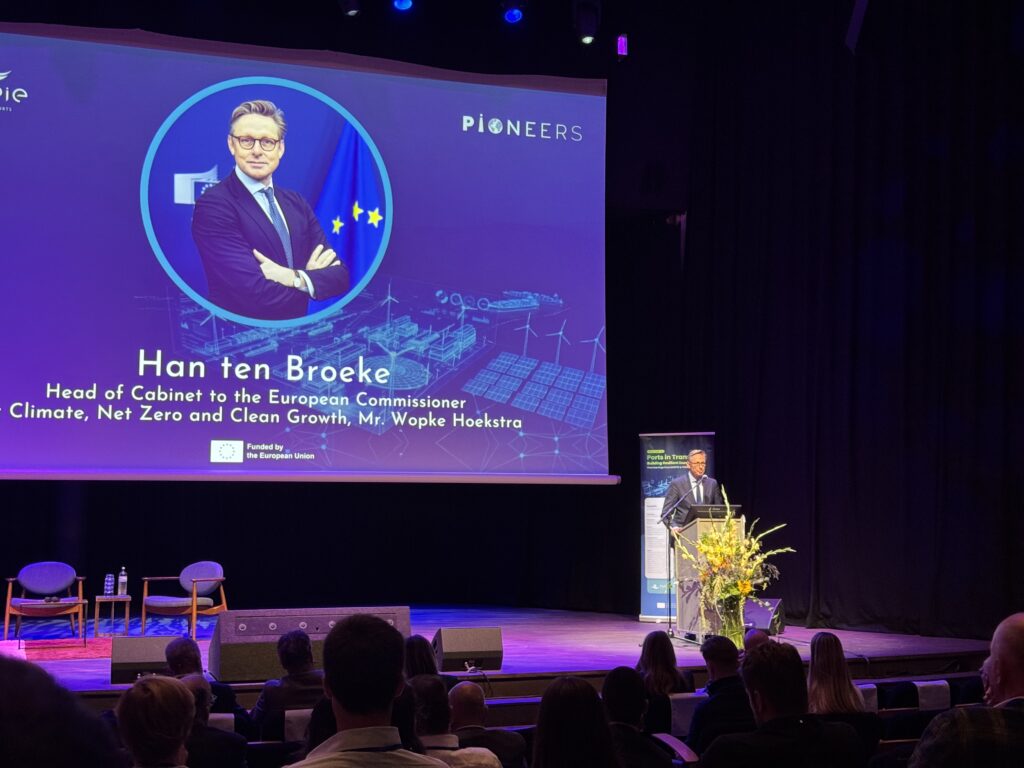
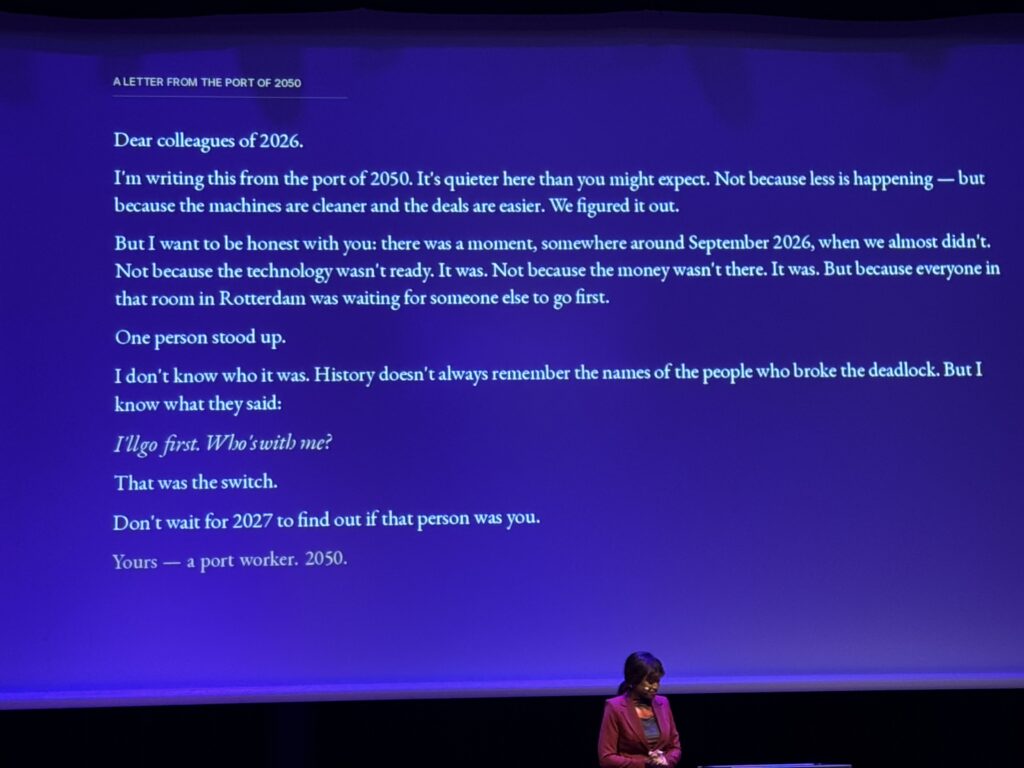
This was a central message of the MAGPIE & PIONEERS Final Conference, held on 17 September 2026 at De Doelen in Rotterdam. Bringing together port authorities, policymakers, industry leaders, researchers and innovation partners, the conference marked the conclusion of several years of work by the two European projects and looked beyond individual demonstrations towards the longer-term transformation of European ports.
Discussions throughout the day connected decarbonisation with competitiveness, energy, resilience, infrastructure, digitalisation and investment. They also raised an important question for European research and innovation: what happens to valuable knowledge, tools and lessons when projects come to an end?
For ALICE, this question is particularly relevant. Project results create lasting value only when knowledge continues to circulate, reaches organisations beyond the original consortium and supports further implementation.
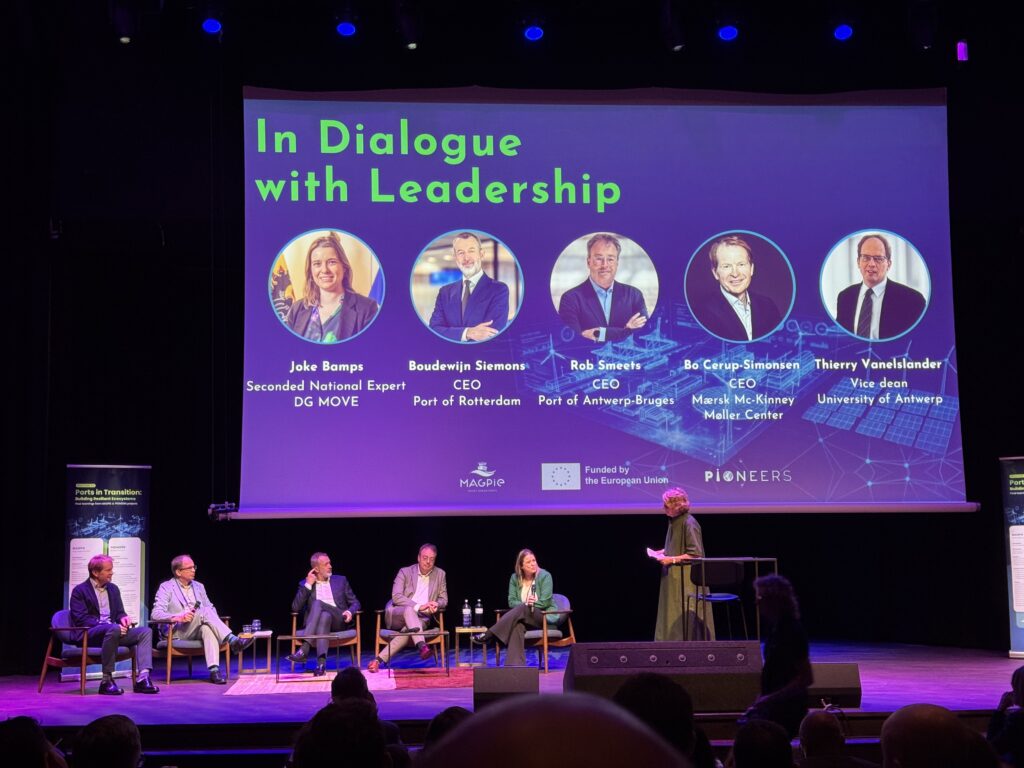
The conference demonstrated how significantly the conversation around port decarbonisation has evolved. New technologies remain essential, but port transformation cannot be achieved through individual technologies or demonstrations alone. Ports need adequate infrastructure, access to energy, investment, committed stakeholders and a clear pathway connecting innovation with long-term strategy.
Several practical lessons emerged from the experience of MAGPIE and PIONEERS.
One of the clearest was that every port is different. Port typologies can provide useful reference points, but they cannot fully explain the operational, infrastructural and organisational conditions influencing transition. Each port needs to understand its own ecosystem: the actors involved, available data and infrastructure, investment conditions, barriers and opportunities.
Innovation also requires experimentation. Demonstrations will not always deliver exactly what was initially expected, but adaptation and even failure are part of the innovation process. The challenge is to transform this experience into knowledge that can inform subsequent implementation.
At the same time, ports cannot wait until every technology and business model is completely mature before acting. The risks and costs of inaction need to be considered alongside the investments required for decarbonisation. Collaboration can help manage this uncertainty. First movers frequently carry higher costs and risks, while coalitions and coordinated action can create demand, build scale and improve the conditions for investment.
Technology therefore represents only one part of the transition. People, planning, collaboration and long-term commitment are equally important in turning demonstrations into operational change.
Another important lesson from the projects is that replication does not mean simply copying a solution from one port to another.
The conference illustrated this through experiences with stakeholder engagement in very different port environments. An approach developed in a large and complex ecosystem such as the Port of Antwerp-Bruges cannot necessarily be transferred unchanged to a smaller inland port such as Venlo. Stakeholder structures, operational conditions, available resources and local priorities differ.
The value of knowledge exchange lies instead in understanding what worked, why it worked, what barriers were encountered and which elements can be adapted to another context.
This makes knowledge transfer an important part of scaling innovation. European R&I projects generate demonstrations, methodologies, tools and practical lessons, but this knowledge can remain fragmented across projects and repositories after projects conclude. Organisations outside the original consortia may struggle to discover what already exists or determine whether a solution is relevant to their own challenges.
ALICE addressed precisely this challenge during the conference Learning Lab. As the European Technology Platform for logistics innovation, ALICE can connect project results with a wider and longer-lasting ecosystem of ports, hubs, logistics actors, technology providers, research organisations and public stakeholders.
As highlighted during the session:
“For us, legacy is not simply about keeping a platform online. It is about keeping knowledge in circulation.”
This reflects the ALICE4Impact approach: strengthening the bridge between research and innovation results, operational needs and wider innovation uptake.
A concrete opportunity to put this approach into practice is the MAGPIE Green Innovation Compass.
Although ALICE was not a partner in MAGPIE, its involvement developed through collaboration with the Port of Rotterdam, an active ALICE member. MAGPIE developed the Green Innovation Compass as a user-oriented tool helping ports explore innovation options relevant to their transition.
The Compass currently brings together 44 innovation topics, providing accessible information on technological developments, implementation perspectives, investment, relevant stakeholders and potential barriers.
Importantly, the ambition is not for the Compass to remain a static repository of MAGPIE results. It is intended to evolve as a living framework capable of incorporating relevant knowledge from other projects and initiatives. Knowledge from another project has already been integrated, demonstrating how the approach can extend beyond the original MAGPIE consortium.
During the Final Conference, ALICE presented its intention to support the continuation of this approach beyond MAGPIE, helping relevant innovation knowledge remain accessible and connected with the wider logistics and port community.
PIONEERS, in which ALICE is a project partner, leaves another important body of knowledge for European ports.
Among its results, the project presented the Greenport Master Plan Handbook, together with tools, methodologies and best practices designed to help ports structure their own pathways towards greener operations.
The Final Conference highlighted a useful complementarity between the two projects. PIONEERS provides guidance on how a port can develop a Greenport Master Plan, while MAGPIE provides knowledge and inspiration about innovations and solutions that could become part of that pathway.
The opportunity now is to connect these results rather than allow them to remain within separate project environments. This does not require every port to follow the same model. Instead, ports need access to relevant knowledge and opportunities to discuss how different approaches could be adapted to their specific operational context.
This is also where the developing ALICE Ports & Hubs Community can play an important role.
The ambition is to establish a continuous and neutral environment where large, medium-sized and smaller ports and hubs can exchange experiences, discuss innovation and sustainability challenges, connect with R&I projects and solutions, and learn from each other’s implementation journeys.
The Green Innovation Compass can help make knowledge accessible; the Ports & Hubs Community can help keep the conversation around that knowledge alive.
Over time, this combination can help connect results from MAGPIE, PIONEERS and other initiatives with practical needs emerging from ports and hubs. It can support exchanges around replication and implementation barriers while also feeding operational needs back into future research, innovation and policy discussions.
The conclusion of MAGPIE and PIONEERS therefore does not have to mark the end of the knowledge they have generated. Their demonstrations, methodologies, tools and lessons provide a foundation that can continue to support port transformation beyond the projects themselves.
For ALICE, the next step is to help strengthen that connection: from individual project results to shared knowledge, from shared knowledge to implementation, and from implementation towards lasting impact across the European ports and logistics ecosystem.