Thursday, September 24th, 2026
How can Europe move from successful demonstrations of automated trucks to logistics operations that work reliably, safely and at scale? This question was at the centre of MODI’s strong presence at the Autonomous Summit on 16 September 2026 at the Port of Antwerp-Bruges.
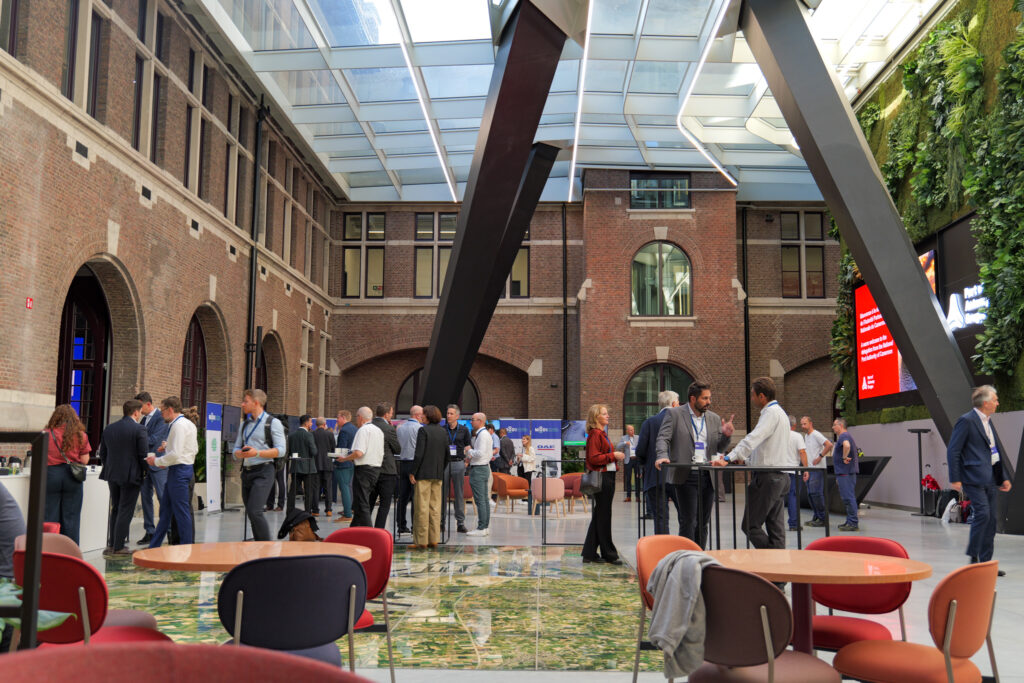
Following the MODI Final Event on 15 September, the project continued the discussion at the Autonomous Summit, part of Port of the Future Week. The Summit brought together industry, technology providers, ports, policymakers and researchers, alongside more than 30 demonstrations of autonomous technologies in an operational port environment. MODI contributed with a dedicated stand, a static demonstration of the vehicles and two main-stage sessions focused specifically on automated freight and its integration into logistics operations.
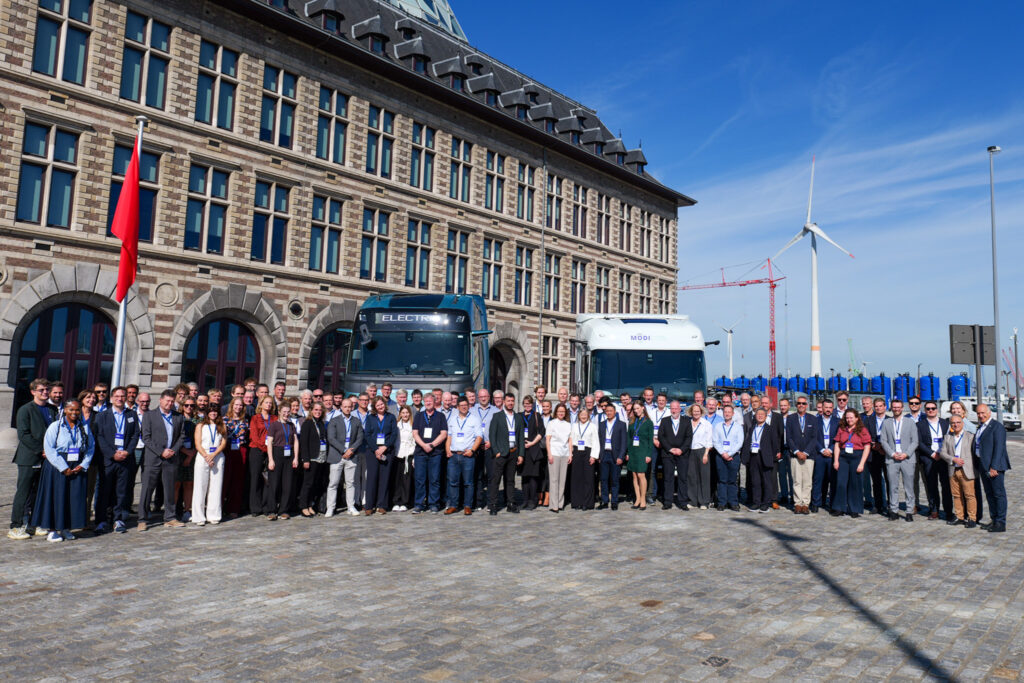
For MODI, this was an opportunity not only to showcase four years of work, but also to address one of the most important conclusions emerging from the project: automating the driving task is only one part of automating freight transport.
Deployment depends on integrating the vehicle into the complete logistics operation, connecting the logistic stakeholders and the vehicle by interfaces and addressing the non-driving activities currently done by the driver.
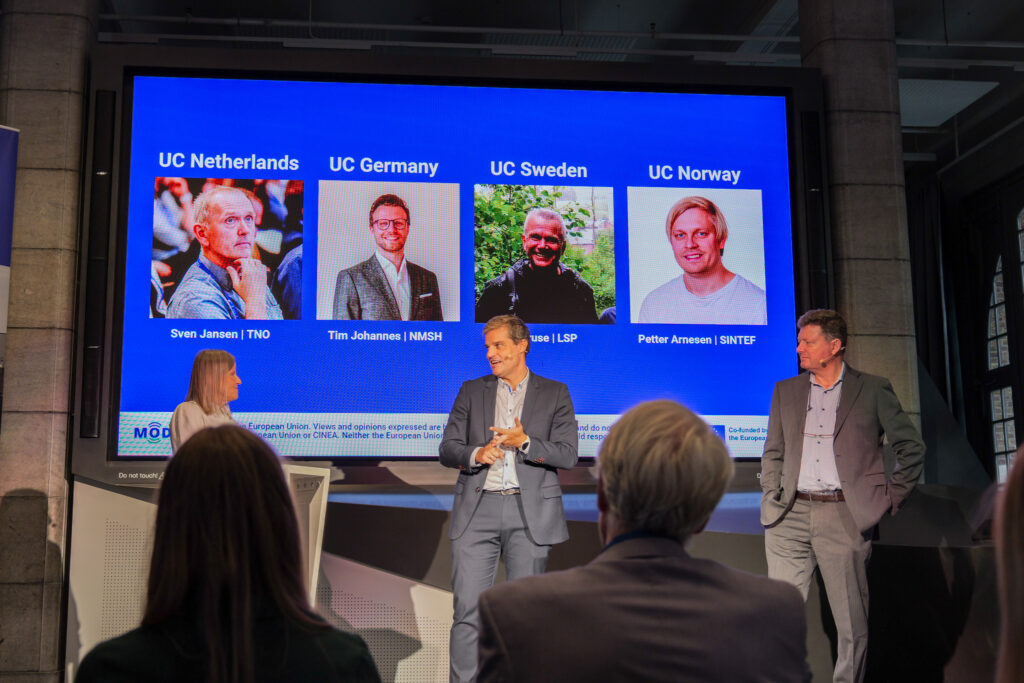
The first MODI session, From Logistics Challenges to Automated Freight Solutions, examined where automation can create value for logistics and what industry has learned from testing Connected, Cooperative and Automated Mobility (CCAM) in real operations. The session opened with a keynote by Mads Rasmussen from DFDS, followed by a panel with Jop Spoelstra from Technolution, Guus Arts from DAF and Burak Derecik from APM Terminals, moderated by Vicent Pastor from IN-MOVE.
A recurring message was that autonomous transport cannot be approached simply as automated driving. Logistics operators need reliable transport services, and this requires the entire process around the vehicle to function. Access to terminals, coordination with infrastructure, loading and unloading, charging, traffic management, data exchange and exception handling all become part of the automation challenge.
The message from industry was consistent: no single organisation can address all the interfaces required for automated freight. Vehicle manufacturers, logistics operators, terminals, technology providers, road authorities and infrastructure operators need to work together.
The second MODI session, “Integrating Automated Freight into the Logistics Ecosystem”, shifted the discussion from individual solutions towards deployment at system level.
Stefanie Van Damme from ALICE presented the keynote “What have we learned from MODI?”, bringing together the project’s main findings after four years of demonstrations and deployment-oriented work. The presentation highlighted an important distinction between vehicle readiness and logistics readiness.
MODI has demonstrated SAE Level 4 automated freight operations in real logistics environments, including public roads, ports and terminals and cross-border operations. Yet the project has also shown that a technically capable vehicle cannot create an automated logistics service on its own.
Many processes currently handled by a driver remain necessary when the driving task is automated. Vehicles still need to enter terminals, interact with gates and access systems, connect with loading and unloading processes, charge, exchange operational information and respond when something unexpected occurs.
This means that deployment requires an ecosystem that is ready to interact with the automated vehicle. Physical and digital infrastructure, connectivity, positioning, operational procedures, interfaces between systems and organisational responsibilities all need to work together.
The relevant question is therefore not simply whether a truck can drive autonomously, but where automation creates measurable value for the logistics operation and what must change around the vehicle to realise that value.
This is also why deployment is likely to begin in operational environments where processes are relatively predictable and repeatable. MODI’s findings point towards applications such as hub-to-hub operations, repetitive terminal movements and other well-defined logistics flows as important environments for gaining further operational experience.
The panel following the ALICE keynote brought together Zeljko Jeftic from Einride, Mats Rosenquist from Volvo and Bob Dodemont from the Port of Rotterdam. Their discussion focused on moving from pilots to operational deployment and the conditions required for automation to deliver value. A central topic was interoperability.
An automated truck may need to operate across different ports, terminals, infrastructure systems, logistics platforms and national environments. If every new operation requires a bespoke technical solution, scaling across Europe becomes difficult.
Experience from MODI has therefore reinforced the importance of common interfaces, standards and cooperation between organisations from the beginning. Testing solutions in different operational environments also helps identify issues that may remain invisible when technologies are developed separately.
The Port of Rotterdam perspective brought this challenge into particularly clear focus. Automated vehicles entering a major port may have to interact with multiple terminals, each with its own operational and digital systems. For deployment beyond isolated applications, those systems need ways to communicate and work together.
As a MODI partner, ALICE has contributed to keeping the logistics perspective at the center of the automation discussion.
Across MODI activities, demonstrations and industry exchanges, ALICE has worked with logistics operators, vehicle manufacturers, ports, terminals, research organisations and public authorities to connect technological development with operational requirements and the wider European research and innovation agenda.
At the Autonomous Summit, this role was reflected in the focus on logistics integration, business value and ecosystem readiness. These topics are also central to ALICE’s work on Connected, Cooperative and Automated Logistics Operations.
For ALICE, MODI’s results provide an important evidence base for the next phase of automated freight in Europe. Future large-scale demonstrations and cross-border testbeds will need to build not only on increasingly capable vehicles, but also on the infrastructure, digital systems, standards, operational processes and collaboration models required to integrate them into European logistics chains. MODI’s results are already contributing to discussions around future large-scale CCAM demonstrations and cross-border testing initiatives.