Wednesday, July 1st, 2026
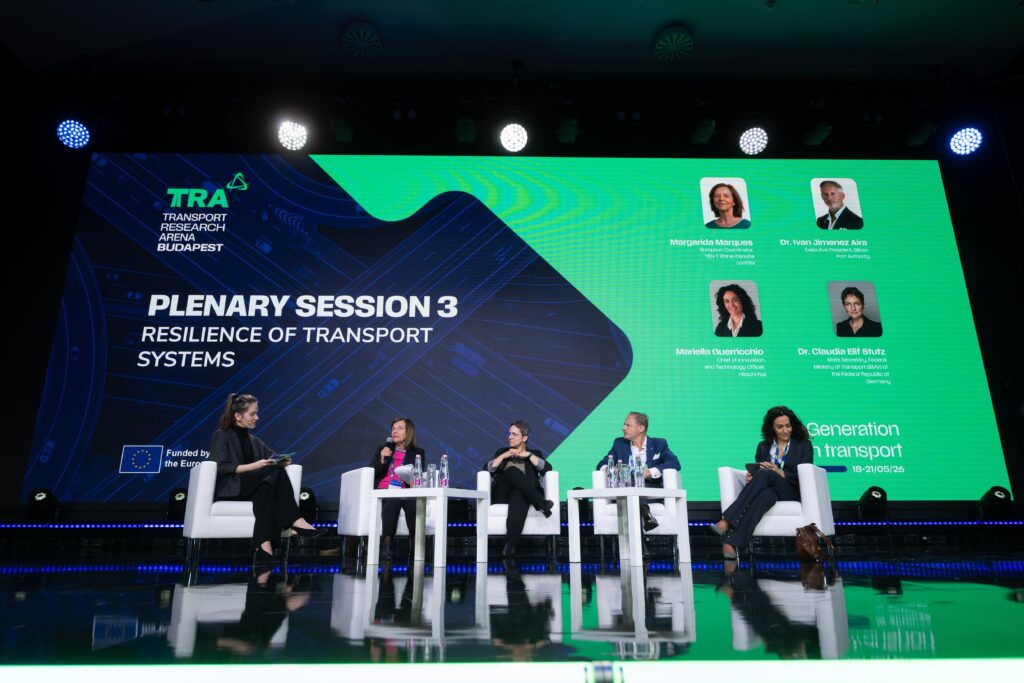
How can transport systems remain reliable in a world increasingly affected by climate change, geopolitical instability and digital threats? This question was at the centre of the “Resilience of Transport Systems” plenary session at TRA 2026, where experts from infrastructure management, transport policy, logistics and industry discussed how Europe can strengthen the resilience of its transport networks while supporting sustainability objectives.
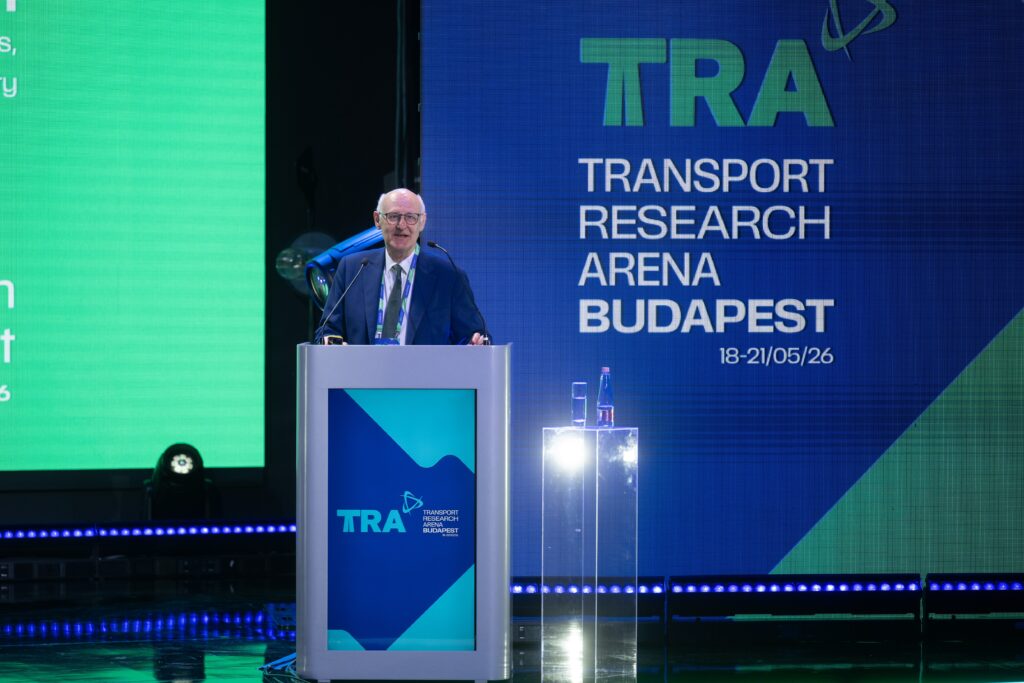
The session brought together representatives from transport corridors, infrastructure operators, ports, rail, energy and public authorities. However, it was the keynote address by Professor Alan McKinnon, Professor Emeritus of Logistics at Kuehne Logistics University, that set the tone for the discussion by providing a broad perspective on the evolving nature of transport risks and the growing importance of adaptation and resilience planning.
The panel discussion complemented Professor McKinnon’s keynote with perspectives from across the transport ecosystem. Margarida Marques reflected on the importance of resilient TEN-T corridors and cross-border coordination. Ivan Jimenez Aira brought the perspective of ports as critical infrastructure facing climate and geopolitical challenges. Mariella Guerricchio highlighted the role of digital technologies in supporting resilience, alongside the growing importance of cybersecurity. Uroš Salobir addressed the increasing interdependence between transport and energy systems, while Claudia Elif Stutz provided a policy perspective on building resilient and future-proof transport networks.
Professor McKinnon argued that transport resilience has traditionally focused on risk mitigation: reducing the likelihood of disruptions occurring in the first place. While this approach remains important, he explained that the growing number and complexity of risks affecting transport systems make it increasingly difficult to prevent disruptions entirely.
His keynote highlighted how transport systems are now exposed to a combination of climate-related events, geopolitical tensions, energy disruptions, cyber threats and supply chain vulnerabilities. More importantly, these risks no longer occur in isolation. They increasingly interact, creating cascading effects across transport networks, supply chains and economies.
McKinnon identified climate change as one of the most significant examples of a global risk mitigation failure. Despite decades of scientific evidence and policy commitments, greenhouse gas emissions continue to rise, while Europe remains one of the regions experiencing the fastest rates of warming. As a result, transport systems face growing exposure to extreme weather events, flooding, heatwaves and other climate-related disruptions.
According to McKinnon, the discussion must therefore move beyond preventing risks and place greater emphasis on adaptation. While much research and investment has focused on protecting infrastructure, he stressed that resilience must also address operational processes, workforce preparedness, supply chain management and the wider logistics ecosystem.
A recurring theme throughout the keynote was the close relationship between resilience and sustainability.
McKinnon noted that many measures designed to reduce emissions can also strengthen resilience. Improvements in efficiency, better network utilisation and greater operational flexibility often contribute to both objectives simultaneously. However, he also warned that in some respects efforts to decarbonise logistics and improve its resilience are in conflict.
The transition towards low-carbon transport systems introduces new dependencies and risks, including reliance on critical raw materials, uncertainty around future energy systems and increased exposure to global supply chain disruptions. He also explained that while multimodality is essential for decarbonisation, greater reliance on rail and inland waterways can introduce additional resilience challenges that require careful management.
These observations resonated strongly with the wider panel discussion, where speakers emphasised the need to ensure that decarbonisation pathways are supported by robust infrastructure, reliable energy systems and long-term investment strategies.
The panel discussion expanded on many of the themes introduced in the keynote.
Representing the Rhine-Danube TEN-T Corridor, Margarida Marques emphasised the importance of strengthening transport corridors and improving cross-border coordination to ensure continuity of transport services under increasingly challenging conditions.
Dr. Ivan Jimenez Aira from the Port of Bilbao addressed the role of ports as critical infrastructure and gateways for European trade, underlining the need to prepare for both climate-related and geopolitical disruptions.
From the rail sector perspective, Mariella Guerricchio of Hitachi Rail discussed how digital technologies can support more adaptive and resilient transport operations, while also noting the importance of cybersecurity as transport systems become increasingly connected.
The session also included perspectives from the energy sector through Uroš Salobir of ELES and from national transport policy through Dr. Claudia Elif Stutz of Germany’s Federal Ministry of Transport, both emphasising the growing interdependence between transport, energy and digital infrastructure.
Together, the speakers reinforced the idea that resilience can no longer be considered solely within individual transport modes. Instead, it requires coordination across modes, sectors, countries and infrastructure systems.
Professor McKinnon concluded his keynote with a call for stronger collaboration and greater practical application of research results.
While resilience has become an increasingly important research topic, he argued that the challenge now is ensuring that knowledge translates into real-world decision-making. Research must not only improve understanding of vulnerabilities and risks but also help governments, infrastructure managers and businesses implement effective adaptation measures.
This message aligned closely with the broader discussions throughout TRA 2026, where deployment, implementation and operational impact repeatedly emerged as priorities across multiple transport and logistics domains.
The plenary concluded that building resilient transport systems will require a combination of climate adaptation, digital preparedness, infrastructure investment, operational flexibility and stronger collaboration between public authorities, industry and researchers. As disruptive events become more frequent and interconnected, resilience is no longer simply about recovering from shocks – it is increasingly about preparing transport systems to operate effectively in an increasingly turbulent world.