
Friday, June 5th, 2026
How can digitalisation help Europe build more efficient, resilient and sustainable logistics systems across rail, road, maritime and multimodal transport? This question was at the centre of the roundtable session “Leveraging the Power of Digitalisation for Efficient Logistics” at TRA 2026, bringing together representatives from industry, infrastructure operators, research organisations and the European Commission to discuss how digital technologies can move from isolated pilots towards large-scale implementation.
Moderated by Paola Cossu (FIT Consulting) and reported by Giuseppe Luppino (ALICE), the session focused not on digital technologies in isolation, but on how they can support practical logistics operations, interoperability and multimodal coordination across fragmented transport ecosystems.
A strong common message emerged throughout the discussion: Europe already has many of the technological solutions needed for digital logistics. The main challenge now is interoperability, trust and implementation at scale.
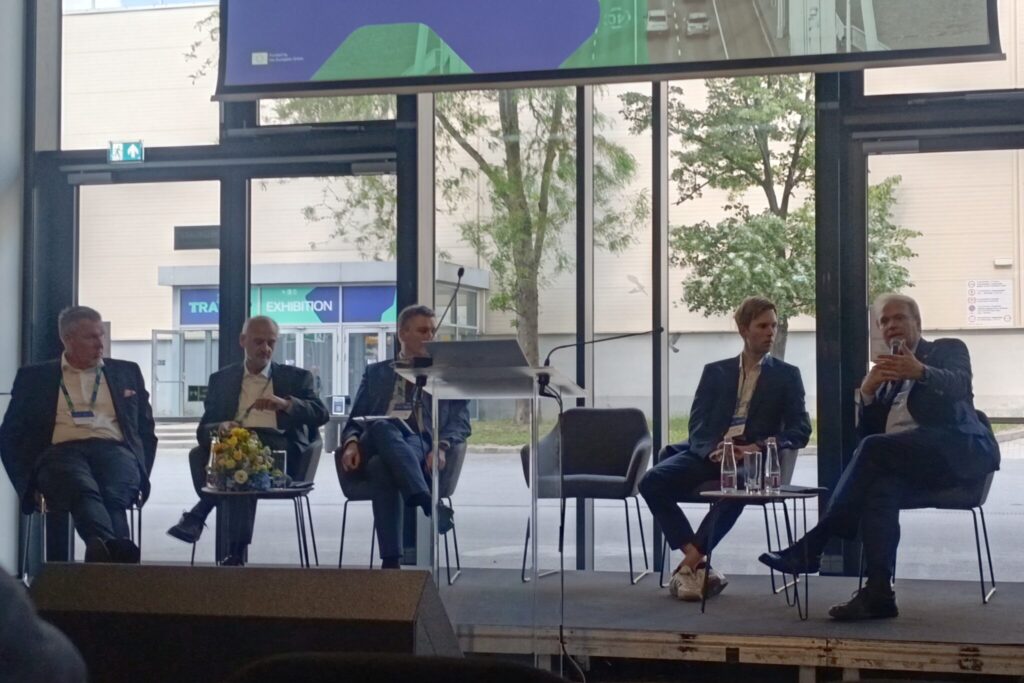
The discussion repeatedly highlighted fragmentation as one of the biggest barriers to efficient multimodal logistics. Speakers stressed that logistics systems remain fragmented across transport modes, operators, infrastructure managers, data systems and governance structures, making coordination and operational optimisation difficult.
Representing the European Commission, Szymon Ościsłowski explained that digitalisation can only create value if systems are interoperable and capable of supporting trusted data exchange across the logistics ecosystem. He also underlined that a significant share of regulatory requirements affecting logistics operations originates at Member State level, showing that fragmentation cannot be addressed only through European frameworks, but also requires stronger alignment in national implementation. According to the discussion, isolated digital solutions risk creating additional “digital silos” instead of reducing operational fragmentation. Interoperability, common frameworks and collaboration between actors were therefore identified as essential priorities for future implementation.
This perspective was reinforced by Angelos Amditis (ICCS), who stressed that transport should be treated as one interconnected system rather than a collection of disconnected modes and operational silos. He highlighted trusted data sharing frameworks, predictive analytics, digital twins and connected assets as technologies already available today that can support more collaborative and resilient logistics systems – provided they are implemented within interoperable ecosystems.
Throughout the session, trust emerged as a recurring theme. Speakers noted that data sharing is often not limited by technology itself, but by concerns around commercial sensitivity, governance and the willingness of operators to collaborate. At the same time, several participants stressed that many valuable datasets – such as infrastructure locations, idle capacity or terminal availability – are not commercially sensitive and could already support better multimodal coordination if shared within trusted frameworks.
A major focus of the roundtable was how digitalisation can improve operational resilience and real-time coordination across transport networks.
Representing CER Cargo, Wilhelm Patzner highlighted the operational challenges faced by rail freight operators in Europe, including fragmented infrastructure systems, national operational rules and limited interoperability between countries. He also referred to practical cross-border rail freight challenges, including the need for a more unified operational language for locomotive drivers in Europe and more automated transfer of information in cross-border operations. He explained that rail freight operators continue to face practical inefficiencies that digitalisation could help address, including infrastructure coordination, delays and limited real-time operational visibility across borders.
Similarly, Felix Hildebrandt (HACON) emphasised the importance of real-time visibility for improving railway resilience and efficiency. According to Hildebrandt, terminals, operators and infrastructure managers need end-to-end visibility across transport chains to react dynamically to disruptions and optimise capacity use. The discussion highlighted that predictive planning and coordinated data sharing could significantly improve resilience during disruptions caused by weather events, infrastructure works or geopolitical crises.
From the inland waterways perspective, Sascha Gill (United Waterways) explained that digitalisation is becoming a strategic condition for business continuity rather than simply a technological upgrade. He also stressed the need to move from promising concepts and pilots towards implementation and scale-up. Inland waterways operators increasingly need predictive tools capable of managing disruptions such as low-water conditions, infrastructure bottlenecks and multimodal transfer challenges. According to the discussion, the ability to switch efficiently between transport modes during disruptions remains one of the weakest points of current logistics systems.
The session also highlighted how AI, predictive analytics and connected systems can support more adaptive logistics operations. Speakers stressed that technologies already exist to anticipate disruptions, optimise infrastructure use and improve multimodal planning. However, scaling these solutions requires trusted operational data sharing and coordinated implementation across the logistics ecosystem.
One of the strongest messages emerging from the roundtable was the need to move beyond fragmented pilot projects and accelerate implementation of already available solutions.
Several speakers argued that Europe does not lack innovation or technological capability. Instead, the challenge lies in scaling solutions across operational environments and harmonising implementation across Member States and transport modes.
Participants repeatedly referenced the importance of the Electronic Freight Transport Information (eFTI) Regulation as a potential game changer for trusted digital freight operations and interoperable logistics systems. Speakers noted that Europe already possesses many of the necessary building blocks for digital logistics, including eFTI, trusted data-sharing frameworks and operational technologies. The next step is accelerating deployment and ensuring practical implementation across the market.
The discussion also addressed the role of standards and governance. While common standards were considered essential for interoperability, speakers warned that overly complex standardisation processes risk slowing deployment and creating new “silos of standards”. Several participants stressed the importance of balancing harmonisation with practical implementation speed. The discussion also raised the question of how regulation and implementation should interact. Regulation can enable deployment, but practical implementation, operational experience and market uptake can also provide evidence for better regulatory decisions.
Felix Hildebrandt also referred to the importance of understanding how ideas discussed in previous TRA editions have actually been implemented in practice. This point connects directly with the broader need to move from discussion and demonstration towards deployment, follow-up and measurable progress.
A recurring topic was the need for stronger urgency in implementation. Participants highlighted that while European policy frameworks are often well designed, deployment across Member States remains slow and fragmented. According to the discussion, implementation should increasingly become a strategic priority rather than remaining dependent on isolated pilots and demonstrations.
The roundtable concluded with a shared vision for the coming years: creating collaborative logistics ecosystems capable of improving asset utilisation, reducing empty runs, supporting multimodal coordination and enabling large-scale decarbonisation through trusted digitalisation and operational interoperability.
Speakers agreed that the next phase of digital logistics in Europe should focus less on developing new technologies and more on scaling, integrating and operationalising the solutions already available today.