Corridor-based electrification is emerging as the backbone of Europe’s transition to zero-emission road freight. The ALICE Logistics Innovation Summit 2025 session “The Backbone of the Transition: Powering Corridors for Zero-Emission Trucks” explored how grid operators, charging providers, and logistics innovators can align to deploy megawatt-scale charging infrastructure across Europe’s main transport routes.
Hosted by Alice Scotti, ALICE Project Manager, the session featured participation from Koen Noyens (Milence), Janez Humar (ELES), and Marie Knutsen-Oy (Einride), and was linked to five EU-funded projects: FLEXMCS, MACBETH, ESCALATE, NextETRUCK, and ZEFES. Together, they illustrated how Europe can move from pilot deployments to a fully connected, interoperable charging network for heavy-duty battery-electric vehicles (HD-BEVs).
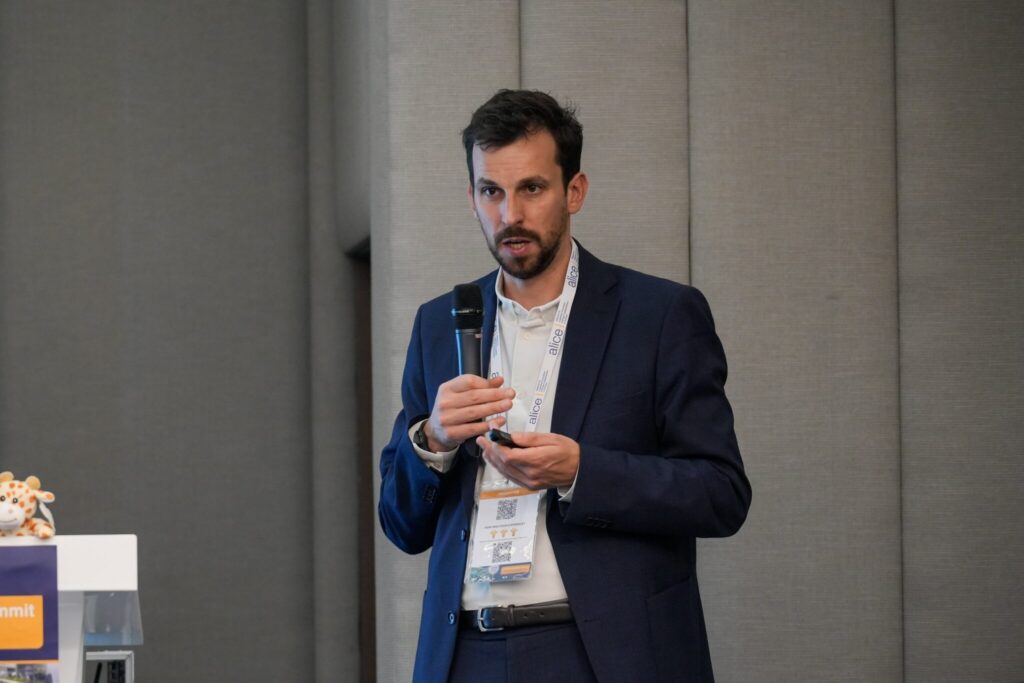
Koen Noyens presented Milence’s progress in building a pan-European network of public charging hubs for heavy-duty trucks. In just three years, the company has launched over 25 hubs across North-Western Europe – around 250 truck connectors. To meet 2030 climate targets, this must grow to more than 10,000. Noyens underlined the need for faster permitting, better grid readiness, and stronger demand visibility to attract private investment.
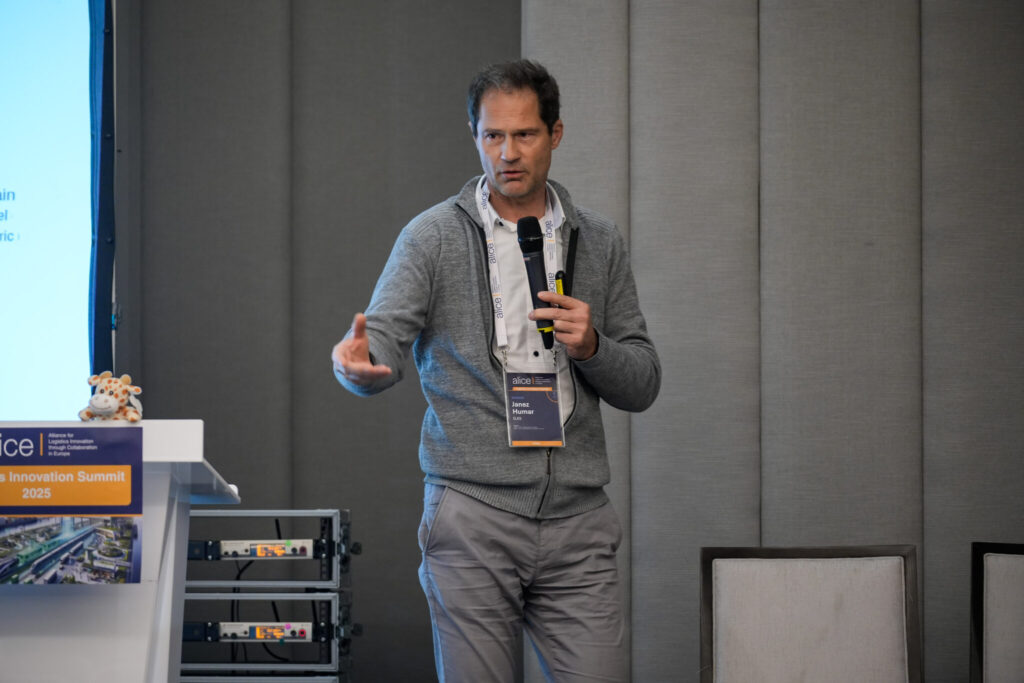
Janez Humar, from Slovenia’s transmission system operator ELES, brought the grid operator’s perspective. ELES is planning large, anticipatory charging parks directly connected to the transmission grid, starting with a flagship 40-MW site near Ljubljana. He warned that lengthy permitting processes and poor coordination between DSOs, CPOs, and public authorities can delay deployments for years. Integrating power and land planning early – and designing multi-operator hubs – is crucial for efficiency and scalability.
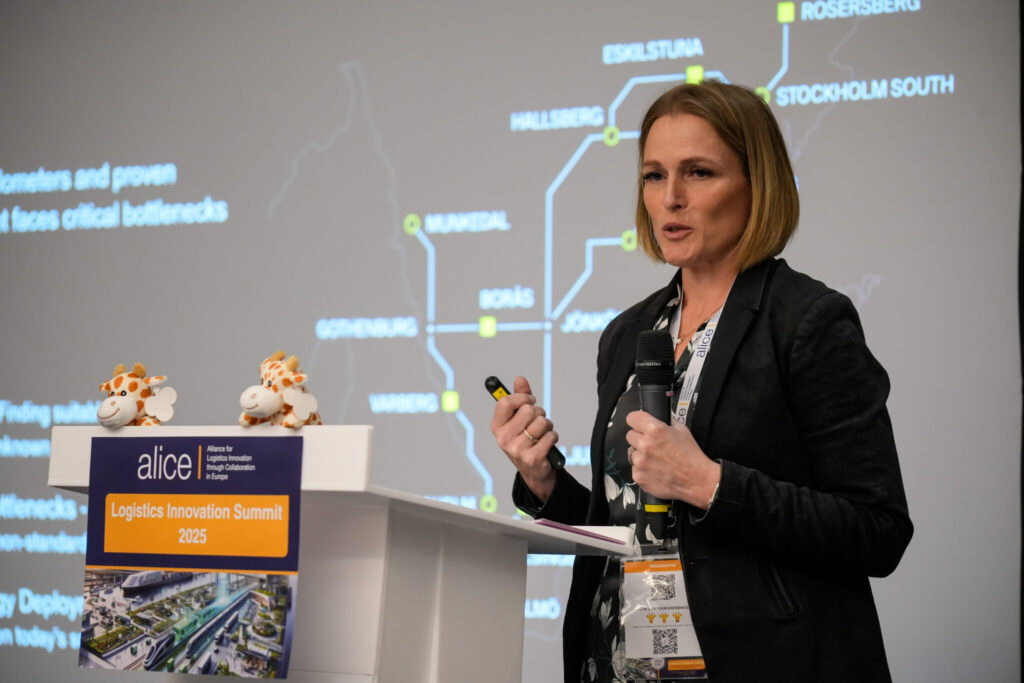
Marie Knutsen-Oy, Vice President for Energy Solutions at Einride, shared lessons from more than ten million electric freight kilometres across Sweden and beyond. Einride’s integrated approach – combining electric fleets, digital routing, and energy management – shows that electrification can already cut operational costs by up to 8%. Yet, the biggest obstacles remain access to land with grid capacity, inconsistent permitting procedures, and utilisation risk. She stressed that infrastructure must be built where customers are already transitioning to electric fleets – not where land and grid happens to be available.
All speakers agreed that corridor-based deployment is the most efficient strategy to reach the Alternative Fuels Infrastructure Regulation (AFIR) targets. Concentrating investment along high-demand freight routes enables cross-border predictability and optimised use of grid capacity.
Projects FLEXMCS and MACBETH are demonstrating multi-point megawatt charging hubs in Germany, Belgium, and Sweden, integrating smart load management and modular design for scalable, energy-efficient infrastructure. ESCALATE, NextETRUCK, and ZEFES are complementing this by testing advanced zero-emission vehicle technologies and interoperability solutions across the heavy-duty sector. These efforts will feed into the HORIZON-CL5-2026-05-D5-01 large-scale demonstration call under the 2ZERO Partnership, which aims to test up to 100 HD-BEVs across four international corridors.
Related call in work programme 2026-2027: HORIZON-CL5-2026-05-D5-01 – Large-scale deadline: 14th April 2026
The session concluded that Europe’s freight decarbonisation will be corridor-driven, requiring simultaneous progress on grid readiness, fleet deployment, and regulatory harmonisation. Collaboration across the energy, mobility, and logistics sectors will be key to making the transition real.
Read the full session report (restricted access) on the ALICE Knowledge Platform https://knowledgeplatform.etp-logistics.eu/pluginfile.php/23267/mod_resource/content/1/2A.%20Session_%20report.pdf and download the short PDF version here 2A.-Session_-TG1_electrification-COM.pdf