Thursday, December 11th, 2025
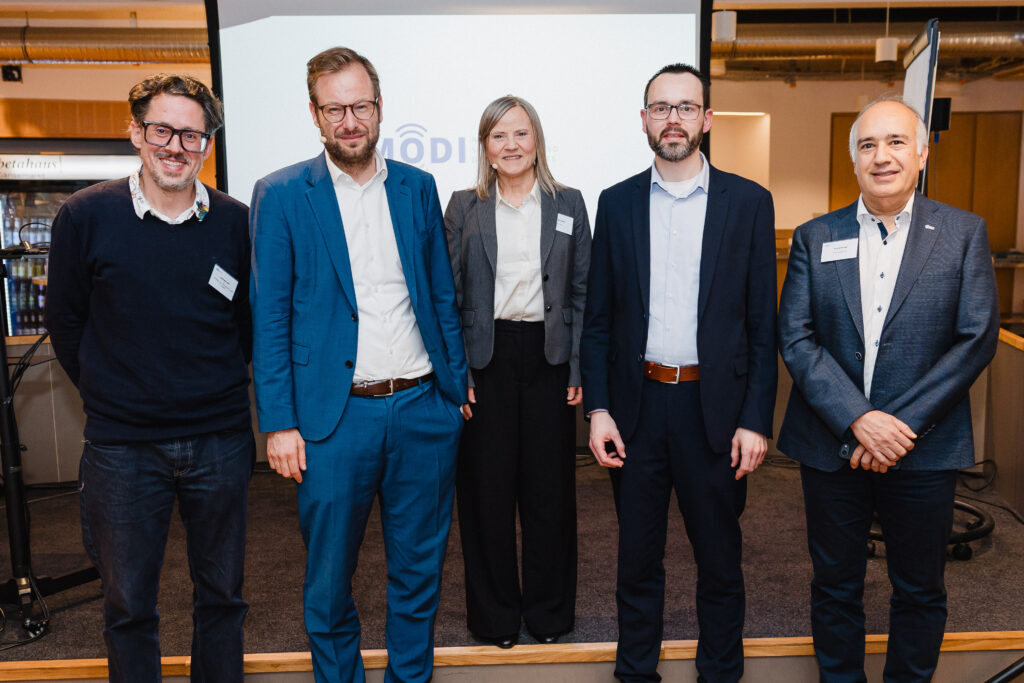
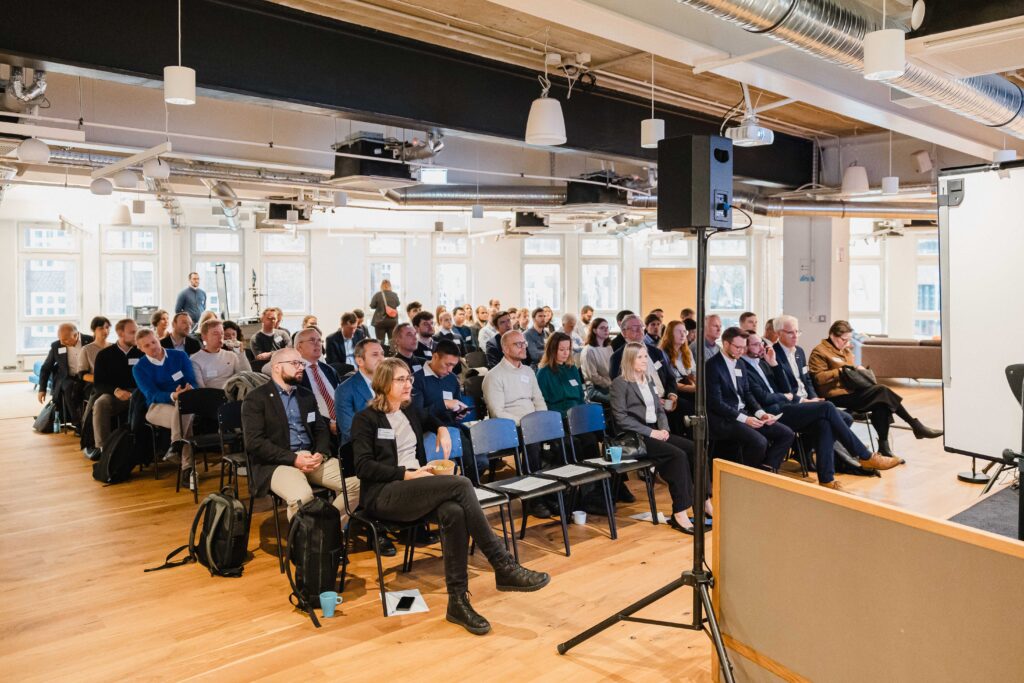
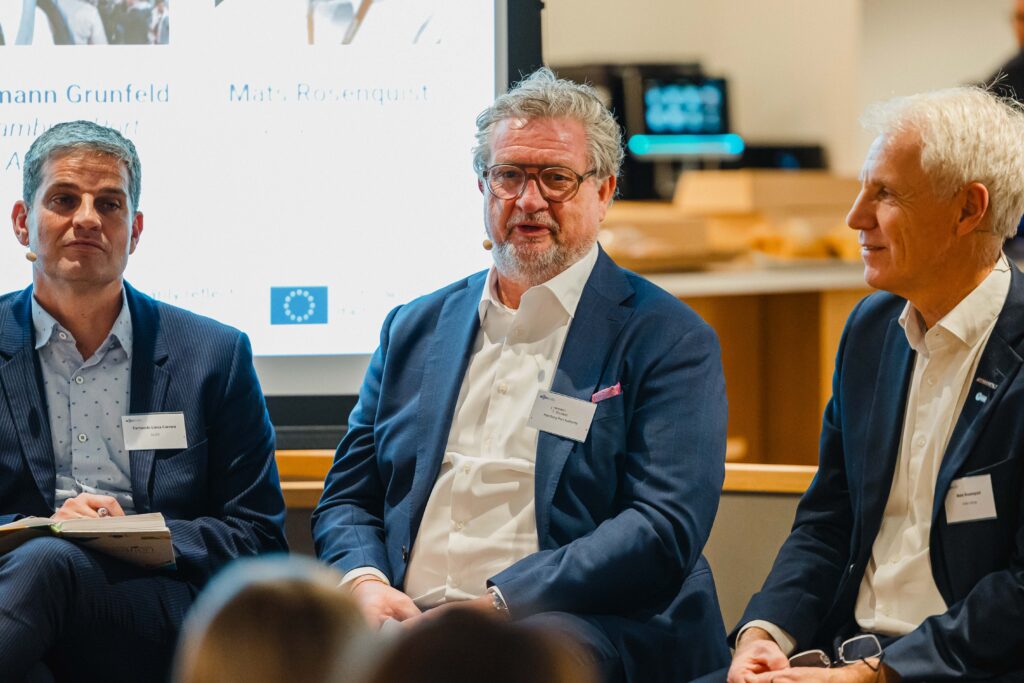
At the MODI Hamburg Event, ALICE contributed to a focused discussion on the future of automated freight transport and the steps required to move from experimentation to real deployment. The panel brought together leading voices from large-scale demonstrators, OEMs (Volkswagen, Volvo), ports (Hamburg Port) and logistics networks to explore what it will take to turn technological progress into a viable business case for the European logistics sector. The conversation aligned closely with insights developed within the MODI initiatives and with ALICE’s broader mission to accelerate the Physical Internet vision.
The logistics sector stands at a decisive moment. Europe operates around 6 million trucks, and even marginal improvements in efficiency, capacity, and reliability could generate substantial economic and environmental benefits. At the same time, the industry faces mounting challenges, including a projected shortage of 745,000 professional drivers by 2028. Automation is increasingly seen not as an optional innovation, but as a critical enabler to maintain service levels and support competitiveness.
Panellists agreed that the question is no longer whether automated logistics will scale, but how quickly Europe can create the conditions for deployment.
Responding to the panel’s opening question – what is the most important shift in automated logistics in the past five years? – speakers highlighted a clear transition from small pilots to early operational phases. Across Europe, automated systems are being tested in real environments, with ports in particular emerging as strong technology, regulatory and business sandboxes. Projects such as L3Pilot, Hi-Drive and MODI are demonstrating how automated systems behave as complexity increases and where logistics networks must adapt to accommodate them.
Participants stressed that hands-on operational research provides far more value than theoretical studies. Testing technology in real operations accelerates learning, exposes practical constraints and clarifies what must be done next.
A recurring theme was the central role of ports as key nodes in enabling road automation. With growing volumes, increasing digitalisation needs and the concentration of multimodal flows, ports are ideally positioned to act as hubs that connect technology providers, OEMs, logistics operators and regulators.
Speakers emphasised the need for:
Collaboration between major ports – such as Antwerp-Brugges and Rotterdam – is essential to define commonalities and establish scalable operational frameworks.
A strong message from the panel was that building the business case for automated logistics requires looking beyond the vehicle itself. Value creation spans resilience, capacity, operational reliability and safety.
Examples included:
Panellists agreed that the benefits will only be unlocked through collaboration across the entire value chain, not solely through OEM innovation.
Speakers were candid about current limitations: today, a strong, autonomous business case depends on supportive incentives and taxation structures. One example mentioned was the German MAUT system, which can act as a lever for innovation when aligned with long-term competitiveness goals.
The sector is entering a phase of logistics model transformation, where operational frameworks will need rethinking to integrate automated transport. Technology adoption will reshape cost structures, service models and competitive positioning.
Although Europe is making progress, several speakers pointed out that China is moving faster, largely due to its willingness to implement technologies at scale. With new announcements expected next year from OEMs and technology providers worldwide, Europe must ensure its regulatory and business environment keeps pace to avoid falling behind.
ALICE continues to support the transition by aligning automation efforts with the Physical Internet roadmap, zero-emission logistics objectives, and the digitalisation and interoperability agenda.
Through initiatives such as:
ALICE brings the voice of logistics operators, shippers and technology users into policy discussions with DG GROW, DG MOVE, DG RTD and DG CONNECT. Ensuring that regulations, incentives and standards reflect logistics requirements is essential for enabling automated freight at scale.
The panel concluded with a consensus on the actions required in the near future:
Participants emphasised that decisions made in the next two to three years will determine whether Europe leads or lags in automated logistics.